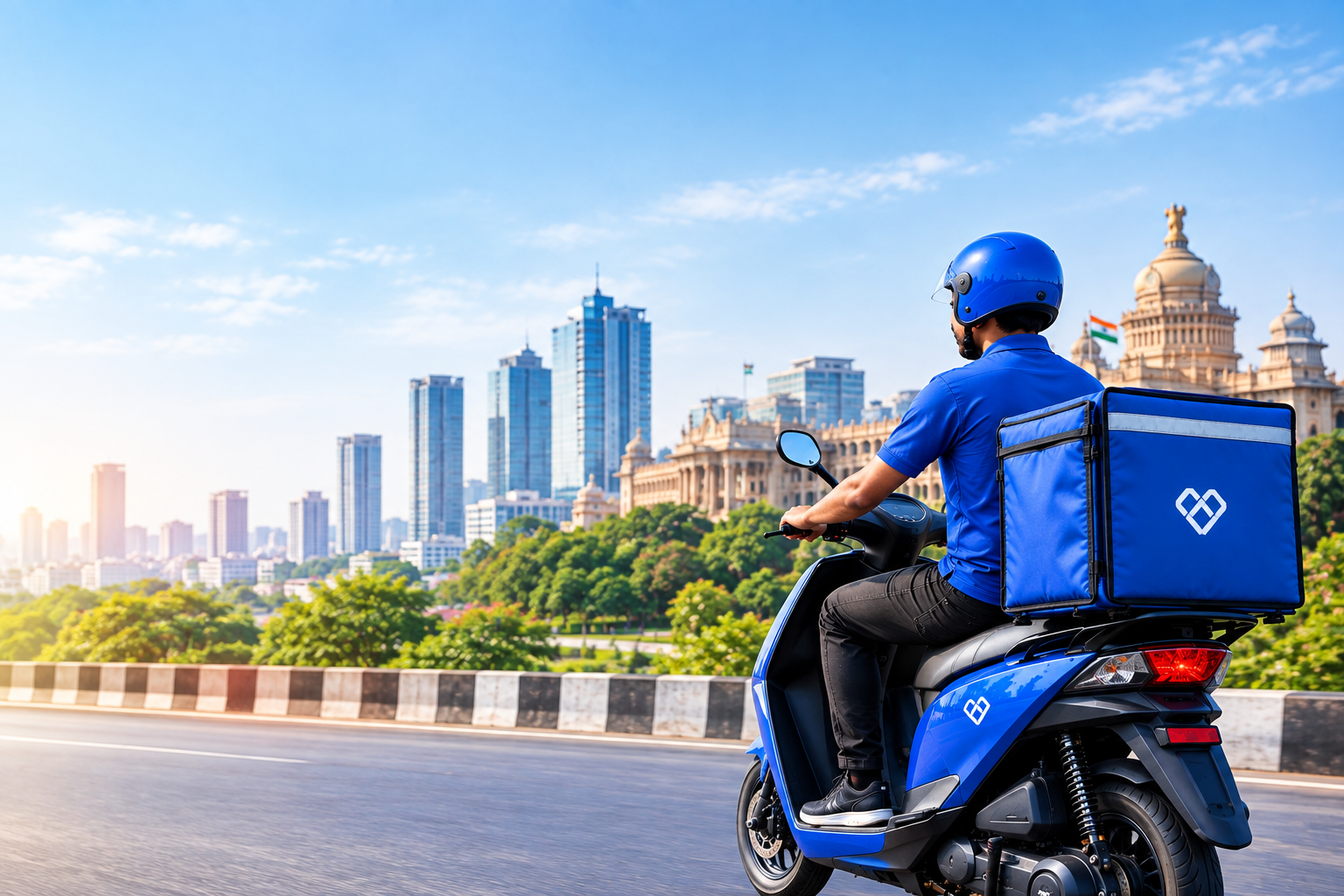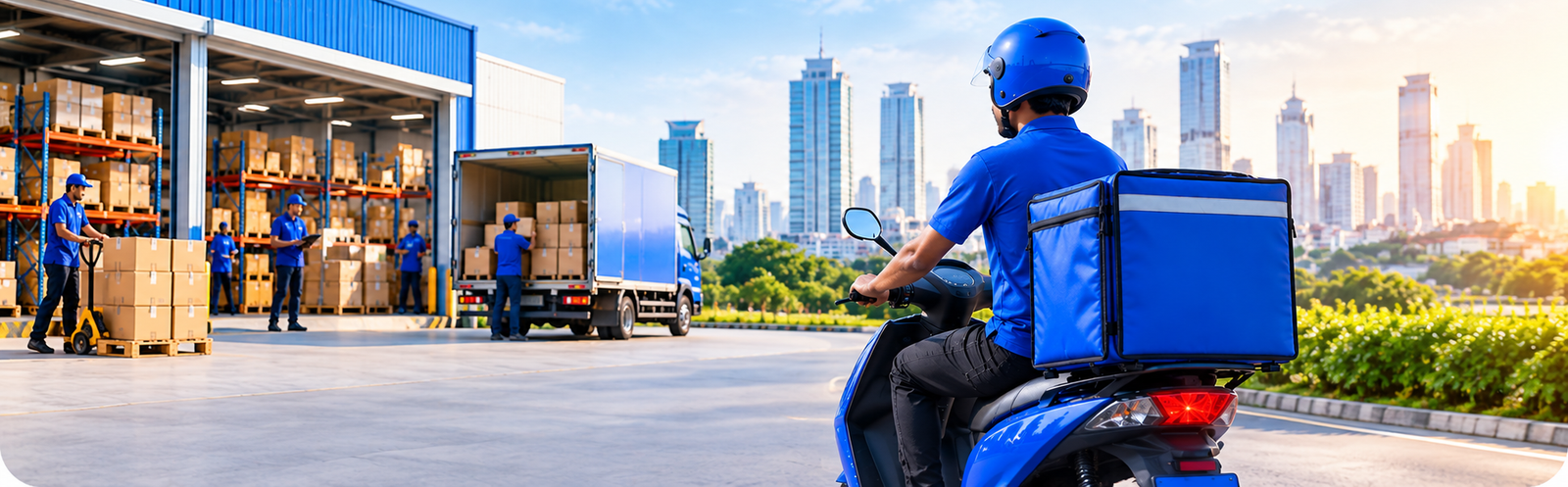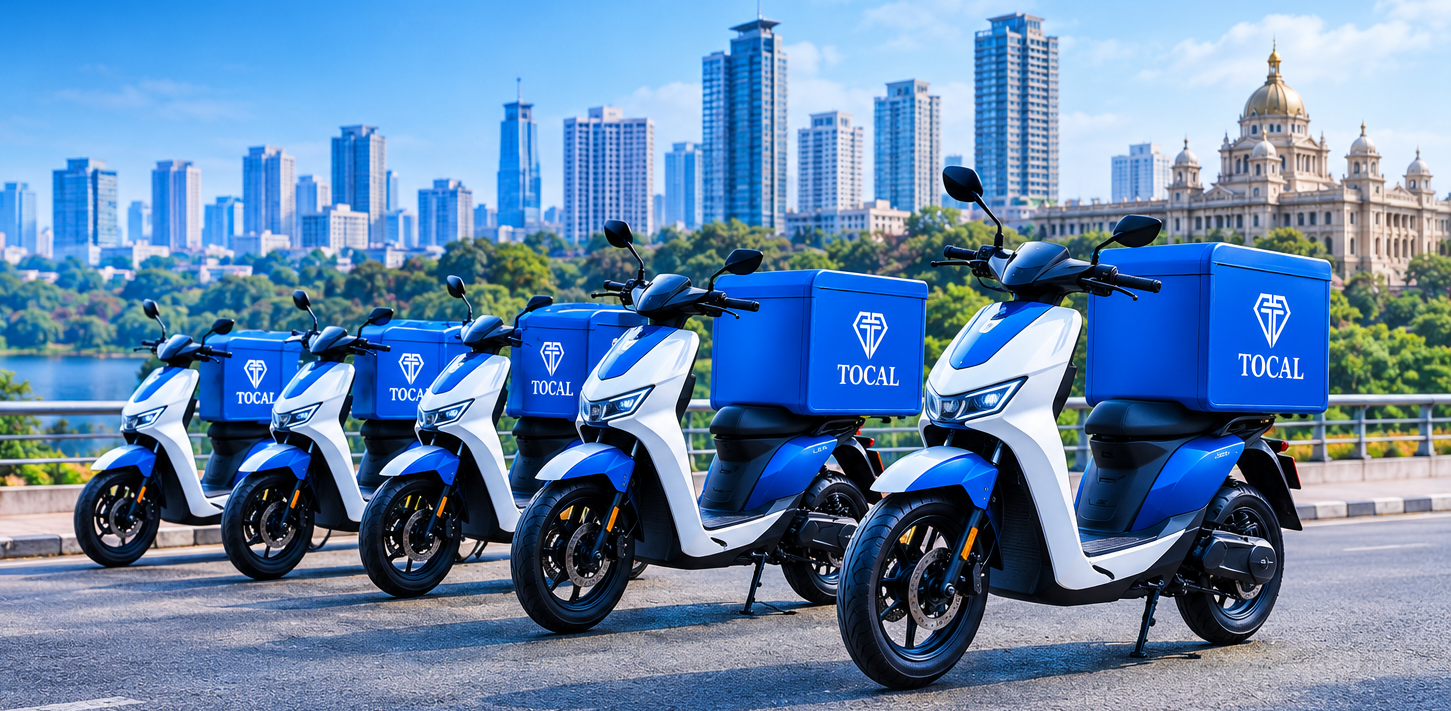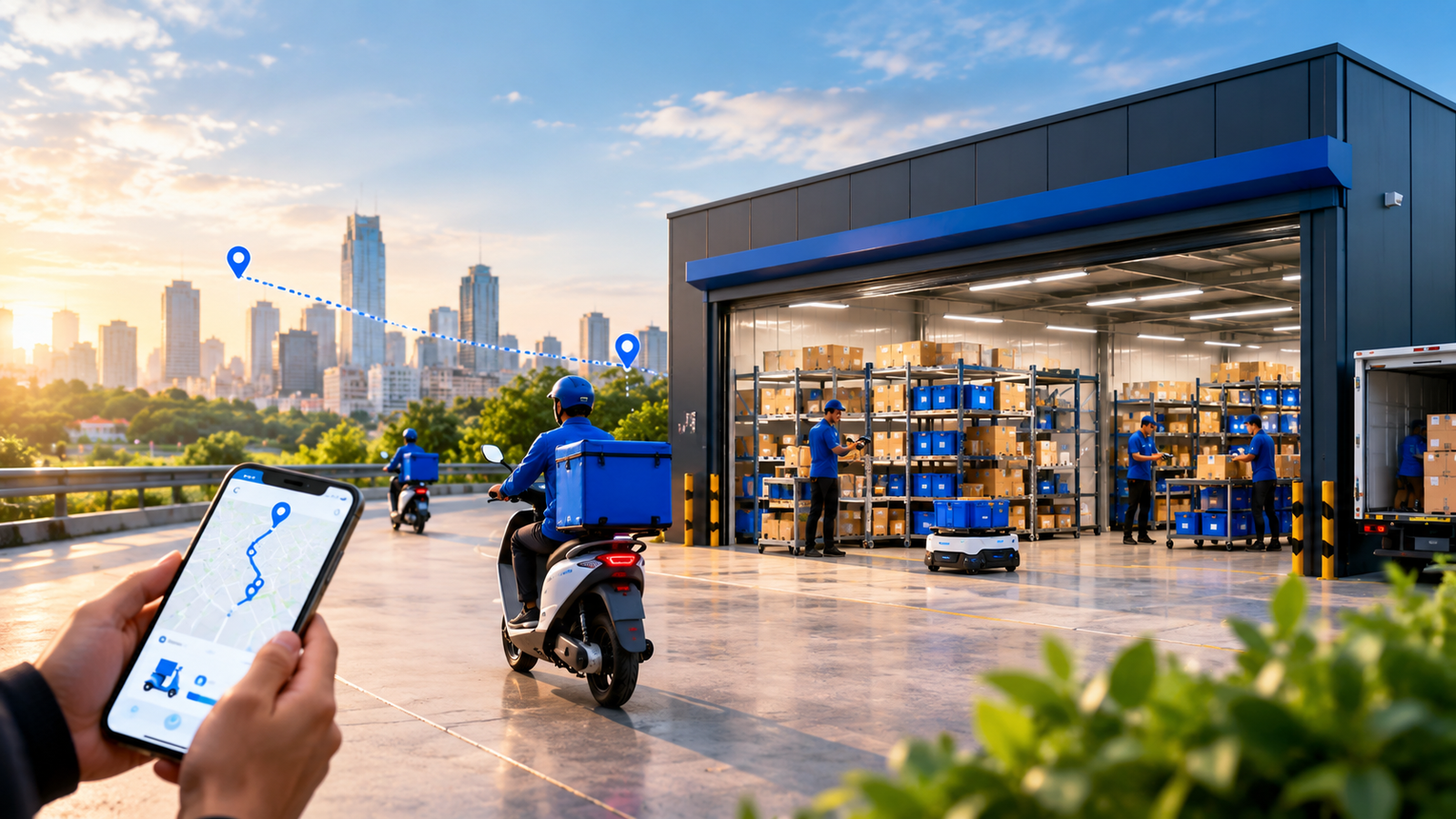
What a micro-fulfillment centre is, why it suits Bangaluru's dense delivery zones, and how D2C brands can use one to deliver faster without a large warehouse.
Customers in Bangaluru no longer measure delivery in days. They measure it in hours, and sometimes minutes. For online brands, that creates a real problem: a single large warehouse on the edge of the city cannot always reach every neighbourhood fast enough, or cheaply enough. The answer many fast-growing businesses are turning to is the micro fulfillment centre in Bangaluru.
This guide explains what micro-fulfillment is, how it differs from a traditional warehouse and a dark store, why it suits the city, and how D2C and retail brands can start using one without a big capital commitment.
What is a micro-fulfillment centre?
A micro-fulfillment centre (MFC) is a small, strategically located facility that stores a focused range of fast-moving products close to customers. Instead of shipping every order from one large warehouse, you hold stock in compact hubs inside or near the neighbourhoods where demand is highest.
Orders are picked and packed locally, and then handed to a rider for delivery over a short distance. The result is shorter delivery times, lower last-mile cost per order and fewer failed or delayed deliveries.
If you are searching for a fulfillment center in Bangaluru or a fulfilment center in Bangaluru that supports same-day and hyperlocal delivery, a micro-fulfillment model is often the better fit than a large, distant warehouse.
Micro-fulfillment centre vs warehouse vs dark store
These terms are often used interchangeably, but they serve different purposes.
- Traditional warehouse: large, usually on the city's outskirts, holding wide inventory for bulk storage and long-distance shipping. Lower rent per sq ft, but longer delivery distances.
- Micro-fulfillment centre: small, close to demand, holding fast-moving SKUs for quick pick, pack and dispatch. Higher rent per sq ft, but much faster delivery.
- Dark store: a closed-to-public retail-style outlet used mainly for quick commerce, often serving a tight radius with very short delivery promises.
In practice, dark store fulfilment in Bangaluru and micro-fulfillment overlap heavily. Many brands use a combination: a larger warehouse for bulk and slow-moving stock, and micro-fulfillment hubs for the products that customers want fastest.
Why micro-fulfillment suits Bangaluru
Bangaluru's geography and customer behaviour make it a natural fit for distributed, close-to-customer fulfilment.
- Heavy traffic: long cross-city trips are slow and unpredictable, so shorter delivery legs protect your delivery promise
- Dense, high-demand pockets: areas such as Koramangala, Indiranagar, HSR Layout, Whitefield and Jayanagar generate heavy order volumes in small radii
- High customer expectations: same-day delivery is becoming the default for many categories, especially grocery, pharmacy, gifting and fashion
- Spread-out layouts: a single warehouse can be far from many fast-growing residential zones
- Strong rider and EV adoption: short routes work well with electric two-wheelers, which keeps cost per delivery low
Key benefits of a micro-fulfillment centre
Faster delivery
When stock sits a few kilometres from the customer, same-day and even sub-hour delivery becomes realistic. Shorter trips also mean fewer delays from traffic and distance.
Lower last-mile cost
Shorter distances mean more deliveries per rider per shift. Over thousands of orders, that lowers the cost per order compared with long-haul delivery from a distant warehouse.
Better customer experience
Faster delivery, accurate ETAs and fewer failed attempts lead to happier customers, better reviews and higher repeat purchase rates.
Fewer returns and cancellations
Quicker delivery reduces order cancellations and lowers the chance of customers changing their minds before the parcel arrives.
Flexibility to test new areas
A small facility lets you test demand in a new locality before committing to larger space, which lowers risk for growing brands.
Who should use a micro-fulfillment centre?
Micro-fulfillment is especially useful for:
- D2C brands: beauty, personal care, fashion, nutrition and home products that depend on quick delivery and repeat orders
- Quick commerce and grocery: high order frequency within tight delivery windows
- Pharmacy and healthcare: time-sensitive deliveries where speed matters
- Retail and FMCG: brands that want store-to-doorstep delivery at scale
- SMEs and individual sellers: sellers who want organised, fast delivery without leasing a full warehouse
D2C fulfilment in Bangaluru: why speed matters
For direct-to-consumer brands, delivery is part of the product. A customer who receives an order the same day is far more likely to order again, while one who waits several days may switch to a competitor.
D2C fulfilment in Bangaluru works best when brands combine three things: stock placed close to demand, fast and accurate order processing, and a reliable delivery fleet for the last mile. Micro-fulfillment covers the first two, and a dedicated rider network covers the third.
For a D2C brand, delivery is part of the product. The closer your stock sits to the customer, the easier it is to keep the promise.
Warehouse as a service in Bangaluru: the flexible model
Building your own micro-fulfillment network means leasing space, hiring staff, setting up systems and managing operations in every location. That is a heavy investment for most brands.
Warehouse as a service in Bangaluru offers a more flexible route. Instead of owning or leasing facilities long term, you use fulfilment space and operations on demand. Typical benefits include:
- No heavy upfront investment in space, racking or systems
- Pay for what you use, rather than fixed long-term overheads
- Scale up or down for festive seasons and campaigns
- Faster setup, so you can go live in new zones quickly
- Focus on your product, while operations are managed by specialists
What to look for in a fulfilment partner
Whether you choose a micro-fulfillment centre or a mixed model, ask these questions before signing:
- Location: is the facility close to your highest-demand pincodes?
- Same-day capability: are processing times, cut-offs and delivery fleet aligned with your promise?
- Inventory visibility: can you see stock levels and order status in real time?
- Accuracy: what are their pick, pack and dispatch accuracy rates?
- Scalability: can they add capacity during peak seasons?
- Delivery integration: is last-mile delivery part of the same operation, or a separate vendor to coordinate?
- Returns handling: do they manage reverse pickups, quality checks and restocking?
- Pricing transparency: are storage, handling, packaging and delivery costs clear upfront?
Start with a pilot
Wherever possible, begin with a limited set of SKUs in your highest-volume zone. A short trial shows real delivery times and costs far better than any presentation.
How TOCAL supports faster fulfilment in Bengaluru
TOCAL provides dedicated delivery infrastructure in Bengaluru for enterprise, D2C and retail businesses. Its Fulfilment Centers offer strategically located fulfilment space with warehousing and order fulfilment on demand, built to support same-day delivery.
Because fulfilment sits alongside hyperlocal delivery, last-mile delivery and an EV-led dedicated fleet, brands can run storage, dispatch and delivery through one partner instead of coordinating several vendors. For growing brands, TOCAL's D2C solutions are designed to scale fulfilment without scaling headcount.
TOCAL works in three steps: understand your order volumes, delivery zones and SLA needs; deploy the right fleet, trained delivery partners and operations team; then manage, track and scale as your volumes grow. The company reports 98% + on-time delivery, more than 30 lakh green deliveries completed and 35+ brands served.
Tips to get the most from micro-fulfillment
- Stock only your fastest-moving SKUs in micro hubs, and keep slow movers in a larger warehouse
- Use order data to choose locations, placing hubs where order density is highest
- Keep SKU data clean, including accurate weights, dimensions and barcodes
- Set clear cut-off times and show delivery promises accurately at checkout
- Replenish stock on a regular schedule so popular items do not run out
- Track on-time delivery rate, order cycle time, inventory accuracy and cost per order
- Share tracking links with customers to cut support queries
Frequently asked questions
What is a micro fulfillment centre?
A micro fulfillment centre is a small facility located close to customers that stores fast-moving products and processes orders locally for quick delivery.
How is a micro-fulfillment centre different from a dark store?
A dark store is a closed-to-public retail-style outlet used mainly for quick commerce. A micro-fulfillment centre is a broader concept covering any compact, close-to-demand facility used for fast order processing. The two overlap, and many businesses use both terms for similar setups.
Is a micro-fulfillment centre suitable for small businesses?
Yes, especially through a flexible, on-demand model. Small and mid-sized sellers can access fulfilment space and operations without leasing and staffing their own facility.
What is warehouse as a service?
Warehouse as a service lets businesses use storage and fulfilment operations on demand, instead of owning or leasing a facility long term. You typically pay for the space and services you use.
Can micro-fulfillment support same-day delivery in Bangaluru?
Yes. Placing stock close to customers shortens delivery distances, which makes same-day and even faster delivery realistic, provided the provider has a reliable delivery fleet and clear cut-off times.
Which products work best for micro-fulfillment?
Fast-moving, high-frequency products such as grocery, beauty and personal care, pharmacy items, nutrition, fashion basics and home essentials usually work best.
Final thoughts
As customer expectations rise, micro-fulfillment centres in Bangaluru offer a practical way to deliver faster without sacrificing cost control. By placing stock close to demand, pairing it with accurate order processing and a dependable delivery fleet, brands can turn speed into a real competitive advantage.
Start by mapping your top-selling SKUs and highest-demand pincodes, then pilot a small setup before scaling it across the city.
Ready to deliver faster in Bengaluru? Visit tocal.in or explore TOCAL Fulfilment Centers to talk to a delivery expert about fulfilment space and delivery built around your business.