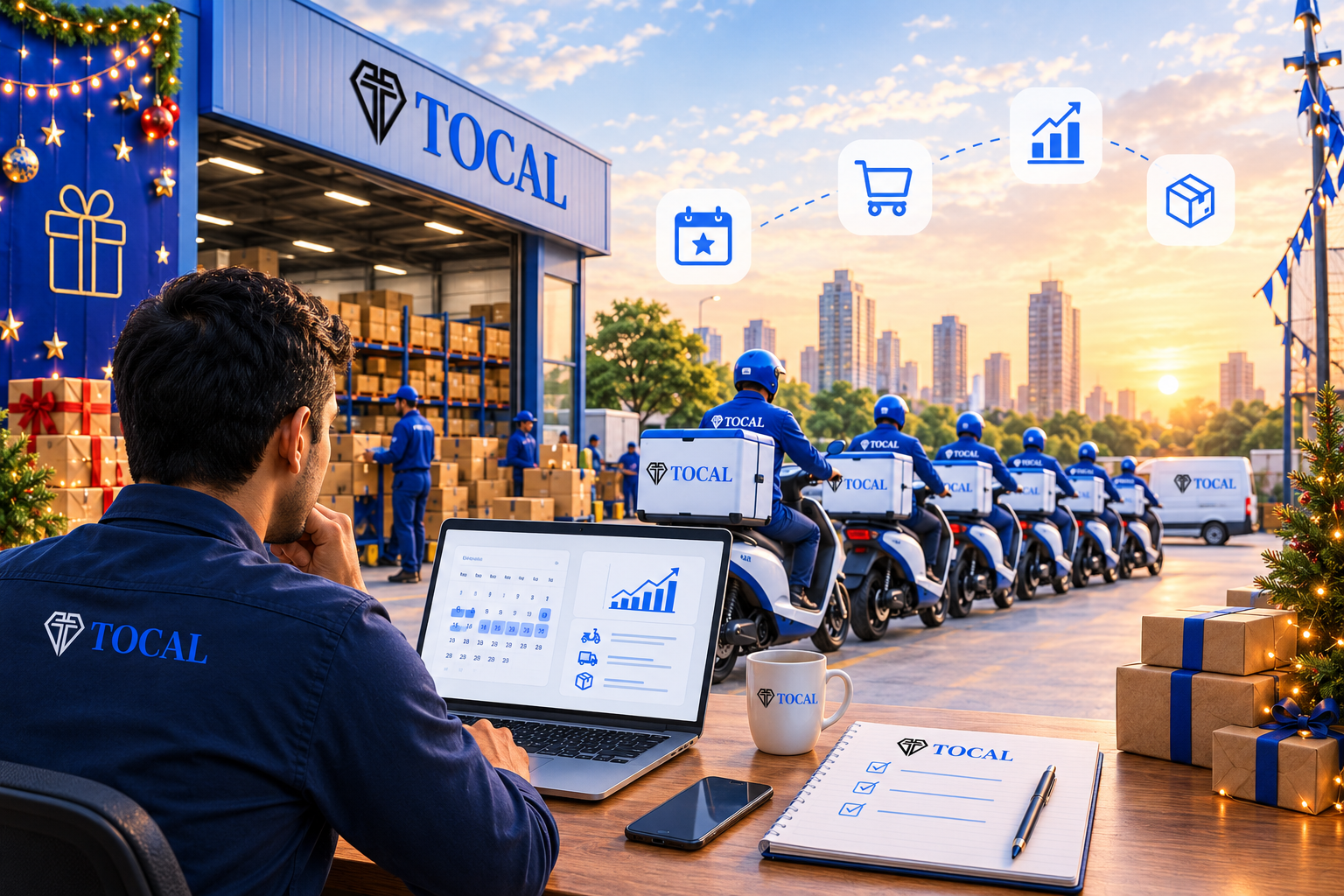
Festive sales, promotional campaigns and flash offers can double your orders overnight. Here is a practical plan for peak season delivery in Bangalore: forecast early, reserve capacity, add flexible fleet, and protect your delivery promise when it matters most.
Every year the same story repeats. A brand runs a festive sale or a big campaign, orders surge, and the delivery operation that worked fine for months starts to crack. Riders are unavailable, deliveries slip past their promised time, customers call for updates, and the sale that was supposed to build loyalty ends up in a pile of complaints.
Peak season does not have to go this way. With the right plan, peak season delivery in Bangalore can be one of the strongest moments for your brand. This guide walks through how to plan it step by step, from forecasting to fleet to day-of execution.
Why peak season breaks ordinary delivery operations
Peak demand does not just mean more orders. It changes the conditions your delivery runs under:
- Everyone peaks together, so shared rider pools run short exactly when you need them
- Order patterns turn spiky, with large volumes landing in a few hours rather than across the day
- Customer expectations rise, as people ordering for festivals and gifts expect on-time arrival
- Traffic and weather add pressure, with Bangalore's congestion and sudden rain slowing every route
- Mistakes cost more, because a missed festive delivery is often a lost customer
A delivery model built for average days will struggle on peak days unless it is planned for them.
Know your peaks: when demand spikes in Bangalore
Map the dates that matter to your business before anything else. Common peaks include:
- Festive season: the run of festivals that drives gifting, sweets, fashion, electronics and home goods
- Year-end and new year sales: shopping, gifting and party orders
- Big online sale events: marketplace and brand-led sale days
- Wedding season: clothing, gifts, decor and food
- Your own campaigns: flash sales, influencer drops, launches and discount weekends
- Weather and event spikes: monsoon days, match days and long weekends that change ordering behaviour
Write these down with expected start and end dates. This is the calendar your delivery plan will be built around.
Step 1: Forecast volumes by zone and by day
A single number like "we expect 3x orders" is not enough. Break your forecast down:
- By zone: which parts of Bangalore will generate the most orders
- By day and time slot: when the surge will actually hit, not just which week
- By order type: small parcels, bulky items, cold or fragile products, same-day versus scheduled
Use last year's numbers, your campaign targets and current growth, then add a buffer. It is much cheaper to hold a little spare capacity than to explain failed deliveries.
Step 2: Reserve capacity early
The biggest peak-season mistake is leaving fleet decisions until demand has already arrived. By then every business is hunting for riders at once.
A dedicated delivery fleet reserves riders and vehicles for your business, so capacity does not vanish when the whole city peaks. Planned capacity matched to your volumes also means you know in advance what you can promise. If you are still comparing models, read our guide on dedicated fleet vs delivery apps.
The best time to book peak capacity is before your competitors start looking for it.
Step 3: Add flexible capacity for the spike
You do not need to carry a peak-sized fleet all year. Build a base and flex on top of it:
- Base fleet: dedicated riders for your steady daily volume
- Seasonal additions: extra vehicles, with or without trained riders, for the peak weeks. EV fleet rentals work well here, since you add capacity for the period you need and scale back afterwards
- Overflow: shared delivery apps for sudden, unplanned surges or far-off pin codes
This layered approach keeps service consistent without paying for idle vehicles in quiet months.
Step 4: Move stock closer to your customers
Delivery speed is not only about riders. Distance from stock to doorstep decides how fast a promise can be kept. Before peak, consider:
- Pre-positioning high-demand SKUs in fulfilment centers near your busiest zones
- Using smaller hubs to shorten trips and make same-day delivery realistic (see our guide to micro-fulfilment centres in Bangaluru)
- Staging packed orders by zone, so riders spend time delivering rather than waiting
Step 5: Set SLAs and promise realistic windows
Peak season is not the time to over-promise. Agree clear service levels with your delivery partner:
- Target on-time delivery percentage for peak days
- Pickup-to-dispatch time at your store or warehouse
- What happens when an SLA is missed, and who you call
- Delivery windows you show customers at checkout
It is better to show a slightly longer window and beat it than to promise a short one and miss it. Customers forgive a longer estimate far more easily than a broken promise.
Step 6: Get live visibility and keep customers informed
On peak days, problems appear quickly and snowball. You need to see them early:
- Real-time tracking of riders and orders so your team can spot delays before customers do
- Proactive updates via tracking links and status messages, which cut "where is my order" calls
- A single point of contact at your delivery partner, so escalations are answered in minutes, not hours
- Zone-level reporting, so you can move capacity to where delays are building
Step 7: Plan for Bangalore-specific risks
Bangalore adds its own wrinkles to peak delivery. Plan for them rather than react:
- Traffic: keep riders in fixed zones they know, and avoid cross-city runs on the busiest corridors such as ORR and Whitefield
- Sudden rain: keep buffer capacity and rain-ready packaging, and widen delivery windows when forecasts turn
- Dense hyperlocal clusters: areas like Koramangala, HSR Layout and Indiranagar reward riders who know the lanes and landmarks
- Rider fatigue: long peak days need shift planning and enough riders so quality does not drop in the evening
Peak-season delivery planning timeline
Use this as a working schedule and adjust it to your campaign dates:
| When | What to do |
|---|---|
| 6 to 8 weeks before | Map peak dates, forecast volumes by zone, decide delivery model, talk to partners |
| 4 to 6 weeks before | Reserve base and seasonal capacity, agree SLAs, finalise fulfilment locations |
| 2 to 4 weeks before | Onboard and train riders, set up tracking and reporting, run a pilot in your busiest zone |
| 1 week before | Pre-position stock, confirm shifts, brief support teams, test customer notifications |
| During peak | Monitor live, review zone performance daily, shift capacity, escalate early |
| After peak | Review SLAs, failed deliveries and cost per order, scale capacity back, note lessons for next season |
Peak-season delivery checklist
- Peak dates and expected volumes are mapped by zone and day
- Base delivery capacity is reserved, with extra capacity lined up
- Stock is positioned close to your busiest zones
- SLAs and escalation contacts are agreed in writing
- Riders are trained on your brand, products and handling needs
- Live tracking and customer notifications are tested
- Buffer plans exist for rain, traffic and sudden spikes
- A post-peak review is scheduled
How TOCAL helps businesses prepare for peak season
TOCAL builds dedicated delivery infrastructure in Bengaluru around an EV-only fleet, with capacity planned to match your volumes. Our approach follows three steps:
- Understand: we analyse your order volumes, delivery zones and SLA requirements, including your peak calendar
- Deploy: we put the right fleet, trained delivery partners and operations team in place ahead of demand
- Manage, track and scale: we monitor performance live and scale capacity up for the spike, then back down
With 98%+ on-time delivery, 30 lakh+ green deliveries completed and 35+ brands served, TOCAL supports D2C brands, retail and FMCG, SMEs and individual sellers and enterprises and quick commerce, through hyperlocal delivery, last-mile delivery, fulfilment centers and EV fleet rentals.
Frequently asked questions
When should I start planning peak season delivery in Bangalore?
Start six to eight weeks before your first big sale or campaign. That gives you time to forecast volumes, reserve rider and vehicle capacity, set up zones and run a small trial before demand arrives.
What are peak season delivery solutions?
They are the fleet, rider, fulfilment and tracking arrangements that let a business handle sudden order spikes without missing delivery promises. This usually means reserved capacity, flexible short-term fleet additions, nearby fulfilment space and live visibility.
Can I add delivery capacity only for the festive season?
Yes. Short-term fleet rentals and planned capacity increases let you add riders and vehicles for the peak period and scale back afterwards, instead of keeping a large fleet all year.
Is a dedicated fleet better than delivery apps during peak season?
For consistent volumes, usually yes. Shared app pools tend to run short of riders when every business peaks at once, while a dedicated fleet reserves capacity for you. Many businesses use apps only as overflow.
How do I avoid delays during rain and traffic spikes in Bangalore?
Plan buffer capacity, assign riders to fixed zones they know, cluster orders by area and set realistic delivery windows. Live tracking helps your team reroute and update customers early.
Does TOCAL support peak season delivery for small businesses?
Yes. TOCAL serves D2C brands, retail and FMCG, SMEs and individual sellers, and enterprises. Capacity is planned around your volumes, zones and SLA needs.
Final thoughts
Peak season rewards the businesses that plan early and punishes the ones that improvise. Forecast by zone, reserve capacity before demand arrives, add flexible fleet for the spike, keep stock close to customers, and watch performance live.
Preparing for your next sale or campaign? Share your expected volumes, service areas and SLA needs, and TOCAL will plan peak season delivery around your business. Talk to a TOCAL Delivery Expert.