For a D2C brand, the delivery rider is the last person your customer meets. Dedicated delivery riders give you consistent on-time delivery, fewer failed orders and a better brand experience than shared rider pools. Here is the business case, with a cost framework and a Bengaluru setup guide.
Quick answer
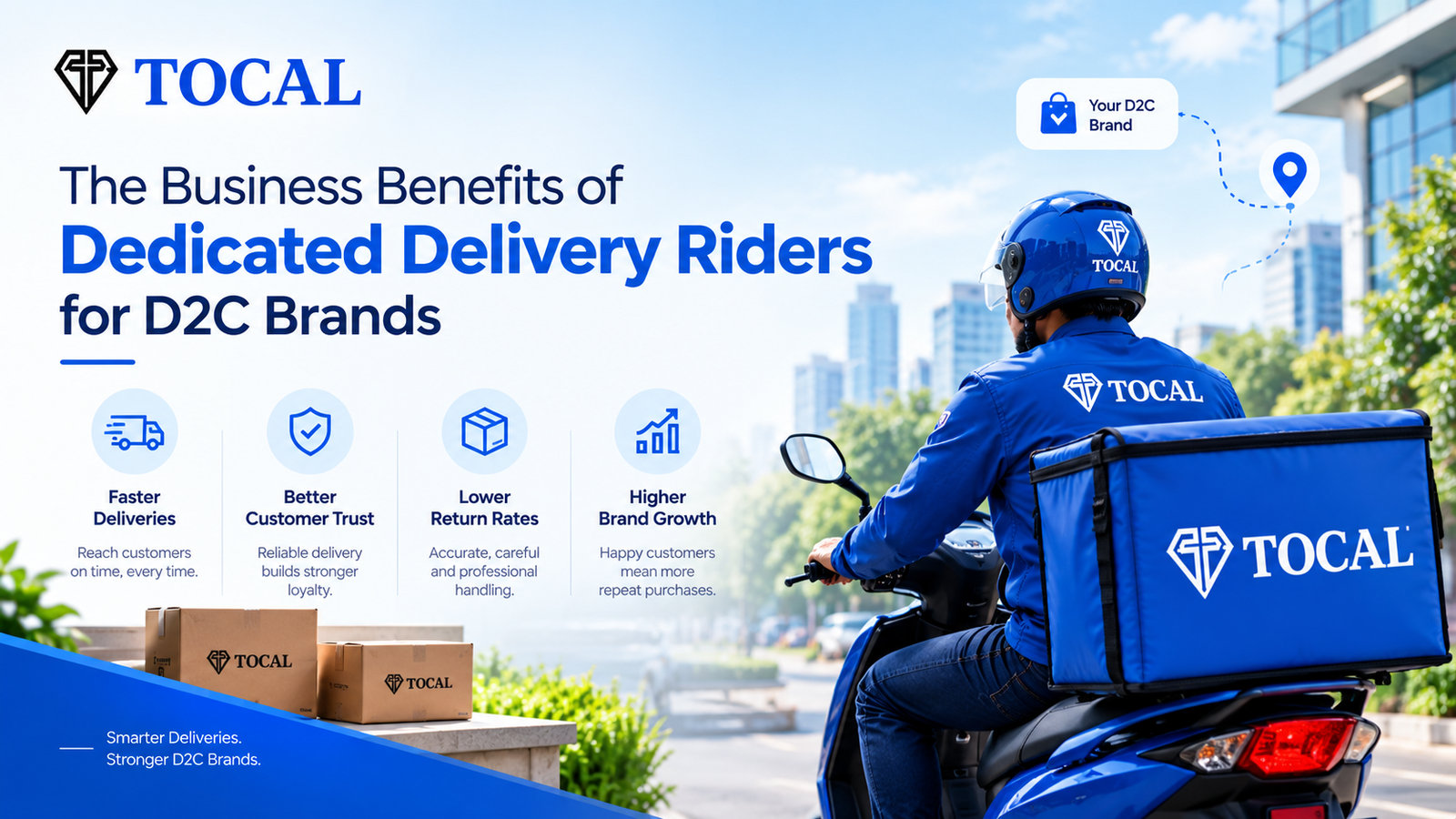
What are the business benefits of dedicated delivery riders for D2C brands? Dedicated riders work only for your brand in fixed zones, so they learn your products, pickup flow and customers. That means more consistent on-time delivery, fewer failed deliveries and returns, careful product handling, live accountability against an SLA, capacity you can count on during peaks, and a cost per delivered order that is easier to control at steady volumes.
Key takeaways
- Dedicated riders are assigned to your brand and zones, not drawn from a shared pool.
- The biggest gains are on-time delivery, fewer failed attempts and a consistent customer experience.
- Judge cost by cost per successfully delivered order, not by the per-order rate alone.
- The best setup is usually hybrid: a dedicated base fleet, flexible EV capacity for peaks and apps only as overflow.
- In Bengaluru, zone knowledge and rain-ready operations matter as much as rider count.
D2C brands spend heavily to win a customer: ads, influencers, discounts, packaging. Then the whole experience rests on a stranger on a bike who may have collected three other brands' parcels that morning. If that delivery is late, careless or rude, the customer remembers your brand, not the delivery app.
That is why more D2C brands are moving their core volumes to dedicated delivery riders. This guide explains what they are, how they differ from gig and app riders, the business benefits, how to think about cost, and how to set one up in Bengaluru.
What is a dedicated delivery rider?
A dedicated delivery rider is a trained rider assigned to your business (or a small set of accounts) who works fixed zones and shifts. Instead of accepting whichever order appears on an app, the rider handles your pickups and deliveries as part of a defined operation with a clear SLA.
A dedicated delivery fleet is the group of riders, vehicles, supervisors and tracking systems built around your volumes. Together they act like an extension of your own logistics team, without you having to hire, train or manage them yourself.
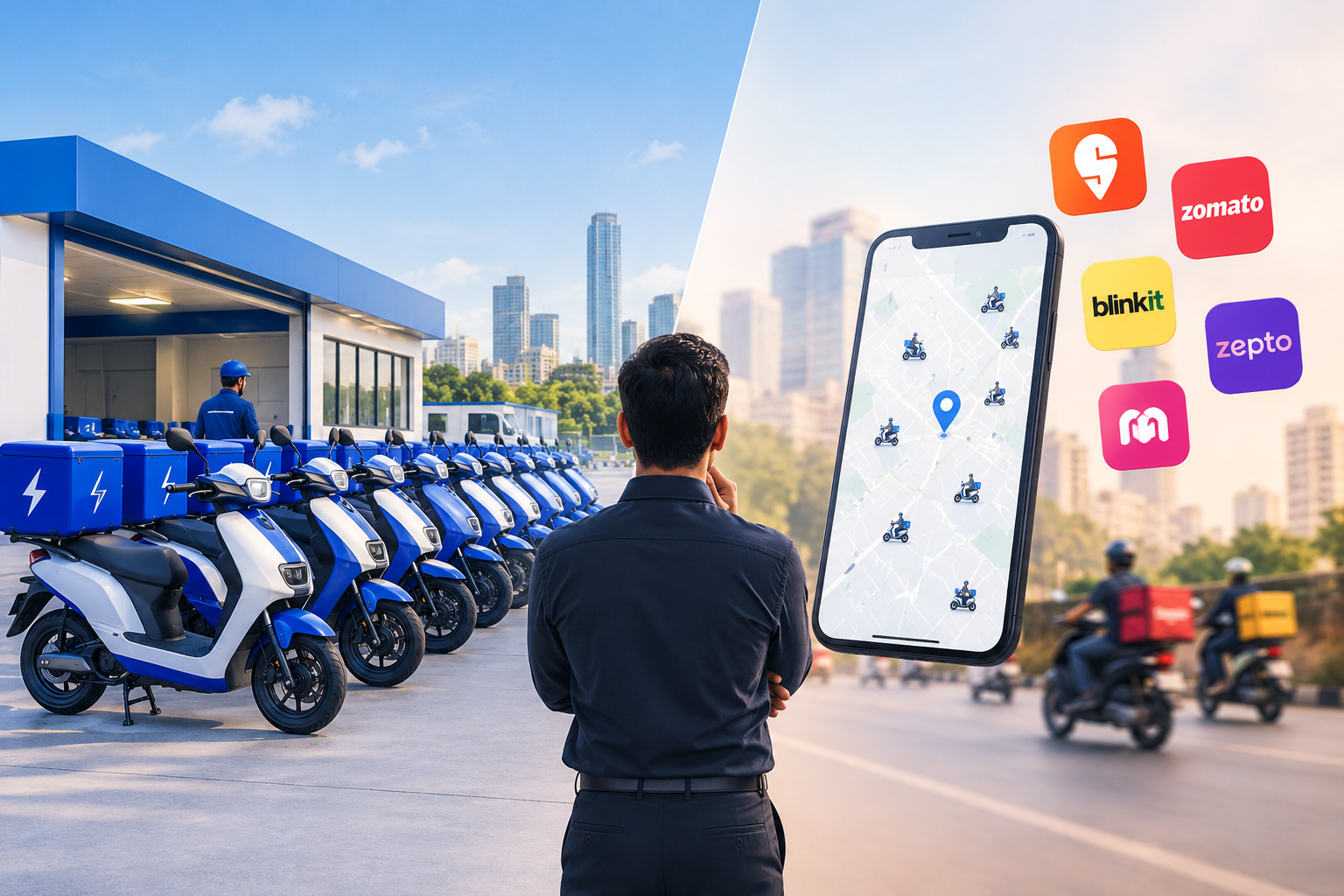
Dedicated riders vs gig and app-based riders
Both models have a place. Here is how they compare on the factors D2C brands care about most:
| Factor | Dedicated riders | Gig / app-based riders |
|---|---|---|
| Rider consistency | Same riders, same zones, same pickup routine | Different rider on most orders |
| Brand and product knowledge | Trained on your products and handling needs | Generic, no brand training |
| Accountability | SLA-backed, with a named operations contact | Platform support tickets |
| Peak-day capacity | Reserved in advance | Shared pool, can run short when everyone peaks |
| Local zone knowledge | High, built through repeat routes | Varies by rider |
| Best used for | Steady daily volumes and core zones | Overflow, rare far-off pin codes, unplanned spikes |
For a deeper comparison, read our guide on dedicated fleet vs delivery apps in Bengaluru.
7 business benefits of dedicated delivery riders for D2C brands
1. More consistent on-time delivery
When riders work the same zones every day, routes get faster and delays become rarer. Reserved capacity also means your orders do not wait for a rider to become available. Consistency, not just speed, is what lets you promise a delivery window and keep it.
2. Fewer failed deliveries and returns
Riders who know a locality understand gated communities, landmark-based addresses and the best time to find customers at home. That cuts failed attempts, wrong-address deliveries and the re-delivery cost and customer frustration that follow.
3. A stronger brand experience at the doorstep
Dedicated riders can be trained on how your brand wants to be represented: greeting, packaging care, handover and handling of fragile or premium products. For categories such as beauty, fashion, gifting, electronics and food, that final moment shapes reviews and repeat purchases.
4. Careful handling of products
Riders who deliver your products every day learn what needs upright carry, protection from rain or gentle handling. That reduces damage, complaints and refunds compared with riders seeing your parcels for the first time.
5. Accountability and live visibility
A dedicated setup comes with an SLA, a single point of contact and live tracking. Your team can see where orders are, spot delays early and send customers proactive updates, which reduces "where is my order" calls. When something goes wrong, you know who to call and who owns the fix.
6. Capacity you can plan around
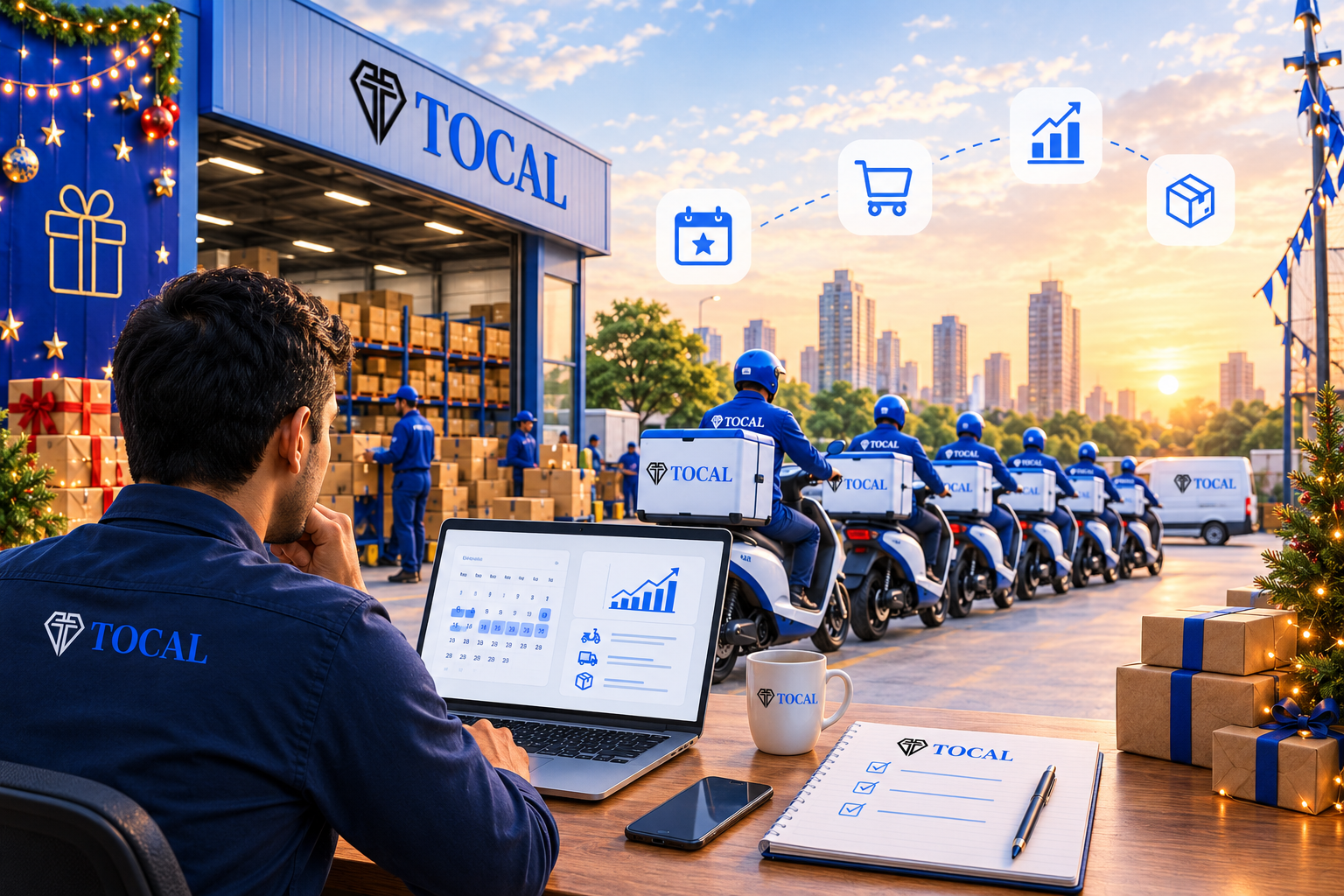
Shared pools shrink when the whole city peaks. Dedicated capacity is reserved for you, and flexible additions such as EV fleet rentals cover sales and festive weeks. Planning this ahead is covered in our guide to peak season delivery planning in Bengaluru.
7. Simpler operations as you grow
One dedicated partner means one process, one dashboard and one set of reports, instead of juggling several vendors. This is the core of scaling without extra complexity, which we cover in how to scale daily deliveries without increasing logistics complexity.
For a D2C brand, delivery is not a back-end cost. It is the last and most memorable step of the customer journey.
Are dedicated riders more expensive? How to think about cost
A per-order rate on an app can look cheaper than a dedicated fleet. But the rate alone hides costs. The number that matters is:
Cost per successfully delivered order = (delivery spend + re-delivery cost + refunds from damage or delay + support effort) ÷ orders delivered successfully.
Failed attempts, late deliveries and damaged parcels all raise that number even when the headline rate is low. Dedicated riders tend to lower the hidden costs, so at steady volumes the total can come out equal or better. At very low or highly irregular volumes, a shared model may still be cheaper, which is why a hybrid approach is common.
- Cost drivers to track: failed delivery rate, re-delivery rate, damage claims, support contacts per 1,000 orders
- Where dedicated helps most: dense zones with repeat daily volume
- Where shared helps most: scattered, low-volume or unpredictable pin codes
When do dedicated delivery riders make sense for a D2C brand?
Dedicated riders are a strong fit when most of these are true:
- You ship steadily in the same city or zones every day
- Delivery speed and reliability are part of your brand promise
- You sell products that need careful handling, such as premium, fragile, gifting or temperature-sensitive items
- You run frequent sales and need capacity you can plan around
- Your support team spends too much time on delivery complaints
If your volumes are small or scattered, start with a limited dedicated setup in your busiest zone and use apps as overflow. Add riders as volumes become predictable.
The best model: dedicated base, flexible layer, app overflow
- Dedicated base: riders for your steady daily volume in core zones
- Flexible layer: short-term vehicles and riders added for campaigns, festive peaks and growth phases
- App overflow: shared delivery apps for rare, unplanned surges and distant pin codes
This layered model keeps service consistent while cost follows demand. For fast delivery, pair it with stock placed near your customers, as explained in our guide to micro-fulfilment centres in Bengaluru.
How to set up dedicated delivery riders in 5 steps
- Map your demand: list orders by zone, day and time slot, including your peak calendar
- Define your delivery promise: decide delivery windows, on-time targets and what counts as a failed delivery
- Choose a partner and agree the SLA: cover rider count, zones, shifts, tracking, escalation and remedies for missed targets
- Train and pilot: brief riders on your products and handover standards, then run a trial in your busiest zone
- Review and scale: track on-time %, failed delivery rate, cost per delivered order and complaints weekly, then expand zones
What to ask a delivery partner before you commit
- How are riders recruited, trained and replaced when absent?
- Which Bengaluru zones do you cover well, and how do you assign riders to them?
- What on-time delivery target do you commit to, and what happens if it is missed?
- Do I get live tracking, proof of delivery and automated customer updates?
- How is cash-on-delivery collected and reconciled?
- How will you add capacity for sale days and festive peaks?
- Who is my single point of contact when something goes wrong?
Dedicated delivery riders in Bengaluru: why local zones matter
Bengaluru rewards local knowledge. Dense, fast-growing neighbourhoods such as Koramangala, HSR Layout, Indiranagar, Whitefield, Bellandur and Jayanagar each have their own lanes, landmarks and traffic patterns, and corridors like ORR slow down sharply at peak hours. Sudden rain adds another layer of delay.
Dedicated riders assigned to fixed zones learn these patterns, which shortens delivery times and cuts failed attempts. An hyperlocal delivery model, where stock sits close to the customer, makes same-day delivery realistic across the city. Our guide to the EV delivery fleet in Bengaluru explains why electric vehicles also suit these short, frequent urban trips.
How TOCAL helps D2C brands with dedicated delivery riders
TOCAL builds dedicated delivery infrastructure in Bengaluru around an EV-only fleet. Our approach follows three steps:
- Understand: we analyse your order volumes, delivery zones and SLA requirements
- Deploy: we put the right fleet, trained delivery partners and operations team in place
- Manage, track and scale: we monitor performance live and scale capacity up or down as your volumes change
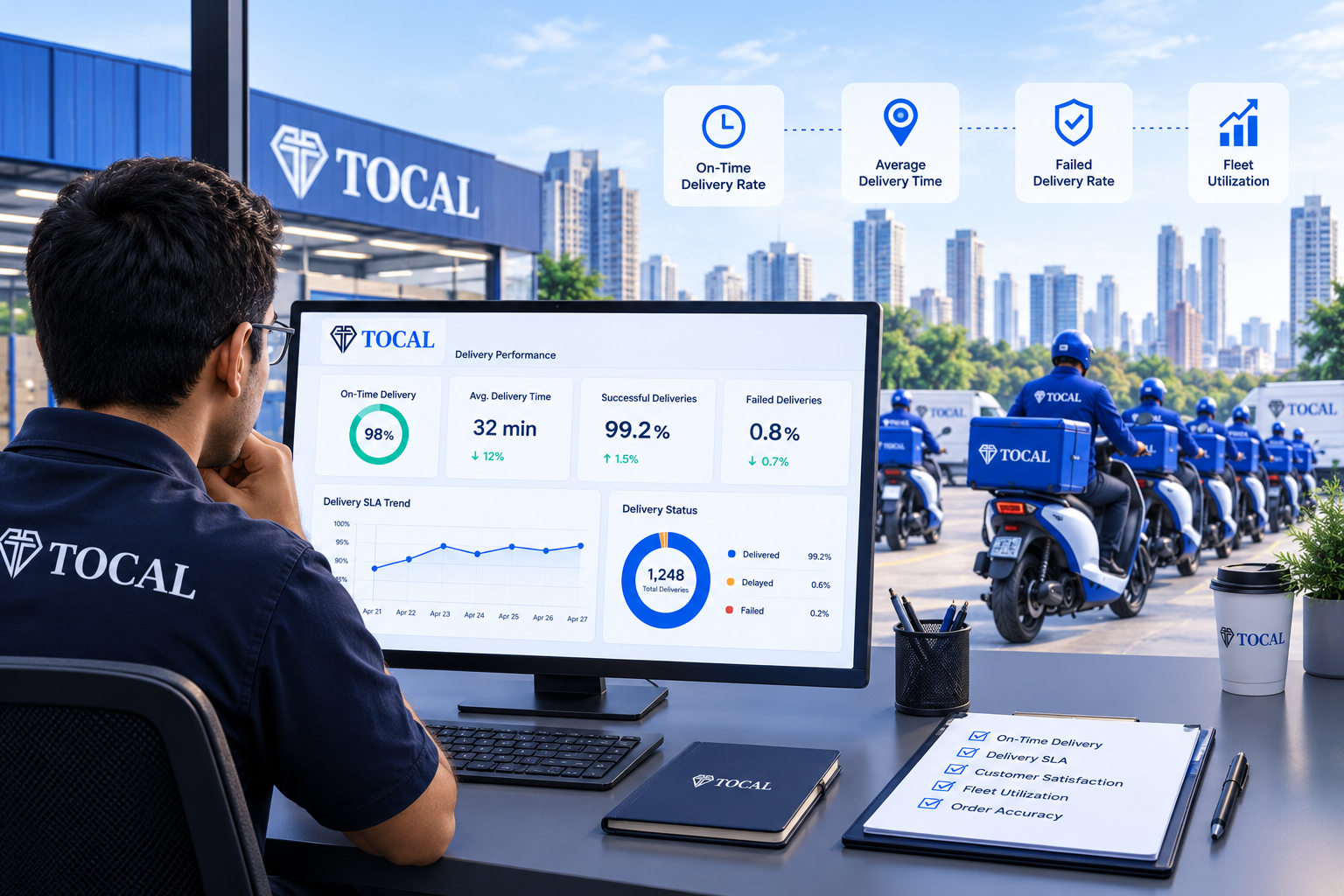
With 98%+ on-time delivery, 30 lakh+ green deliveries completed and 35+ brands served, TOCAL supports D2C brands, retail and FMCG, SMEs and individual sellers and enterprises and quick commerce, through hyperlocal delivery, last-mile delivery, fulfilment centers and EV fleet rentals.
Frequently asked questions
What is a dedicated delivery rider?
A dedicated delivery rider is a trained rider assigned to one business or a small set of accounts, working fixed zones and shifts, instead of picking orders from a shared pool of many brands. The brand gets the same faces, the same routes and clear accountability.
What are the benefits of dedicated delivery riders for D2C brands?
The main benefits are more consistent on-time delivery, fewer failed deliveries, better handling of products, a stronger brand experience, live visibility and accountability, predictable capacity during peaks, and a cost per order that is easier to control at steady volumes.
Are dedicated delivery riders better than gig delivery riders?
For brands with steady daily volumes, usually yes. Dedicated riders learn your products, pickup process and zones, and are accountable to an SLA. Gig pools are flexible but vary in quality and can run short when demand peaks. Many brands keep gig or app riders only as overflow.
Are dedicated delivery riders more expensive?
Not necessarily. Per-order pricing can look cheaper, but the real measure is cost per successfully delivered order, including failed attempts, re-deliveries, refunds and support effort. At steady volumes, dedicated riders often bring this number down.
How many orders per day do I need for a dedicated rider?
There is no fixed number. A dedicated model makes sense once your daily orders in a zone are steady enough to keep a rider productive for a full shift. Smaller brands can start with a shared dedicated fleet or a limited number of riders and add more as volumes grow.
Can a D2C brand scale dedicated riders up for festive sales?
Yes. A base of dedicated riders covers daily volume, and flexible capacity such as short-term EV fleet rentals or planned rider additions covers sales and festive peaks, then scales back afterwards.
What should I ask a delivery partner before choosing dedicated riders?
Ask about rider training, zone coverage, on-time delivery targets, SLA penalties or remedies, live tracking, cash-on-delivery handling, replacement of absent riders, peak-season capacity and a single escalation contact.
Does TOCAL provide dedicated delivery riders in Bengaluru?
Yes. TOCAL provides dedicated delivery riders on an EV-only fleet in Bengaluru for D2C brands, retail and FMCG, SMEs and individual sellers, and enterprises, with capacity planned around your volumes, zones and SLA needs.
Final thoughts
For D2C brands, the delivery rider is part of the product experience. Dedicated riders bring consistency, accountability and local knowledge that shared pools struggle to match, and a hybrid model keeps cost in check. Start by mapping demand, set a clear SLA, pilot in your busiest zone and scale from there.
Want dedicated delivery riders for your D2C brand in Bengaluru? Share your expected volumes, service areas and SLA needs, and TOCAL will plan a dedicated delivery setup around your business. Talk to a TOCAL Delivery Expert.