A delivery partner's promise is only as good as the numbers behind it. Before you sign, define the SLA metrics that decide whether your customers get their orders on time: on-time delivery, first-attempt success, turnaround time, damage rate and response time. This guide shows what to measure and how.
Quick answer
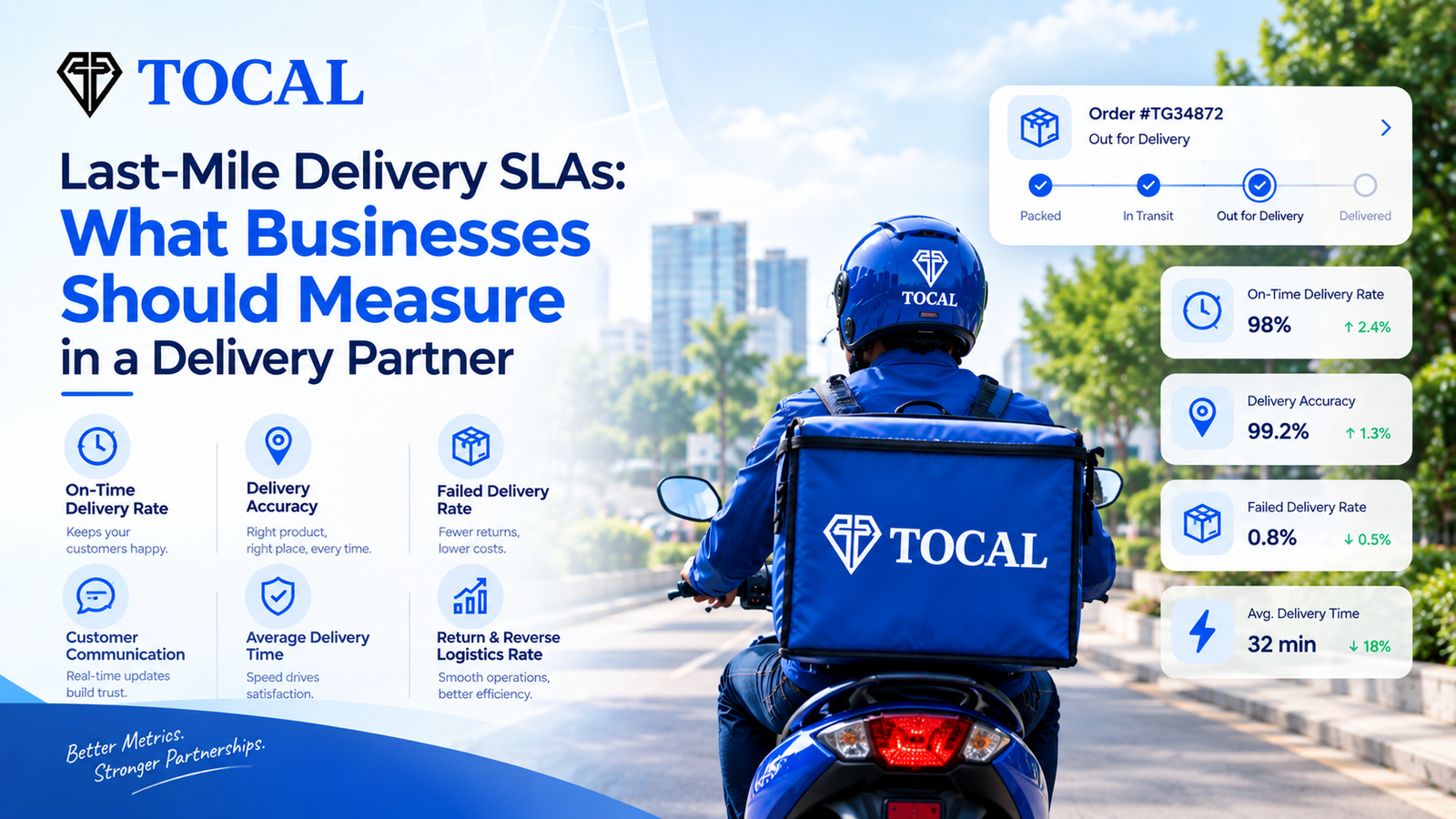
What should businesses measure in a last-mile delivery partner's SLA? At minimum: on-time delivery rate, pickup-to-dispatch time, average delivery time by zone, first-attempt delivery success, failed or returned delivery rate, damage and loss rate, tracking and ETA accuracy, support and escalation response time, cash-on-delivery remittance accuracy, and peak-day performance. Each should have a clear definition, a target, a reporting schedule and a remedy if missed.
Key takeaways
- An SLA is only useful if every metric has a clear definition, a target and a way to be measured.
- Measure by zone and time slot, not just one overall average.
- Define when the delivery clock starts and stops before you compare partners.
- Insist on reporting, remedies for misses and a named escalation contact.
- Compare partners on reported performance, not on headline claims.
Most delivery partners say they are reliable. Few explain what reliable means in numbers. Without a clear SLA, a "late" delivery can be argued either way, a bad week becomes a debate and your customers pay the price.
This guide explains what a last-mile delivery SLA is, the metrics that matter, what a good agreement includes, and the red flags to watch for when you choose a delivery partner in Bengaluru.
What is a last-mile delivery SLA?
A last-mile delivery SLA (service level agreement) is a written commitment between a business and its delivery partner that defines measurable service targets for the final leg of delivery, from your store or warehouse to the customer's doorstep.
A good SLA answers four questions for every metric: what is measured, how it is calculated, what the target is, and what happens when the target is missed.
Why SLAs matter more than price alone
A low per-order rate can hide high costs: failed attempts, re-deliveries, refunds for late or damaged orders and hours of support effort. An SLA turns those hidden costs into visible, accountable numbers. It also gives you a fair basis to compare partners on what they actually deliver, not what they claim.
10 SLA metrics to measure in a last-mile delivery partner
Use this table as a starting scorecard. Targets should be set with your partner based on your order type, zones and delivery windows.
| Metric | What it tells you | How to calculate it |
|---|---|---|
| 1. On-time delivery rate | How often customers get orders within the promised window | Orders delivered within window ÷ total orders delivered × 100 |
| 2. Pickup-to-dispatch time | How quickly riders collect and leave once an order is ready | Time from order ready to rider departure |
| 3. Average delivery time by zone | Where delivery is fast and where it slips | Average pickup-to-delivery time per zone and time slot |
| 4. First-attempt delivery success | How many orders are delivered without a second try | Delivered on first attempt ÷ total attempted × 100 |
| 5. Failed or returned delivery rate | How many orders fail or come back, and why | Failed or returned orders ÷ total dispatched × 100 |
| 6. Damage and loss rate | How safely products are handled | Damaged or lost orders ÷ total delivered × 100 |
| 7. Tracking and ETA accuracy | How reliable status updates and arrival estimates are | Orders arriving within the shown ETA window ÷ total orders |
| 8. Support and escalation response time | How fast issues get a response and a fix | Time from issue raised to first response and to resolution |
| 9. COD remittance accuracy and timing | How reliably cash collected is reported and settled | Matched COD amounts ÷ total COD collected; days to settle |
| 10. Peak-day performance | Whether service holds during sales and festive spikes | Metrics 1 to 7 measured on peak days against normal days |
How to define "on-time" so there are no arguments
On-time delivery is the headline SLA metric, and the one most often disputed. Settle these points in writing:
- When the clock starts: order placed, order ready for pickup or rider assigned
- When the clock stops: doorstep handover, or a recorded failed attempt with a valid reason
- The promised window: the delivery window you show customers at checkout, such as same-day, within a time slot or scheduled
- What is excluded: customer unavailable, wrong address given or other causes outside the partner's control, each with proof
- How it is reported: overall, by zone and by time slot, from timestamped data
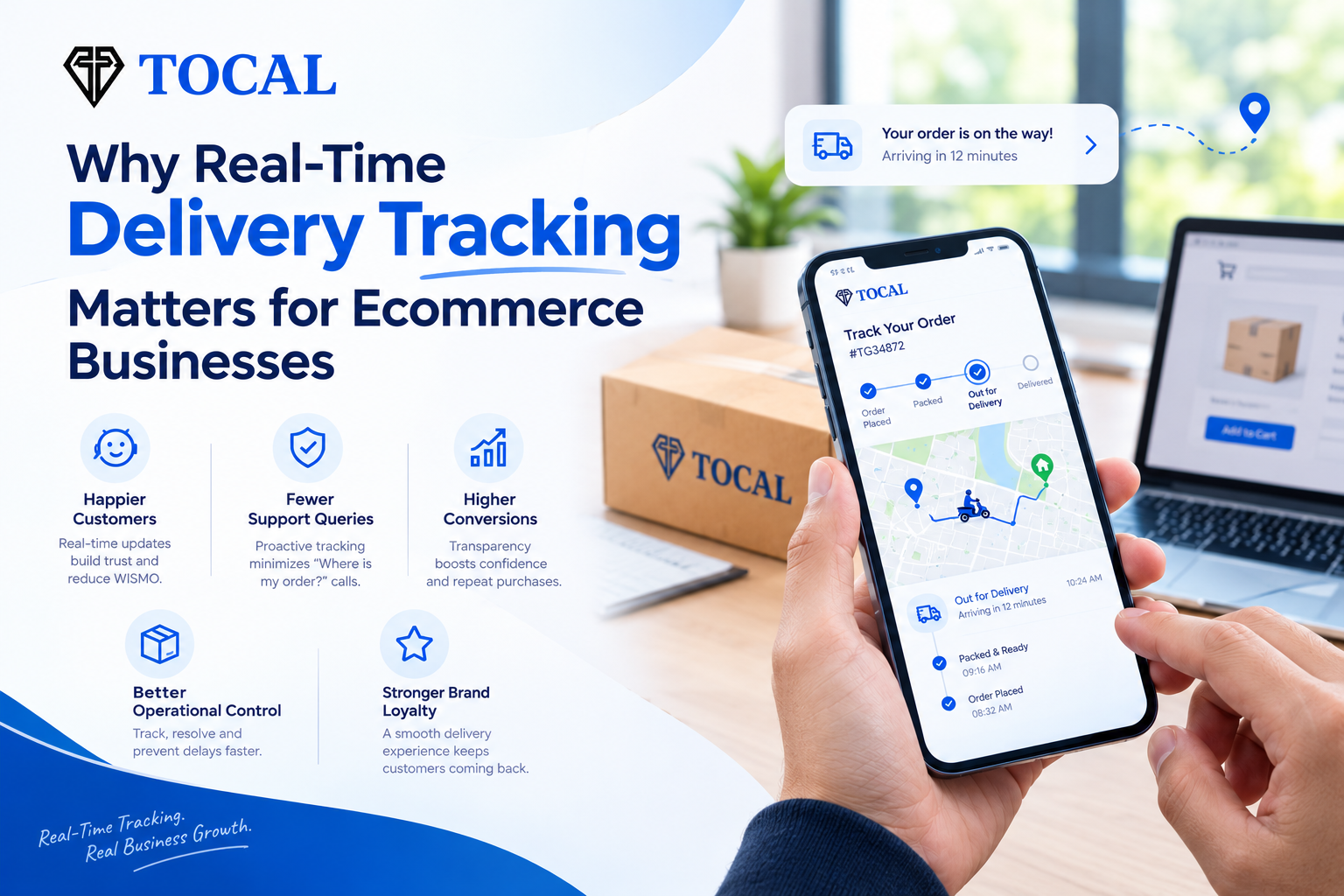
This is where live tracking helps, because timestamps replace guesswork. See why in our guide to real-time delivery tracking for ecommerce.
What should a good delivery SLA include?
- Scope: services covered, zones, order types and operating hours
- Metrics and targets: each metric defined, with a target and measurement method
- Reporting: what you receive, how often and in what format
- Remedies: service credits, corrective action plans or exit rights after repeated misses
- Exclusions: a short, specific list, such as verified customer unavailability, not a catch-all
- Peak commitments: how capacity is reserved for sale days and festive periods
- Escalation: a named contact and clear response times
- Review cadence: regular reviews, and a process to update targets as volumes change
If a target cannot be measured, reported and acted on, it is not an SLA. It is a hope.
Red flags in a delivery partner's SLA
- Vague promises such as "fast and reliable" with no numbers
- No measurement method, so performance cannot be verified
- No regular reporting, or reports only on request
- No remedies when targets are missed
- Broad exclusions that can excuse almost any delay
- No peak-day commitment, leaving you exposed exactly when demand surges
- No single escalation contact, only a general support line
Which SLA metrics matter most for your business type?
| Business type | Metrics to prioritise | Why |
|---|---|---|
| D2C brands | On-time %, first-attempt success, damage rate, ETA accuracy | Delivery is part of the brand experience and drives repeat purchases |
| Retail and FMCG | Pickup-to-dispatch time, delivery time by zone, peak-day performance | High volumes and tight replenishment windows |
| SMEs and individual sellers | On-time %, COD remittance, escalation response | Small teams need reliability and quick problem resolution |
| Enterprises and quick commerce | Average delivery time, dispatch speed, capacity commitments | Speed and consistency at scale |
SLAs in Bengaluru: set targets that fit the city
Bengaluru conditions affect how SLAs should be written. Traffic on corridors such as ORR and around Whitefield, sudden rain, and dense neighbourhoods like Koramangala, HSR Layout and Indiranagar mean performance can vary sharply by zone and hour.
- Measure by zone and time slot, not just city-wide
- Agree realistic delivery windows and how rain or severe disruption is handled, with clear evidence rules
- Prefer partners that use fixed zones and dedicated riders, because local knowledge improves both speed and first-attempt success (see benefits of dedicated delivery riders for D2C brands)
How to review SLA performance in practice
- Build a one-page scorecard with your top five to seven metrics
- Review weekly with your partner, looking at zones and time slots that missed target
- Check daily on peak days and escalate early, using the plan in our peak season delivery guide
- Hold a deeper review monthly or quarterly to adjust targets, zones and capacity
- Act on the data: fix root causes such as addresses, packing delays or rider coverage, instead of only raising penalties
Questions to ask a delivery partner before signing
- What on-time delivery rate do you report today, and for which zones and period?
- How do you measure it, and can I see timestamped data?
- What are your first-attempt success and damage rates?
- What happens when you miss the SLA, and who do I call?
- How will you add capacity for sale days and festive peaks?
- How are riders trained, assigned to zones and replaced when absent?
- How is COD collected, reported and settled?
If you are still choosing between models, compare them in our guide to dedicated fleet vs delivery apps.
How TOCAL helps businesses with SLA-backed last-mile delivery
TOCAL builds dedicated delivery infrastructure in Bengaluru around an EV-only fleet, with capacity planned around your volumes, zones and SLA needs. Our approach follows three steps:
- Understand: we analyse your order volumes, delivery zones and SLA requirements
- Deploy: we put the right fleet, trained delivery partners and operations team in place
- Manage, track and scale: we monitor performance live and scale capacity up or down as your volumes change
With 98%+ on-time delivery, 30 lakh+ green deliveries completed and 35+ brands served, TOCAL supports D2C brands, retail and FMCG, SMEs and individual sellers and enterprises and quick commerce, through hyperlocal delivery, last-mile delivery, fulfilment centers and EV fleet rentals.
Frequently asked questions
What is a last-mile delivery SLA?
A last-mile delivery SLA (service level agreement) is a written commitment between a business and its delivery partner that defines measurable service targets, such as on-time delivery percentage, pickup and delivery timelines, failure and damage limits, reporting and what happens when targets are missed.
What metrics should be in a delivery SLA?
Core metrics include on-time delivery rate, pickup-to-dispatch time, average delivery time by zone, first-attempt delivery success, failed or returned delivery rate, damage and loss rate, tracking and status accuracy, support and escalation response time, cash-on-delivery remittance accuracy and peak-day performance.
How is on-time delivery rate calculated?
On-time delivery rate is the number of orders delivered within the promised window divided by the total number of orders delivered in the same period, multiplied by 100. Your SLA should state when the clock starts, when it stops and which orders are excluded.
What is a good on-time delivery rate for last-mile delivery?
There is no single standard, because it depends on delivery windows, city conditions and order type. Set a target your customers can rely on, measure it by zone and time slot, and compare partners on actual reported performance rather than headline claims.
What should happen if a delivery partner misses the SLA?
The SLA should define remedies in advance, such as service credits, corrective action plans, extra capacity or the right to review or exit the contract after repeated misses. It should also explain how issues are escalated and resolved.
How often should I review delivery SLA performance?
Review a short scorecard weekly for fast-moving operations and hold a deeper review monthly or quarterly. During sale and festive peaks, check performance daily so problems can be fixed while they still affect only a few orders.
What are red flags in a delivery partner's SLA?
Common red flags are vague or missing targets, no defined measurement method, no reporting, no remedies for misses, broad exclusions that excuse most delays, no peak-day capacity commitment and no named escalation contact.
Does TOCAL offer SLA-backed last-mile delivery in Bengaluru?
Yes. TOCAL provides last-mile and hyperlocal delivery in Bengaluru with an EV-only fleet, planning capacity around each business's volumes, zones and SLA requirements, and monitoring performance live.
Final thoughts
The right delivery partner is the one that can show you its numbers, agree to measure them the same way you do and fix problems when they appear. Define your metrics, set clear targets by zone, insist on reporting and remedies, and review performance on a regular rhythm.
Looking for a last-mile delivery partner with clear SLAs in Bengaluru? Share your expected volumes, service areas and SLA needs, and TOCAL will plan a delivery setup around your business. Talk to a TOCAL Delivery Expert.