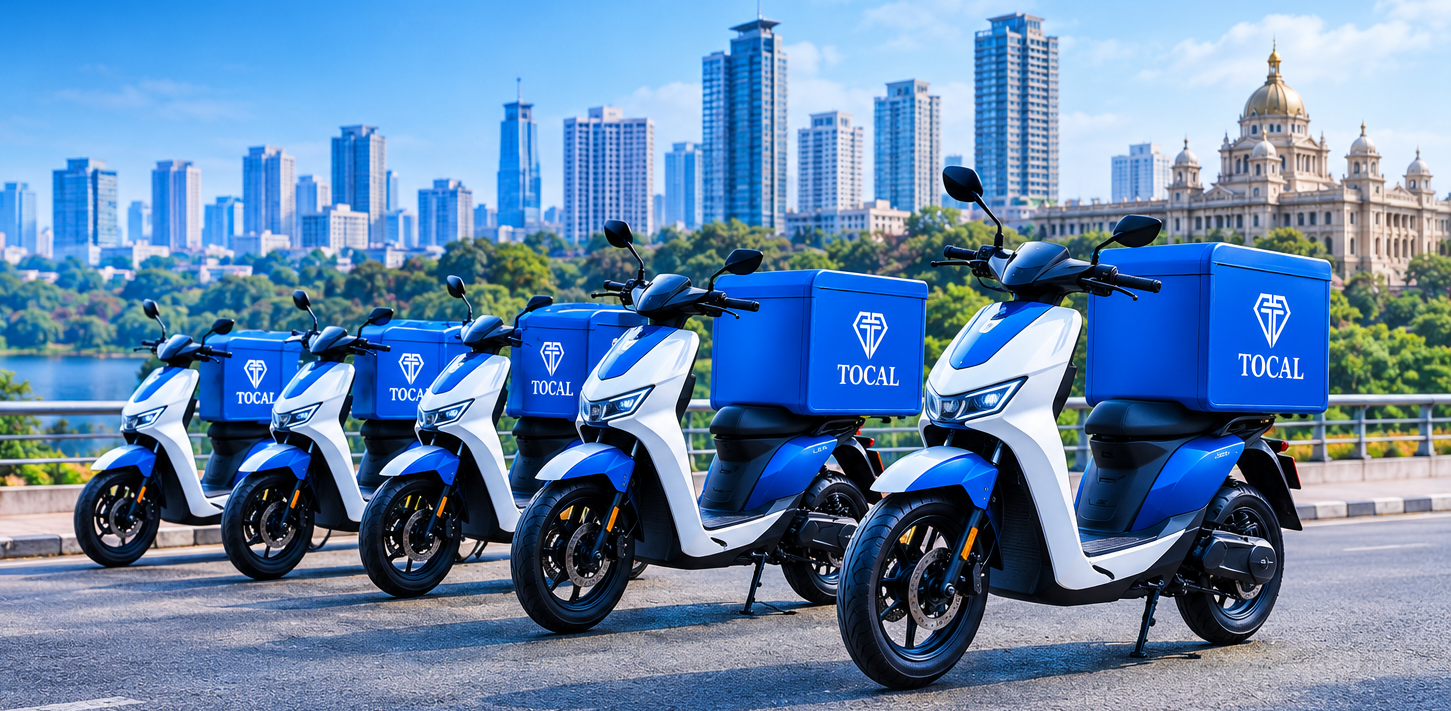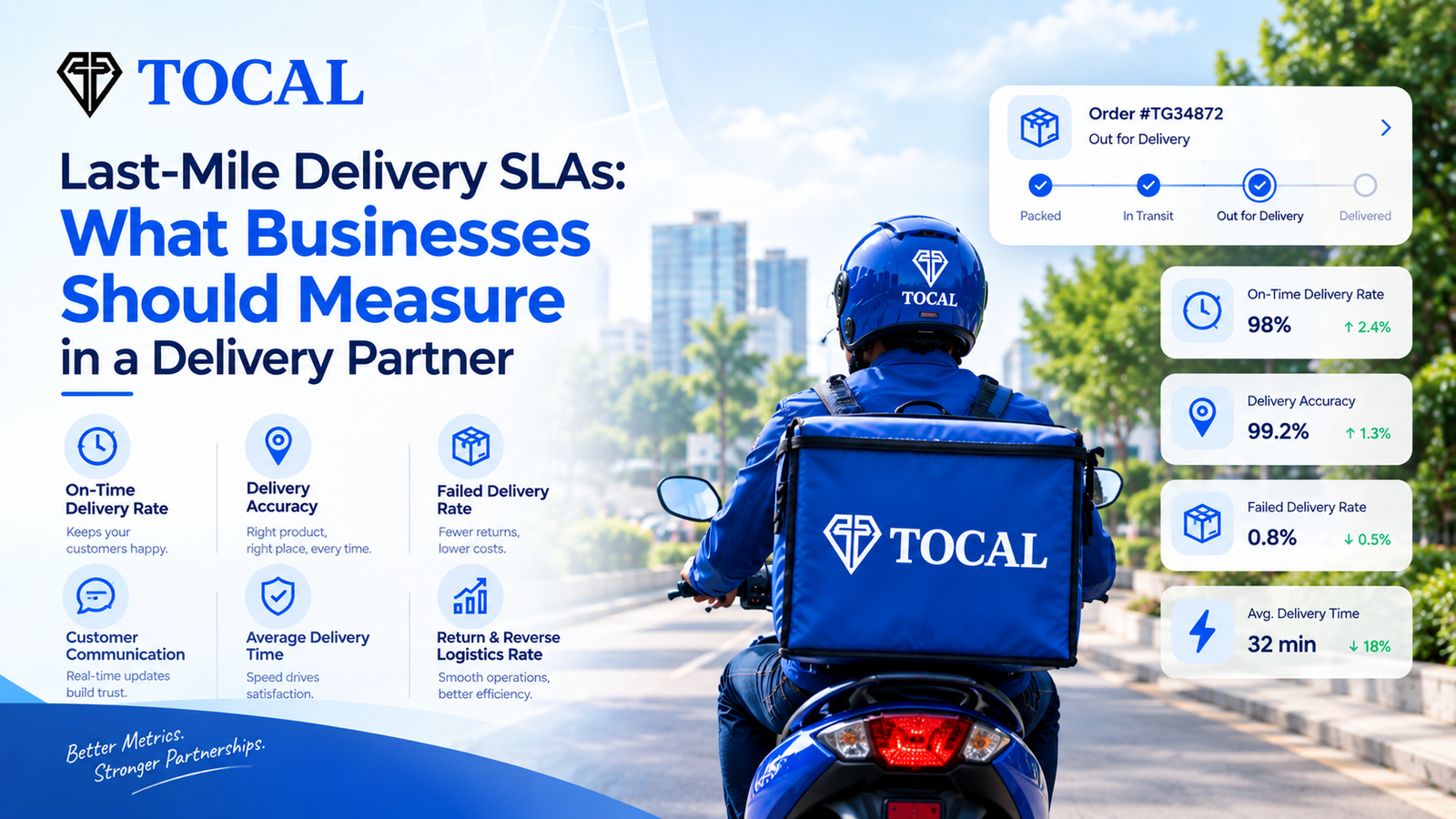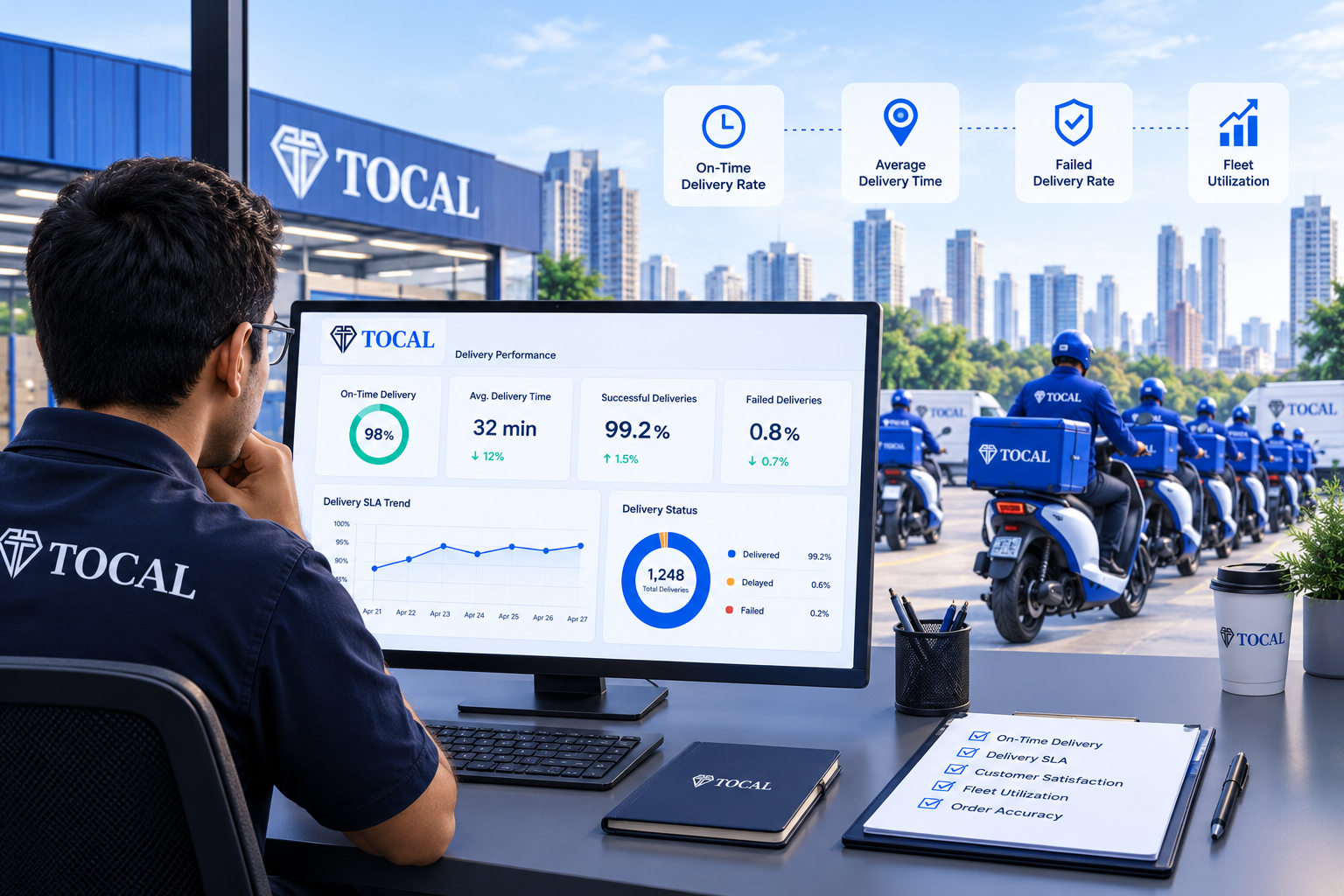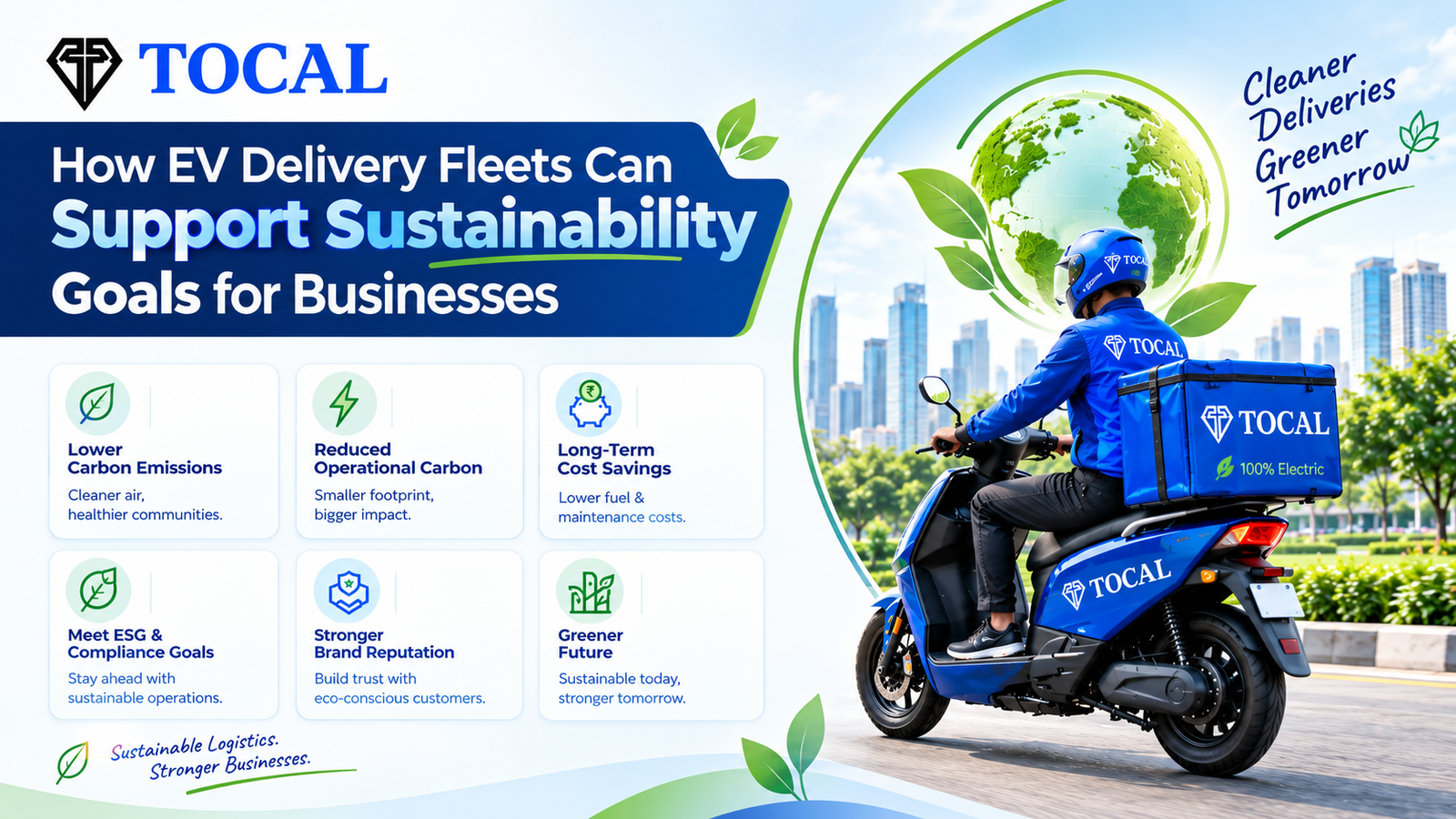
Delivery is one of the most visible parts of a brand's footprint, and one of the easiest to change. An EV delivery fleet removes tailpipe emissions from last-mile trips, supports Scope 3 reporting and strengthens your green promise. Here is how it works, what it does and does not solve, and how to start in Bengaluru.
Quick answer
How can EV delivery fleets support sustainability goals for businesses? They remove tailpipe emissions from last-mile deliveries, help reduce and report transport-related Scope 3 emissions, improve air quality and lower noise in dense neighbourhoods, and give brands a credible green delivery promise. The best results come from pairing EVs with efficient zones and routes, so fewer kilometres are driven in the first place.
Key takeaways
- Outsourced deliveries usually count as Scope 3 emissions, so your delivery partner's fleet shapes your footprint.
- EVs have no tailpipe emissions; the full footprint also depends on the electricity source and battery.
- Efficient zones, clustered orders and dedicated riders cut distance, which multiplies the benefit.
- Renting or using an EV-only partner lets you go green without heavy upfront investment.
- Ask for documented delivery and distance data so you can report impact credibly.
More customers, investors and enterprise buyers now ask a simple question: how green is your supply chain? For product brands, the answer often comes down to the last mile, the short, frequent trips that carry orders from a store or warehouse to the doorstep.
This guide explains how EV delivery fleets support sustainability goals, what they genuinely deliver, where the limits are, and how to switch without disrupting your operation.
Why last-mile delivery matters for sustainability
Last-mile delivery involves many short trips, often in dense cities with stop-start traffic. That pattern is fuel-intensive per parcel and puts emissions and noise right where people live.
For most businesses, deliveries handled by a logistics partner are counted as Scope 3 emissions, which are indirect emissions in your value chain. They sit outside your own operations but inside your responsibility to report, and they are increasingly asked for by large customers, investors and in sustainability reporting frameworks. Choosing a lower-emission delivery fleet is one of the most direct ways to act on them.
What is an EV delivery fleet?
An EV delivery fleet is a group of electric vehicles, typically electric two-wheelers and light electric vehicles, used to carry out deliveries, along with the charging, maintenance, riders and tracking that keep them running. Businesses can own one, rent one, or hand deliveries to a partner that runs an EV fleet for them.
7 ways EV delivery fleets support sustainability goals
1. They remove tailpipe emissions from delivery trips
Electric vehicles produce no tailpipe emissions. Replacing petrol vehicles on short urban routes takes exhaust directly out of the neighbourhoods where deliveries happen.
2. They help reduce and report Scope 3 transport emissions
If your deliveries run on EVs, you have a stronger story and a measurable basis to report lower transport emissions. Consistent data on EV deliveries and distance makes that reporting easier to back up.
3. They improve air quality and reduce noise
Fewer combustion engines on the road means cleaner air and quieter streets in dense residential and commercial areas, benefits that customers and communities notice.
4. They make your green promise credible to customers
Shoppers increasingly prefer brands that act on sustainability. "Delivered by an electric fleet" is concrete and easy to understand, unlike vague green claims. It also fits naturally on tracking pages, packaging and product pages.
5. They help you meet enterprise and partner expectations
Larger retailers, marketplaces and corporate customers often ask suppliers about environmental practices. An EV delivery fleet helps you answer those questions with evidence rather than intentions.
6. They reduce exposure to fuel price swings
Electric vehicles run on electricity rather than petrol, which can make running costs easier to predict. Costs still depend on charging setup, vehicle utilisation and maintenance, so plan these with your partner.
7. They work best with efficient operations
The cleanest kilometre is the one you never drive. Pair EVs with fixed zones, clustered orders and stock placed close to customers, and you cut distance as well as emissions per kilometre. See our guides on scaling deliveries without extra complexity and micro-fulfilment centres in Bengaluru.
A green delivery promise is strongest when it is measurable: how many deliveries, how many kilometres and what method you use to count them.
An honest view: what EVs do and do not solve
Credible sustainability claims are specific. Keep these points in mind:
- Tailpipe is not the whole footprint. The overall impact also depends on how the electricity is generated and how vehicles and batteries are made and recycled
- Distance still matters. An EV on a badly planned route wastes energy; zoning and clustering matter just as much
- Packaging and returns count too. A green fleet works best alongside right-sized packaging and fewer failed or returned deliveries
- Claims need evidence. Avoid vague wording; use documented delivery and distance data
EV fleet vs petrol fleet for last-mile delivery
| Factor | EV delivery fleet | Petrol delivery fleet |
|---|---|---|
| Tailpipe emissions | None | Yes, on every trip |
| Noise in neighbourhoods | Low | Higher |
| Energy source | Electricity; footprint depends on the grid | Petrol |
| Best suited for | Short, frequent urban trips in defined zones | Longer or less predictable routes |
| Operational needs | Charging planning and battery care | Fuel supply and engine maintenance |
| Sustainability reporting | Strong story for Scope 3 transport emissions | Higher transport emissions to report |
How to measure the sustainability impact of your delivery fleet
Track a small set of numbers and ask your delivery partner to supply them consistently:
- Number and share of deliveries completed by EVs
- Distance travelled by EVs in the reporting period
- Estimated emissions avoided, calculated as distance multiplied by the difference between the baseline vehicle's emission factor and the EV's electricity-based factor, using recognised emission factors
- Failed and returned delivery rate, since every repeat trip adds distance
- Orders per trip, a sign of how well orders are clustered
Always state your method and baseline so the numbers hold up to scrutiny.
Own, rent or outsource: which EV fleet model fits?
| Model | What it means | Best for |
|---|---|---|
| Own the fleet | You buy vehicles and run charging, maintenance and riders | Large, stable operations with in-house fleet capability |
| Rent EVs | You rent vehicles for a period and manage riders yourself | Brands with their own rider teams that want flexibility |
| Outsource to an EV-only partner | The partner supplies vehicles, trained riders, tracking and operations | Growing D2C, retail, SME and enterprise brands that want results without managing a fleet |
If you want flexible capacity for campaigns or festive peaks, read about EV fleet rentals and our peak season delivery planning guide.
How to transition to an EV delivery fleet in 5 steps
- Baseline your current deliveries: volumes, zones, average distance and the vehicle types in use today
- Set a clear goal: for example, a share of deliveries by EV in a chosen set of zones by a target date
- Pick a model: own, rent or outsource, based on volumes and your appetite for fleet management
- Pilot in one zone: test range, charging routines, rider adoption and SLA performance
- Measure, report and expand: track the metrics above, publish your method and widen coverage
Common challenges and how to handle them
- Charging access: plan charging at hubs or fulfilment points, or let your partner manage it
- Range per shift: design zones and order clusters so riders stay within comfortable range
- Rider adoption: provide training and consistent vehicles through dedicated delivery riders
- Maintenance: use a partner with scheduled servicing and replacement vehicles
- Peak-day capacity: reserve extra vehicles and riders ahead of sales and festive weeks
- Service levels: keep EV deliveries accountable with a clear SLA, as explained in our guide to last-mile delivery SLAs
Why EV delivery fleets suit Bengaluru
Bengaluru deliveries are typically short, frequent and stop-start, with dense demand in areas such as Koramangala, HSR Layout, Indiranagar and Whitefield. That pattern fits electric vehicles well. Fixed zones keep trips short, clustered orders reduce distance, and hubs close to customers make charging schedules easier to plan.
A cleaner fleet also helps in neighbourhoods where residents feel traffic fumes and noise most. For a deeper look, read our guide to the EV delivery fleet in Bengaluru.
How TOCAL helps businesses go green with EV delivery
TOCAL runs an EV-only delivery fleet in Bengaluru, so every delivery we complete supports your sustainability goals. Our approach follows three steps:
- Understand: we analyse your order volumes, delivery zones and SLA requirements
- Deploy: we put the right EV fleet, trained delivery partners and operations team in place
- Manage, track and scale: we monitor performance live and scale capacity up or down as your volumes change
With 98%+ on-time delivery, 30 lakh+ green deliveries completed and 35+ brands served, TOCAL supports D2C brands, retail and FMCG, SMEs and individual sellers and enterprises and quick commerce, through hyperlocal delivery, last-mile delivery, fulfilment centers and EV fleet rentals.
Frequently asked questions
How do EV delivery fleets support sustainability goals?
EV delivery fleets remove tailpipe emissions from last-mile trips, help businesses reduce and report transport-related Scope 3 emissions, improve air quality and cut noise in dense neighbourhoods, and support a credible green promise to customers and partners.
Are electric delivery vehicles really better for the environment?
In city delivery, usually yes. Electric vehicles have no tailpipe emissions, and their overall footprint depends on how the electricity is generated and how the battery is made. Combining EVs with efficient routing and zones gives the strongest result because fewer kilometres are driven.
What are Scope 3 emissions in delivery?
Scope 3 emissions are indirect emissions in a company's value chain. Deliveries carried out by a logistics partner usually fall under Scope 3, so choosing a lower-emission delivery fleet can reduce the footprint a business reports for transport and distribution.
How can a business measure the emissions saved by an EV delivery fleet?
Track the number of deliveries and kilometres completed by EVs, then estimate emissions avoided by comparing against the baseline vehicle type using recognised emission factors. Ask your delivery partner for consistent, documented data and a clear methodology.
Is it cheaper to rent or buy an EV delivery fleet?
It depends on volume and capability. Buying needs upfront capital plus charging, maintenance and rider management. Renting or working with an EV-only delivery partner avoids heavy upfront investment and lets you scale capacity up or down, which suits many growing brands.
What challenges come with switching to an EV delivery fleet?
Common challenges are charging access, vehicle range per shift, rider training, maintenance planning and handling peak-day capacity. Working with a partner that already runs an EV fleet removes most of these from your own operation.
Do EV delivery fleets suit Bengaluru?
Yes. Bengaluru deliveries are typically short, frequent, stop-start trips in dense zones, which suits electric vehicles well. Fixed zones and clustered orders reduce distance travelled and make charging schedules easier to plan.
Does TOCAL run an EV-only delivery fleet?
Yes. TOCAL provides last-mile and hyperlocal delivery in Bengaluru with an EV-only fleet and offers EV fleet rentals, with 30 lakh+ green deliveries completed for D2C brands, retail and FMCG, SMEs and individual sellers, and enterprises.
Final thoughts
An EV delivery fleet is one of the clearest, most measurable steps a product business can take toward its sustainability goals. Start by baselining your deliveries, pilot in a high-density zone, measure what you avoid and report it with a clear method. Done well, it cuts emissions, strengthens your brand and keeps service levels high.
Want to make your deliveries greener in Bengaluru? Share your expected volumes, service areas and SLA needs, and TOCAL will plan an EV delivery setup around your business. Talk to a TOCAL Delivery Expert.