Every growing business reaches the same decision: reserve a fixed set of riders for reliability, or add fleet only when demand calls for it? Each has a real cost and a real risk. This guide compares the two, gives you a simple framework to choose, and shows why most brands end up with a hybrid.
Quick answer
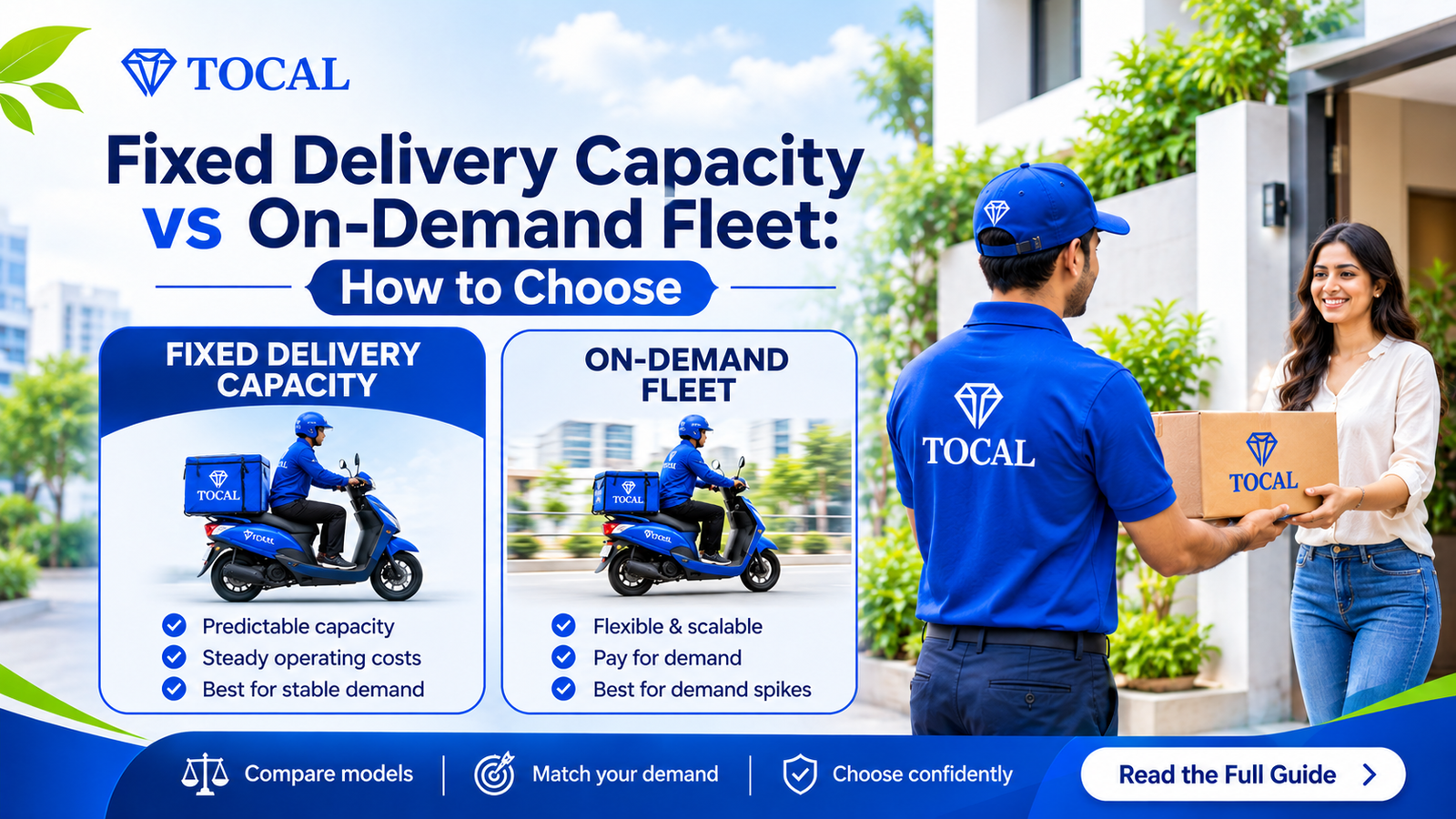
Should you choose fixed delivery capacity or on-demand fleet support? Choose fixed capacity for steady daily volumes where consistency, trained riders and SLA accountability matter. Choose on-demand support for low, irregular or unpredictable volumes and one-off spikes. Most growing brands do best with a hybrid: a fixed base for everyday demand, a flexible layer such as short-term EV fleet rentals for planned peaks, and on-demand apps only as overflow.
Key takeaways
- Fixed capacity buys reliability and consistency; on-demand buys flexibility.
- The deciding factors are volume predictability, peak size, service expectations and utilisation.
- Compare cost per successfully delivered order, not just the headline rate.
- Size your fixed base to the volume you hit on most days, not your busiest day.
- A hybrid model usually gives the best balance of cost and service.
Delivery demand is rarely flat. Some weeks are steady, some days spike, and some campaigns bring a rush nobody forecast. How you cover that demand, with riders on reserve or riders on call, shapes your costs, your delivery quality and your customers' experience.
This guide explains fixed delivery capacity and on-demand fleet support, how they compare, when each fits and how to combine them without adding complexity.
What is fixed delivery capacity?
Fixed delivery capacity means a set number of riders and vehicles reserved for your business under an agreement. They are available to you on agreed days and shifts, usually assigned to your zones and trained on your products. This is what a dedicated delivery fleet provides.
You commit to capacity in advance. In return you get consistent riders, planned availability and clear accountability against an SLA.
What is on-demand fleet support?
On-demand fleet support means adding riders or vehicles only when you need them. It takes two main forms:
- Shared delivery apps, where orders are picked up by whichever rider is available
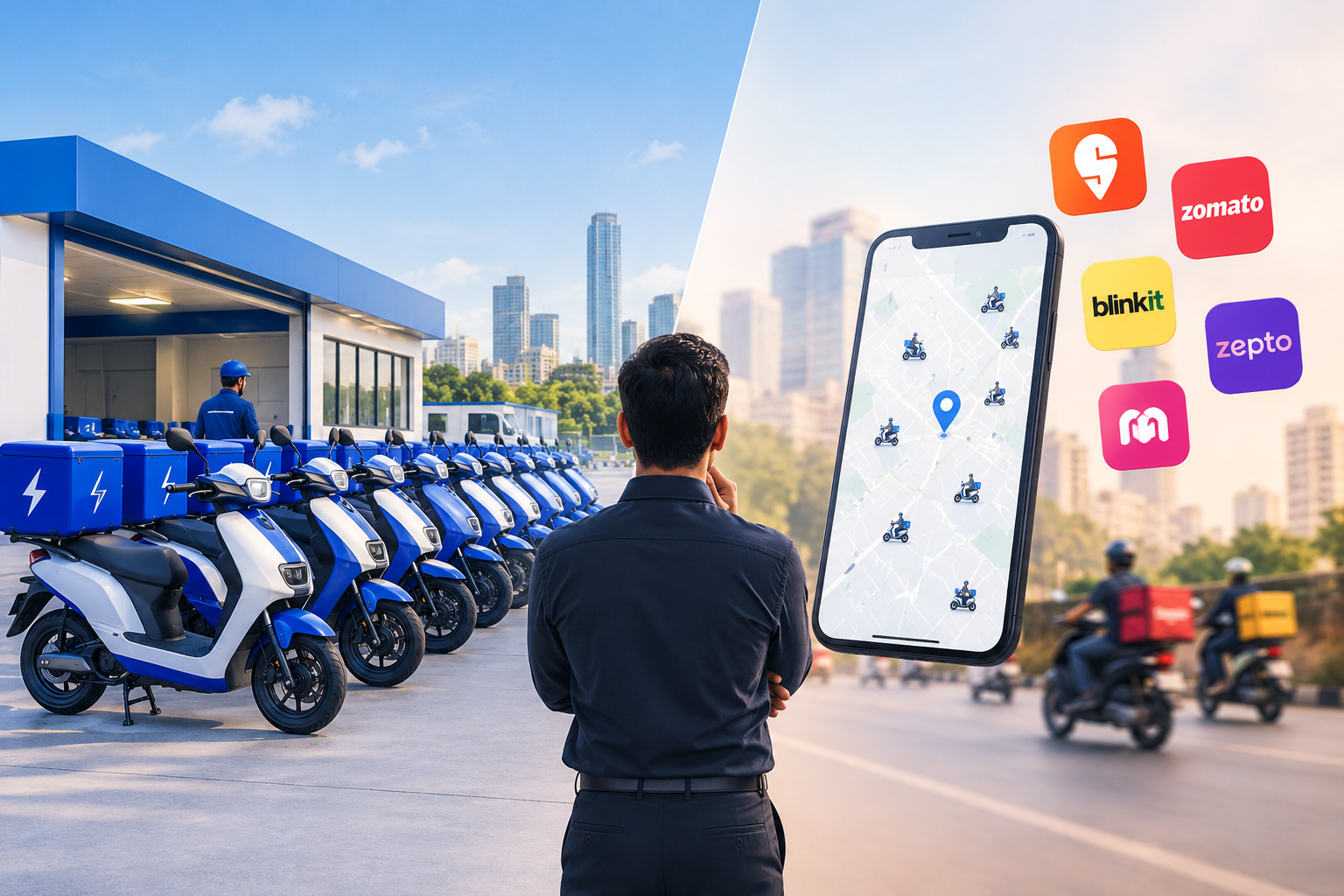
- Short-term fleet additions, such as EV fleet rentals for a campaign, a festive period or a growth phase
You pay for what you use, with little or no long-term commitment. The trade-off is that availability, consistency and handling quality depend on what is free at that moment.
Fixed capacity vs on-demand fleet: side-by-side comparison
| Factor | Fixed capacity | On-demand support |
|---|---|---|
| Availability | Reserved for you | Depends on who is free, can run short at peaks |
| Rider consistency | Same riders, same zones | Different riders on most orders |
| Brand and product handling | Riders trained on your needs | Generic, limited training |
| Cost structure | Largely fixed; efficient when well used | Variable; pay per order or per period |
| Idle capacity risk | Yes, if volumes fall below plan | Minimal |
| Flexibility for spikes | Limited without a flexible layer | High, but not guaranteed at peak |
| SLA accountability | Strong, with a named contact | Weaker, platform support |
| Planning effort | Needs forecasting and review | Low upfront planning |
For a deeper look at the models behind these two columns, read dedicated fleet vs delivery apps.
How cost really compares
Comparing a fixed monthly cost with a per-order rate is not a fair test. Two numbers matter more:
Utilisation = orders delivered ÷ orders your reserved capacity could have delivered.
Cost per successfully delivered order = (delivery spend + failed-delivery and re-delivery cost + refunds from delay or damage + support effort) ÷ orders delivered successfully.
- High utilisation favours fixed capacity, because reserved riders are busy and the fixed cost is spread over many orders
- Low or erratic utilisation favours on-demand, because you avoid paying for idle riders
- Hidden costs favour fixed capacity, because consistent riders tend to reduce failed deliveries, damage and support effort
Do the maths on your own zones and volumes, and include the hidden costs.
When fixed delivery capacity makes sense
- You deliver steadily in the same zones every day
- On-time delivery is part of your brand promise
- Your products need careful handling or brand-trained riders
- You want a clear SLA and a single escalation contact
- Your support team spends too much time on delivery issues
When on-demand fleet support makes sense
- Your volumes are low, irregular or still being discovered
- You are running a one-off campaign or short pilot
- You face sudden, unplanned spikes
- You need to reach scattered or far-off pin codes that do not justify reserved capacity
- You want to test a new area before committing riders
A simple framework: six questions to decide
| Question | If the answer is yes |
|---|---|
| Are my daily volumes in core zones steady and predictable? | Lean towards fixed capacity |
| Would a late or careless delivery damage my brand? | Lean towards fixed capacity |
| Do I have sharp, predictable peaks such as sales and festivals? | Fixed base plus a planned flexible layer |
| Are my volumes small, scattered or very uneven? | Lean towards on-demand |
| Do I need to test a new zone or product quickly? | Start on-demand, then convert to fixed as volumes settle |
| Do I need to hold my partner to SLAs and reporting? | Lean towards fixed capacity |
The hybrid model: fixed base, flexible layer, on-demand overflow
Most growing brands should not pick one extreme. Think in three layers:
- Fixed base: dedicated riders sized for the volume you reach on most days, by zone and time slot
- Flexible layer: short-term vehicles and riders, such as EV fleet rentals, added for planned peaks, campaigns and growth phases
- On-demand overflow: shared apps for rare, unplanned surges and far-off pin codes
The base keeps everyday service consistent. The flexible layer protects you on peak days without paying for idle riders in quiet months. Overflow handles the unexpected.
Size your fixed fleet for the days you have most often, and rent flexibility for the days you have rarely.
Which model fits which business?
| Business situation | Suggested approach |
|---|---|
| D2C brand with steady, growing daily orders | Fixed base in core zones, flexible layer for sale days |
| Retailer with big festive spikes | Smaller fixed base, planned seasonal EV rentals |
| FMCG brand with daily replenishment | Mostly fixed capacity for consistency, on-demand overflow |
| SME or individual seller with irregular orders | Mostly on-demand, move to fixed as volumes stabilise |
| Brand running frequent flash sales | Fixed base plus pre-booked flexible capacity for each sale |
The risks of each model, and how to manage them
Risks of fixed capacity
- Idle capacity if volumes drop: size the base conservatively and review utilisation monthly
- Peak shortfall: pair the base with a pre-booked flexible layer
- Lock-in: negotiate clear terms for scaling up and down
Risks of on-demand support
- Unavailability at peaks: do not rely on it alone for sale days
- Inconsistent quality: restrict it to overflow and lower-risk orders
- Weak accountability: keep your core volume under an SLA, as explained in our guide to last-mile delivery SLAs
Capacity planning in Bengaluru: local factors
Bengaluru adds its own swings to demand and supply. Weekend and evening surges, festive periods, sudden rain and congested corridors such as ORR can all change how many riders you need in a given zone. Dense areas such as Koramangala, HSR Layout, Indiranagar and Whitefield reward riders who know their lanes.
- Plan capacity by zone and time slot, not just city-wide
- Build a rain and traffic buffer into your flexible layer
- Book flexible capacity well before known peaks, using the approach in our peak season delivery planning guide
- Use EV fleet rentals for flexible capacity that also supports your sustainability goals
How to set up your capacity model in 5 steps
- Pull your data: orders by day, zone and time slot for the last few months, with peaks marked
- Size the base: cover the volume you reach on most days in your core zones
- Plan the flexible layer: estimate extra riders and vehicles for each known peak and book them early
- Agree terms: notice periods to scale up and down, SLA coverage for flexible capacity, reporting and an escalation contact
- Review monthly: check utilisation, on-time delivery and cost per delivered order, then adjust the base and flex. For the wider picture, read how to scale daily deliveries without extra complexity
How TOCAL helps businesses balance fixed and flexible capacity
TOCAL builds dedicated delivery infrastructure in Bengaluru around an EV-only fleet, with capacity planned around your volumes, zones and SLA needs. Our approach follows three steps:
- Understand: we analyse your order volumes, delivery zones, peak calendar and SLA requirements
- Deploy: we put the right fleet, trained delivery partners and operations team in place
- Manage, track and scale: we monitor performance live and scale capacity up for the spike, then back down
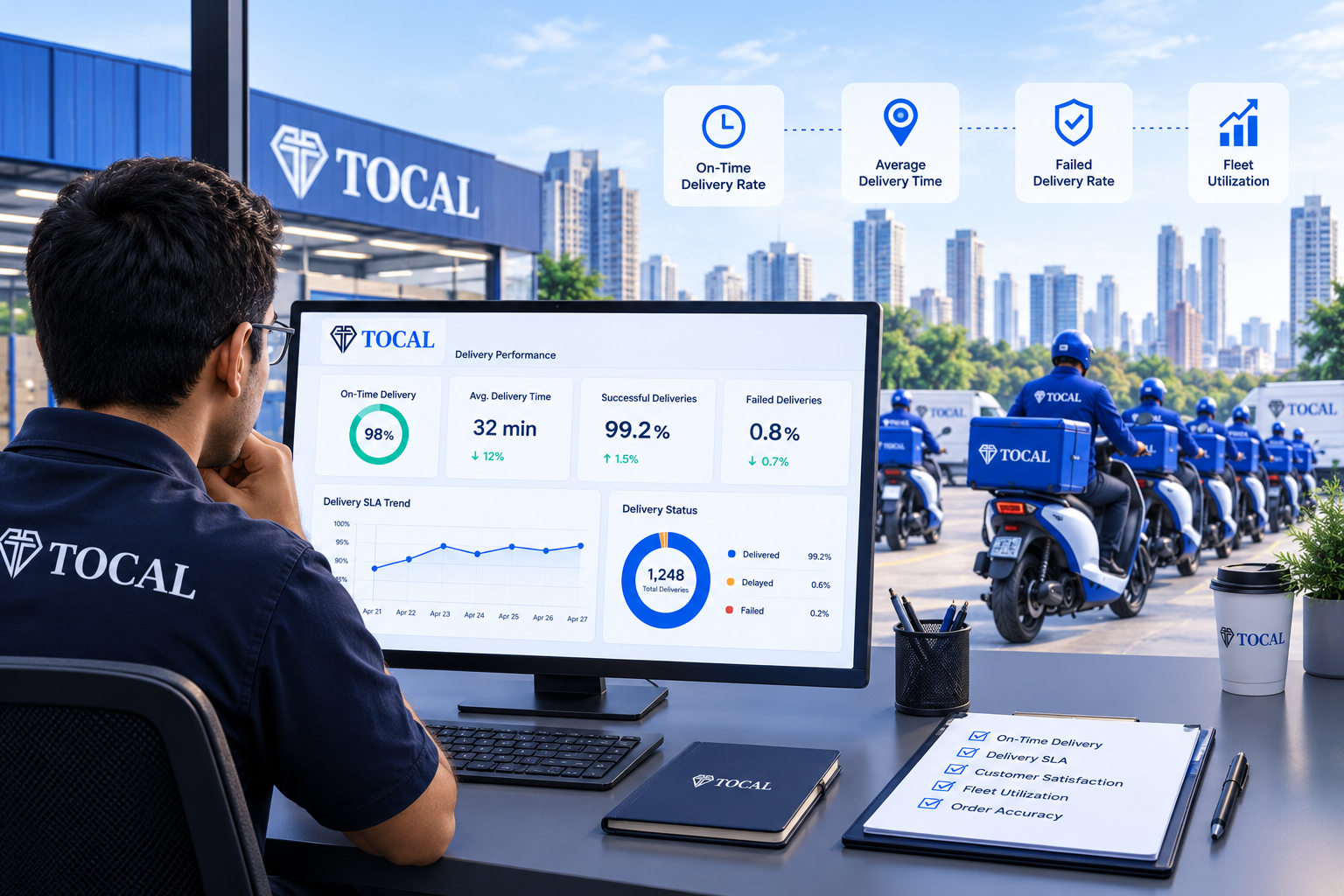
With 98%+ on-time delivery, 30 lakh+ green deliveries completed and 35+ brands served, TOCAL supports D2C brands, retail and FMCG, SMEs and individual sellers and enterprises and quick commerce, through hyperlocal delivery, last-mile delivery, fulfilment centers and EV fleet rentals. To see where capacity fits in the bigger picture, read the last-mile delivery process from order to doorstep.
Frequently asked questions
What is fixed delivery capacity?
Fixed delivery capacity means a set number of riders and vehicles reserved for your business, usually under an agreement. The capacity is available to you whether or not every rider is fully used, which gives consistent service and predictable planning.
What is on-demand fleet support?
On-demand fleet support means adding riders or vehicles only when you need them, such as through shared delivery apps or short-term fleet rentals. You pay for what you use, but availability and consistency can vary, especially when demand peaks across the city.
Is fixed capacity or on-demand cheaper?
It depends on utilisation. Fixed capacity is cost-efficient when riders are well used every day. On-demand is cost-efficient for irregular or low volumes. Compare cost per successfully delivered order, including failed deliveries, delays and support effort, rather than the headline rate.
When should I choose a fixed delivery fleet?
Choose fixed capacity when your daily volumes in core zones are steady, delivery reliability is part of your brand promise, you need consistent riders trained on your products, and you want clear SLA accountability.
When does on-demand fleet support make more sense?
On-demand support fits businesses with low, irregular or hard-to-predict volumes, new businesses still learning their demand, one-off campaigns, and unplanned spikes or far-off pin codes that do not justify reserved capacity.
What is a hybrid delivery capacity model?
A hybrid model combines a fixed base fleet for steady daily volume, a flexible layer such as short-term EV fleet rentals for planned peaks and growth, and on-demand apps only as overflow for sudden, unplanned surges.
How do I size my base delivery fleet?
Size the base to the volume you reach on most days rather than your peak day, by zone and time slot. Cover the peak with flexible capacity, and review actual utilisation and on-time performance regularly to adjust.
Does TOCAL offer both fixed and flexible delivery capacity in Bengaluru?
Yes. TOCAL builds dedicated delivery capacity around an EV-only fleet in Bengaluru, plans it around your volumes, zones and SLA needs, and scales capacity up for peaks and back down afterwards. TOCAL also offers EV fleet rentals for flexible, short-term needs.
Final thoughts
The choice between fixed capacity and on-demand support is not either-or. Reserve riders for the volume you can count on, add flexible capacity for the peaks you can plan, and keep on-demand options for the surprises. Measure utilisation and cost per delivered order, and adjust every month as your business grows.
Not sure how much capacity you need? Share your expected volumes, service areas, peak dates and SLA needs, and TOCAL will plan the right mix of fixed and flexible capacity for your business. Talk to a TOCAL Delivery Expert.