Returns are not a side issue in ecommerce. They shape customer loyalty, margins and inventory. A clear reverse logistics process lets you collect items faster, restock sooner, refund quickly and learn why products come back. Here is how to manage returns and exchanges efficiently, with a Bengaluru focus.
Quick answer
How do you manage returns and exchanges efficiently in ecommerce? Make returns easy to request, schedule pickups by zone and time slot, track every item, inspect and grade it quickly, restock or process it by condition, and close the refund or replacement fast. Combine this with return-reason data to reduce avoidable returns, and handle exchanges in a single trip where possible.
Key takeaways
- Reverse logistics is the full journey of an item from the customer back to you, not just the pickup.
- Speed matters twice: fast refunds keep customers happy and fast restocking recovers sellable stock.
- Exchanges can pair a reverse pickup with a forward delivery in one rider trip.
- Track return rate, reasons, pickup success, return turnaround time and cost per return.
- Fixing avoidable returns at the source is cheaper than processing them.
Every ecommerce business ships products it hopes will stay with the customer. Some will not. A size does not fit, an item arrives damaged, or the customer simply changes their mind. What happens next decides whether that moment costs you a sale or earns you a loyal customer.
This guide explains reverse logistics for ecommerce, the steps in a good returns process, the metrics worth tracking and practical ways to handle returns and exchanges without letting costs spiral.
What is reverse logistics in ecommerce?
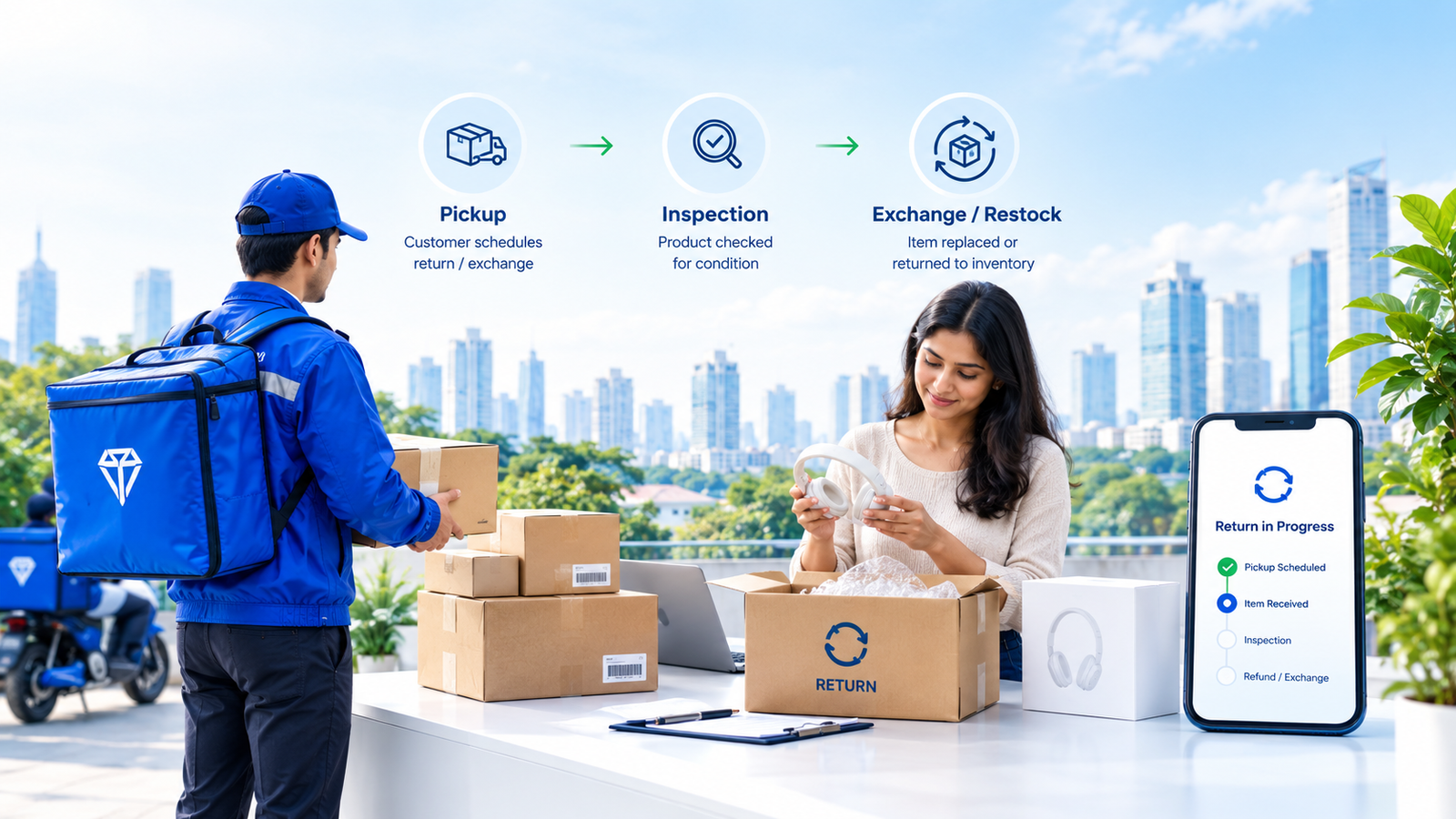
Reverse logistics is the process of moving products back from the customer to the seller or warehouse. In ecommerce, it covers returns, exchanges, repairs and the handling of items that cannot be resold. It includes the request, pickup, transport, inspection, restocking or disposal, and the refund or replacement.
Forward delivery ends at the doorstep. Reverse logistics starts there.
Why reverse logistics matters for ecommerce businesses
- Customer trust: an easy, predictable return process makes shoppers more willing to buy in the first place
- Margin protection: every return carries transport, handling and sometimes lost value, so inefficiency adds up fast
- Inventory recovery: the sooner a sellable item is back on the shelf, the sooner it can earn revenue again
- Operational insight: return reasons reveal problems in sizing, listings, packaging and delivery
- Sustainability: fewer wasted trips and better recovery reduce environmental impact
The reverse logistics process, step by step
| Stage | What happens | What to measure |
|---|---|---|
| 1. Request | The customer raises a return or exchange with a reason | Return rate and reason codes |
| 2. Approval | The request is checked against policy and approved | Approval time |
| 3. Pickup scheduling | A pickup slot is booked and the customer is informed | Slot adherence |
| 4. Pickup | The rider collects the item and confirms its condition | Pickup success rate |
| 5. Transit | The item travels to a hub, store or warehouse, with tracking | Transit time |
| 6. Inspection and grading | The item is checked and graded as resellable, repairable or unsellable | Inspection time and % resellable |
| 7. Disposition | The item is restocked, refurbished, liquidated, recycled or discarded | Time to restock |
| 8. Refund or replacement | The customer gets a refund, credit or exchange item | Refund turnaround time |
Returns vs exchanges: two different flows
Returns and exchanges look similar to the customer but need different handling:
| Factor | Return | Exchange |
|---|---|---|
| Customer outcome | Refund or store credit | A different size, colour or product |
| Logistics | One reverse pickup | Reverse pickup plus forward delivery, often in one trip |
| Key risk | Slow refunds | Replacement not in stock or delayed |
| Best practice | Quick pickup and fast refund | Confirm stock first, then swap items at the doorstep |
8 ways to manage returns and exchanges efficiently
1. Set a clear, simple return policy
State the return window, conditions, refund method and timelines in plain language. Clear rules cut disputes and support queries, and reduce back-and-forth with customers.
2. Reduce avoidable returns at the source
Many returns come from fixable causes: unclear sizing, misleading photos, weak packaging or late deliveries. Improve listings, add size guides, pack products to prevent damage and keep your delivery SLAs tight so orders arrive as promised.
3. Make return requests easy to raise
A simple self-service flow with reason selection and pickup slot choice saves time for customers and your support team. Fewer steps mean fewer abandoned or misrouted requests.
4. Capture reason codes and use the data
Standard reason codes such as wrong size, damaged item, not as described or changed mind turn returns into insight. Review them weekly to find the products, listings or zones driving the most returns.
5. Schedule pickups by zone and time slot
Group reverse pickups by area and time window so riders cover more pickups per trip. Fixed zones and dedicated delivery riders know their areas, which improves first-attempt pickup success.
6. Track every return end-to-end
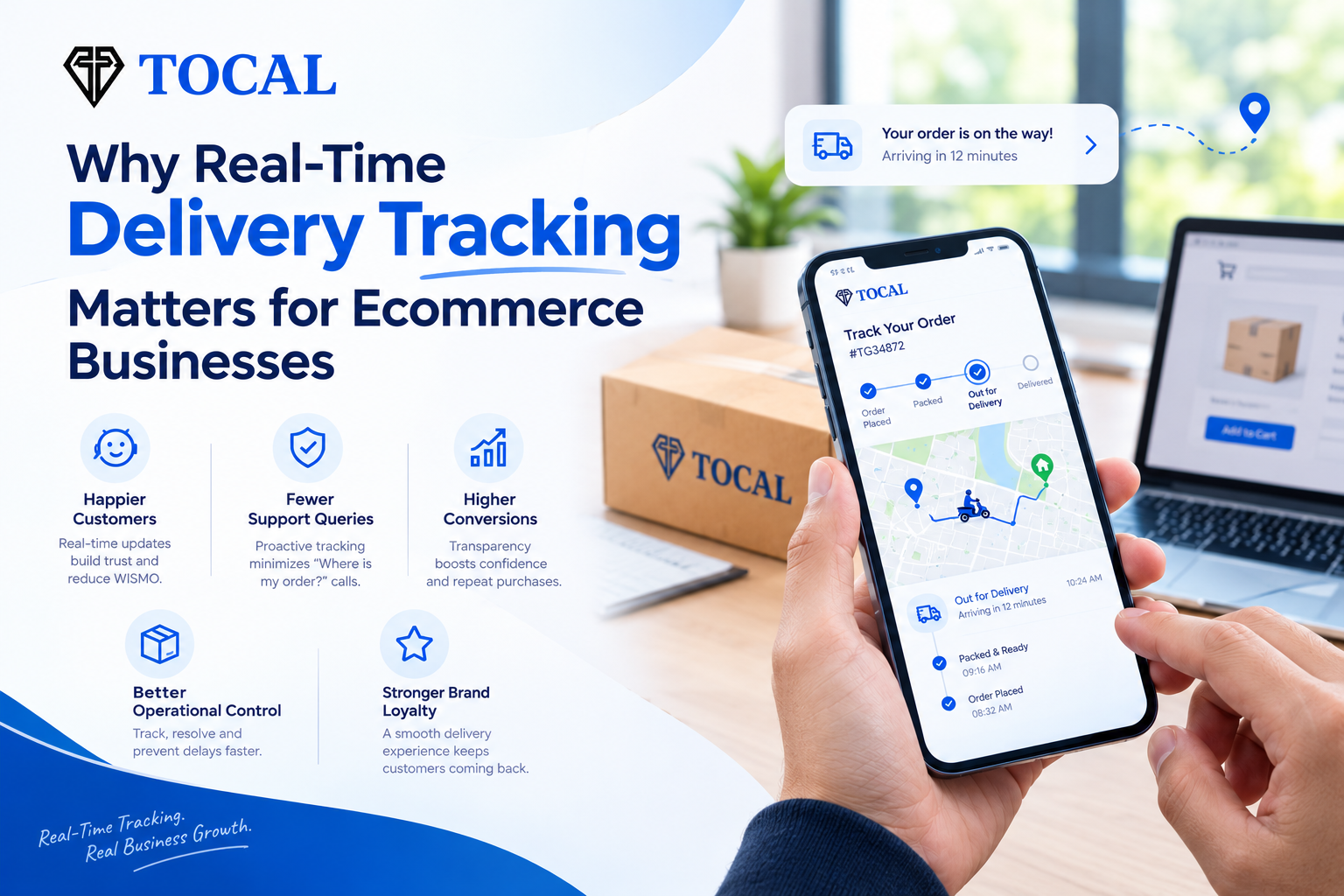
Live status from pickup to warehouse gives customers confidence and your team control. The same visibility that helps forward orders, explained in our guide to real-time delivery tracking, helps returns just as much.
7. Inspect quickly and decide the best disposition
Set a standard grading checklist and aim to decide fast: restock as new, refurbish, sell through a secondary channel, recycle or discard. Doing this close to your customers, such as in a nearby fulfilment center, shortens the time before stock is sellable again.
8. Close the loop fast with refunds and exchanges
Refund quickly once the item is picked up or verified, according to your policy. For exchanges, confirm stock before approving and swap items in one visit where possible. Speed here is what customers remember.
The best return is the one that never happens. The second best is the one that is picked up fast, inspected fast and refunded fast.
What does a return really cost? Metrics to track
Use this simple formula to find your cost per return:
Cost per return = (pickup and transport + handling and inspection + repackaging + refund processing + value lost on unsellable items) ÷ number of returns.
Then watch these metrics on a short weekly scorecard:
- Return rate: returned orders ÷ delivered orders, overall and by category
- Top return reasons, ranked by volume
- Pickup success rate: pickups completed on the first attempt
- Return turnaround time: from request to item back in stock
- Refund turnaround time: from pickup to refund issued
- Percentage resellable: how much comes back in sellable condition
Returns challenges by product category
| Category | Common return drivers | What helps |
|---|---|---|
| Fashion and apparel | Size and fit, colour expectations | Size guides, exchange-first flow, quick pickups |
| Electronics | Defects, damage, missing accessories | Careful packing, pickup with condition check, fast inspection |
| Beauty and personal care | Hygiene concerns, wrong product, damage | Sealed packaging, clear return conditions |
| Home and bulky items | Damage in transit, size mismatch | Right vehicle for pickup, scheduled slots |
| FMCG and perishables | Quality issues, wrong or missing items | Fast response, replacement over return where possible |
Reverse logistics in Bengaluru: what changes in a dense city
Bengaluru offers an advantage for returns: customers are concentrated in dense zones such as Koramangala, HSR Layout, Indiranagar and Whitefield, so reverse pickups can be clustered tightly. It also brings challenges, including traffic on corridors like ORR and sudden rain that can disrupt pickup slots.
- Offer realistic pickup windows and update customers if conditions change
- Cluster pickups by zone, and pair them with forward deliveries on the same route where possible
- Use nearby hubs for quick inspection and restocking instead of long trips to a distant warehouse
- Keep trips short and efficient, which also supports sustainability goals with an EV delivery fleet
Common reverse logistics mistakes to avoid
- Treating returns as an afterthought, with no owner, process or SLA
- Slow refunds, which damage trust even if the pickup was smooth
- No reason data, so the same avoidable returns repeat
- Separate teams and vendors for forward and reverse, which adds complexity (see how to scale deliveries without extra complexity)
- Slow inspection, leaving sellable stock sitting idle
- No tracking, so nobody knows where a returned item is
In-house or outsourced returns: which is better?
With low, predictable return volumes, an in-house process can work. As volumes grow, outsourcing pickups and processing to a delivery partner usually keeps cost and turnaround under control. Look for a partner with zone-based riders, live tracking, nearby fulfilment space and a clear SLA that covers reverse as well as forward deliveries.
How TOCAL helps ecommerce brands with returns and deliveries
TOCAL builds dedicated delivery infrastructure in Bengaluru around an EV-only fleet, with fulfilment centers and zone-based operations. To plan returns and exchanges with us, our approach follows three steps:
- Understand: we analyse your order volumes, return rates, delivery zones and SLA requirements
- Deploy: we put the right fleet, trained delivery partners and operations team in place
- Manage, track and scale: we monitor performance live and scale capacity up or down as your volumes change
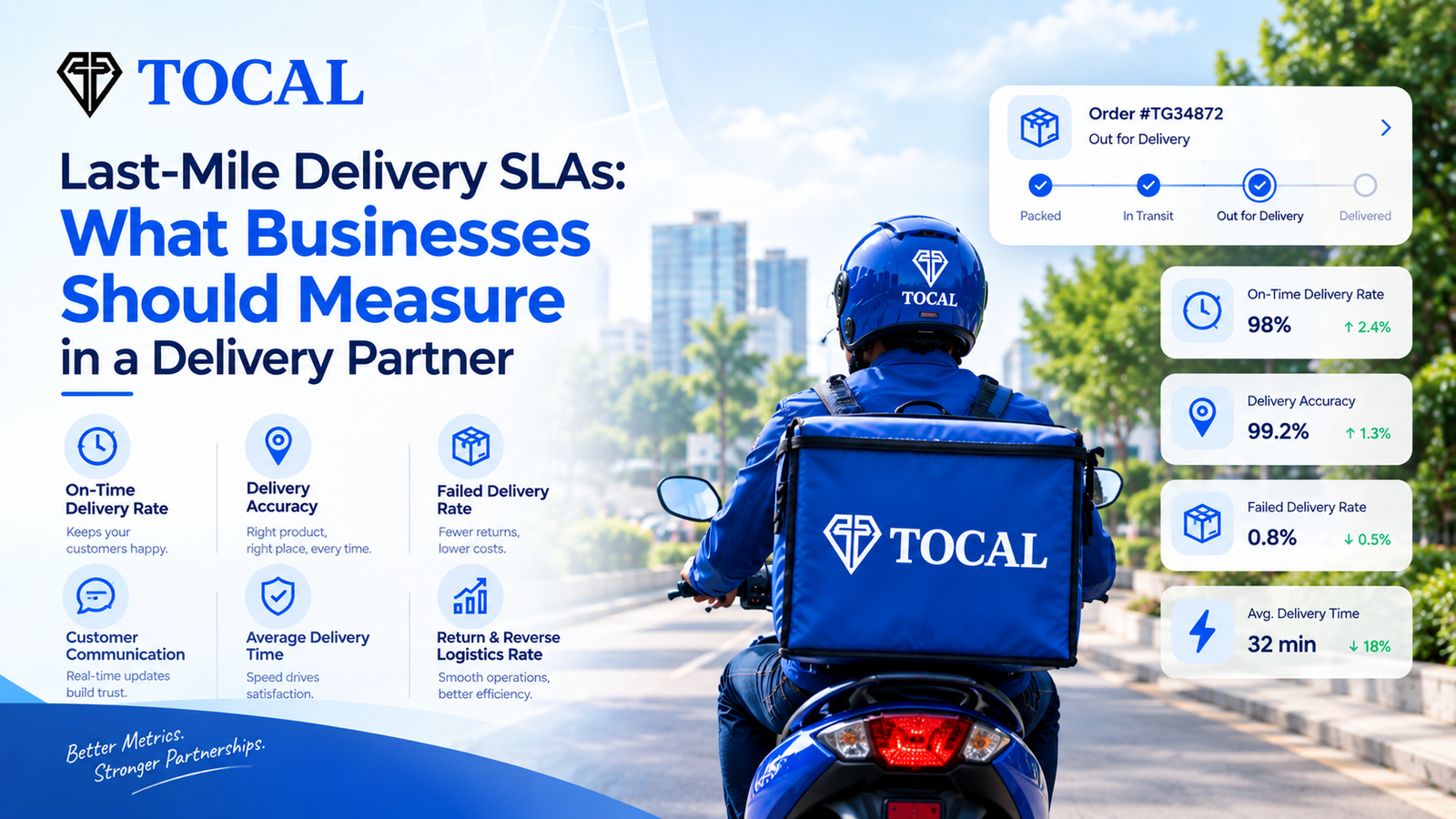
With 98%+ on-time delivery, 30 lakh+ green deliveries completed and 35+ brands served, TOCAL supports D2C brands, retail and FMCG, SMEs and individual sellers and enterprises and quick commerce, through hyperlocal delivery, last-mile delivery, fulfilment centers and EV fleet rentals.
Frequently asked questions
What is reverse logistics in ecommerce?
Reverse logistics in ecommerce is the process of moving products back from the customer to the seller or warehouse for returns, exchanges, repairs or disposal. It covers return requests, pickup, quality checks, restocking or disposition, and refunds or replacements.
Why is reverse logistics important for ecommerce businesses?
A smooth returns process protects customer trust, recovers sellable stock faster, controls the cost of returns, reduces losses from damaged or unsellable items and provides data that helps cut avoidable returns in the future.
What are the steps in the ecommerce returns process?
The usual steps are: the customer raises a return or exchange request, the request is approved, a pickup is scheduled, the rider collects the item, the item is transported to a hub or warehouse, it is inspected and graded, it is restocked or otherwise processed, and the refund or replacement is issued.
How can I reduce ecommerce return rates?
Improve product descriptions, size guides and images, pack products to prevent damage, deliver within the promised window, and analyse return reasons to fix the products or listings causing the most returns.
What is the difference between returns and exchanges in logistics?
A return sends an item back for a refund. An exchange sends back one item and delivers another, so it combines a reverse pickup and a forward delivery. Exchanges can often be handled in a single rider trip, which saves cost and time.
How do I calculate the cost of a return?
Add pickup and transport cost, handling and inspection, repackaging, refund processing and any loss of value if the item cannot be resold at full price, then divide by the number of returns in the period.
Should I handle returns in-house or outsource them?
In-house suits low, predictable volumes. As returns grow, outsourcing pickups and processing to a delivery partner with zone-based riders, tracking and fulfilment space usually keeps cost and turnaround time under control.
Can TOCAL help with returns and exchange pickups in Bengaluru?
TOCAL provides last-mile and hyperlocal delivery in Bengaluru with an EV-only fleet and fulfilment centers. Share your return volumes, zones and turnaround needs and TOCAL will plan the right setup for your business.
Final thoughts
Reverse logistics is where customer experience, cost control and inventory recovery meet. Make returns easy to request, pick them up quickly by zone, track every item, inspect and restock fast, refund promptly and use reason data to cut avoidable returns. Do this well and returns stop being a drain and become a reason customers trust you.
Want a smoother returns and exchange process in Bengaluru? Share your order volumes, return rates, service areas and turnaround needs, and TOCAL will plan a setup around your business. Talk to a TOCAL Delivery Expert.