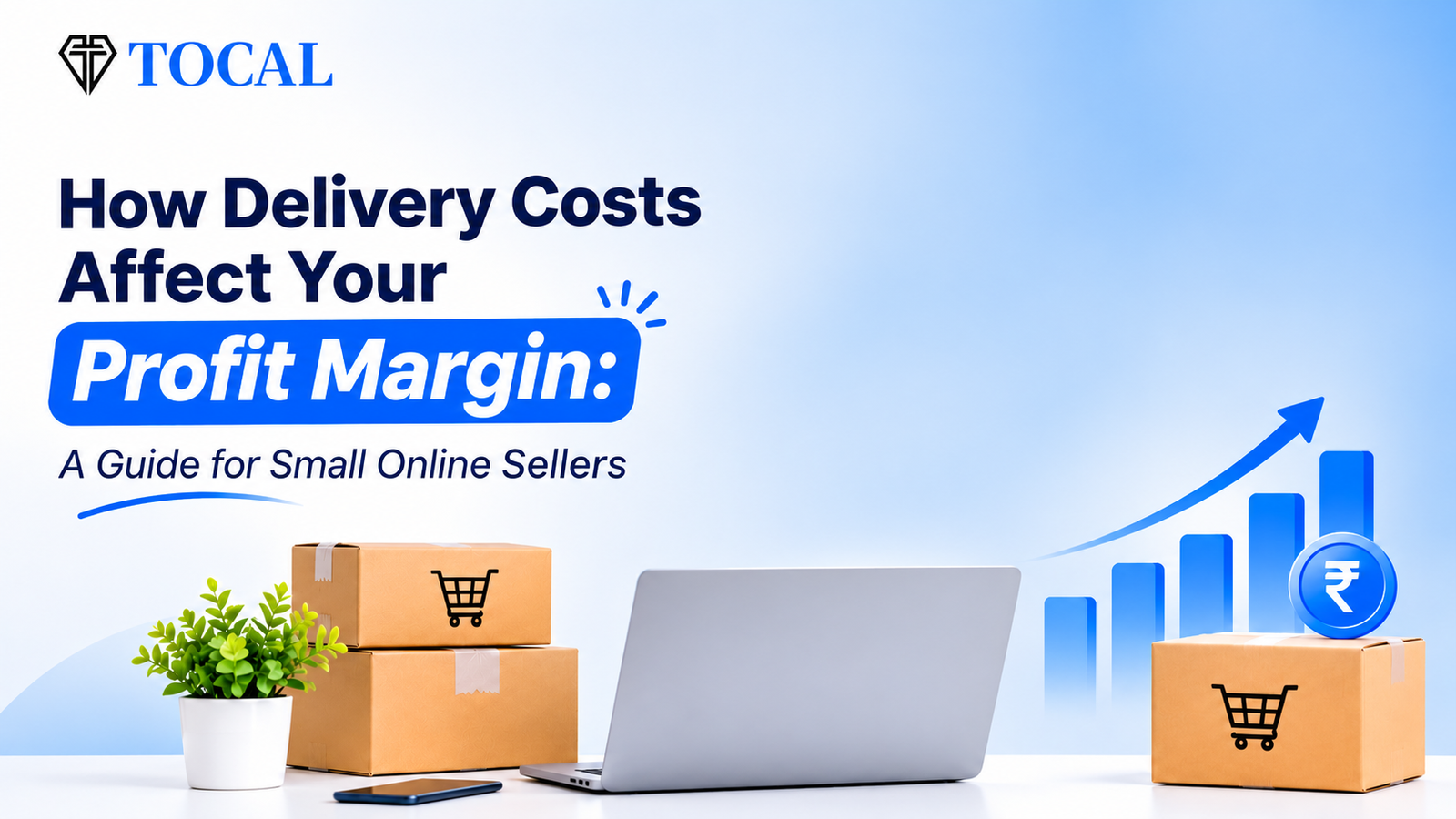
Many small online sellers watch revenue and ad spend closely, but treat delivery as a line they cannot change. In reality, delivery is one of the biggest controllable costs in each order. This guide shows how delivery costs reach your profit margin, with a simple formula, a worked example and practical ways to protect your margin without hurting service.
Quick answer
How do delivery costs affect profit margin? Delivery is a per-order cost, so every rupee spent on it comes straight out of your contribution margin. The true cost includes the delivery charge plus packaging, failed deliveries and RTO, returns, damage, cash-on-delivery handling and your own time. Calculate cost per successfully delivered order, track delivery cost as a percentage of order value, and review it monthly to protect profit.
Key takeaways
- Margin per order = selling price minus all per-order costs, and delivery is one of the biggest.
- On low-priced orders, a small rise in delivery cost removes a large share of your margin.
- Hidden costs such as RTO, returns and damage often matter more than the headline delivery rate.
- Free delivery only works when your product margin can absorb it.
- Fix failures first (addresses, COD confirmation, packaging), then negotiate rates.
A seller lists a product at a good price, runs ads, wins orders and still ends the month with little profit. When she looks closely, the product margin is fine. What is missing is delivery: charges, repeat trips for customers who were not home, returned parcels, damaged items and cash that took weeks to arrive.
This guide explains how delivery costs affect your profit margin as a small online seller, and what you can do about it.
Why delivery cost matters so much
- It is paid on every order, whether the customer is happy or not
- It does not shrink with scale automatically: a delivery costs about the same whether the product is cheap or expensive
- It hits low-priced orders hardest: the same delivery cost is a bigger share of a small basket
- It hides inside other lines: refunds, support time and lost stock often trace back to delivery
- It is controllable: addresses, packaging, payment mode and delivery model are all choices you can improve
The margin formula for one order
Start with contribution margin per order, the money left after the costs that arise because the order happened:
Contribution margin per order = selling price − cost of goods − packaging − delivery cost − payment fees − marketing cost per order − returns and RTO allowance − discounts and other per-order costs.
| Per-order cost | What it includes |
|---|---|
| Cost of goods | What you pay to make or buy the product |
| Packaging | Boxes, bags, fillers, tape, labels and inserts |
| Delivery cost | The delivery charge, plus extras such as cash-on-delivery fees |
| Payment fees | Payment gateway or collection charges |
| Marketing cost per order | Ad spend and promotions divided by orders won |
| Returns and RTO allowance | Cost of failed deliveries, returned items and lost value |
| Discounts | Coupons and offers given on the order |
| Support and your time | Effort spent answering delivery queries and handling problems |
Then divide by selling price to get your contribution margin percentage.
A worked example (illustrative numbers only)
These are round, made-up numbers to show the logic. They are not real prices or TOCAL rates, and taxes are ignored for simplicity. Replace them with your own.
| Per-order item | Scenario A: well-run delivery | Scenario B: weak delivery set-up |
|---|---|---|
| Selling price | ₹1,000 | ₹1,000 |
| Cost of goods | ₹450 | ₹450 |
| Packaging | ₹30 | ₹30 |
| Delivery cost (including repeat trips) | ₹60 | ₹100 |
| Payment fees | ₹20 | ₹20 |
| Marketing cost per order | ₹150 | ₹150 |
| Returns and RTO allowance | ₹40 | ₹90 |
| Contribution margin | ₹250 (25%) | ₹160 (16%) |
Same product, same price, same marketing. The only difference is delivery quality, and it moves margin from 25% to 16%. At the same sales volume, that is more than a third less profit.
How much does each rupee of delivery cost move your margin?
The effect depends on your order value. Using a simple example of a ₹10 increase in delivery cost per order:
| Average order value | Margin lost from a ₹10 rise in delivery cost |
|---|---|
| ₹500 | 2.0 percentage points |
| ₹1,000 | 1.0 percentage point |
| ₹2,000 | 0.5 percentage points |
The formula is simple: margin impact = change in delivery cost ÷ order value. Low-priced baskets are the most sensitive, so that is where delivery discipline matters most.
The hidden delivery costs that quietly cut margin
Failed deliveries and RTO
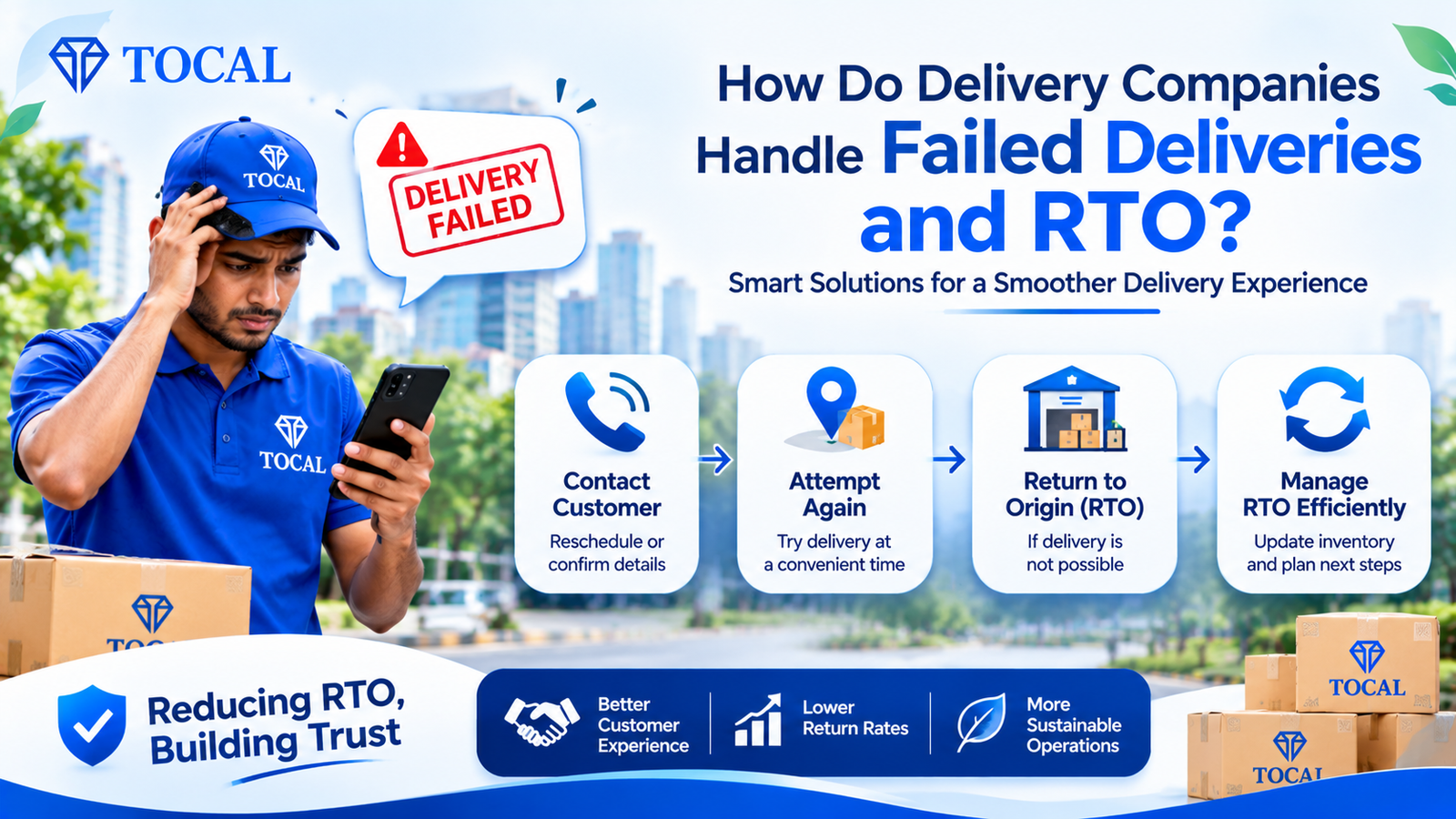
An order that fails and returns to you costs the forward trip, the return trip and handling, and earns no revenue. Spread across your successful orders, it adds up. For example, with illustrative numbers: if you dispatch 100 orders, 10 come back as RTO and each failed order costs ₹150 in forward, return and handling costs, that is ₹1,500 spread over 90 delivered orders, about ₹17 added to every delivered order. See how delivery companies handle failed deliveries and RTO.
Returns and exchanges
Returned items cost pickup, handling, inspection and sometimes lost value if they cannot be resold at full price. See reverse logistics for ecommerce.
Damage and loss
Damaged parcels mean refunds or replacements, and the original delivery cost is wasted. Better packaging and careful handling pay for themselves.
Cash on delivery costs and delays
COD can come with collection fees, higher refusal risk and delayed remittance, which ties up your cash. Confirm the terms before you rely on it.
Packaging weight and size
Oversized or heavy packaging can raise delivery charges and waste material.
Peak-time costs
Festive and sale periods can bring higher demand, tighter capacity and more delays, so plan ahead (see peak season delivery planning).
Your own time
Hours spent chasing deliveries are hours not spent on growth. Count them.
The number that matters: cost per successfully delivered order
Cost per successfully delivered order = (delivery spend + packaging + failed-delivery and re-delivery cost + refunds from delay or damage + support effort + your own time) ÷ orders delivered successfully.
Use this to compare options fairly. A low rate with many failures can cost more than a higher rate with reliable delivery. See self-delivery vs courier vs delivery partner for how the options compare, and hyperlocal delivery vs courier for local versus national shipping.
Should you offer free delivery?
| Approach | Effect on margin | When it works |
|---|---|---|
| Free delivery on all orders | You absorb the full cost on every order | High-margin products or strong repeat purchase rates |
| Free above a minimum order value | Protects margin on small baskets and lifts basket size | Most small sellers with a range of products |
| Flat delivery fee | Recovers part or all of the delivery cost | Low-margin products or tight budgets |
| Delivery built into the price | Feels free to customers; margin depends on pricing | Simple catalogues and premium brands |
| Area-based fees | Matches charges to real distance cost | Sellers covering both nearby and farther zones |
A starting check for a free-delivery threshold: minimum order value ≈ delivery cost ÷ your margin rate before delivery. If your margin before delivery, after product cost, packaging and payment fees, is 40% and delivery costs ₹60 (illustrative), you need about ₹150 of order value just to pay for delivery, and more to cover marketing and returns. Test thresholds and watch both conversion and profit.
10 ways to protect your margin without hurting service
- Capture complete addresses and phone numbers, so fewer deliveries fail (see gated community deliveries)
- Confirm cash-on-delivery orders before dispatch, and encourage prepaid payment with small incentives
- Right-size and protect packaging, to cut damage and weight
- Cluster orders by zone, so riders complete more drops per trip
- Pick the delivery model that fits your volume, instead of the cheapest headline rate
- Set a sensible minimum order value for free delivery and use bundles to lift basket size
- Offer exchanges before refunds, to keep the sale
- Use delivery slots and tracking, so customers are home when the rider arrives (see real-time delivery tracking)
- Negotiate with clean data: share volumes, zones and failure rates with providers, and ask for clear written terms
- Review costs monthly, and act on the biggest leak first
When faster delivery pays for itself
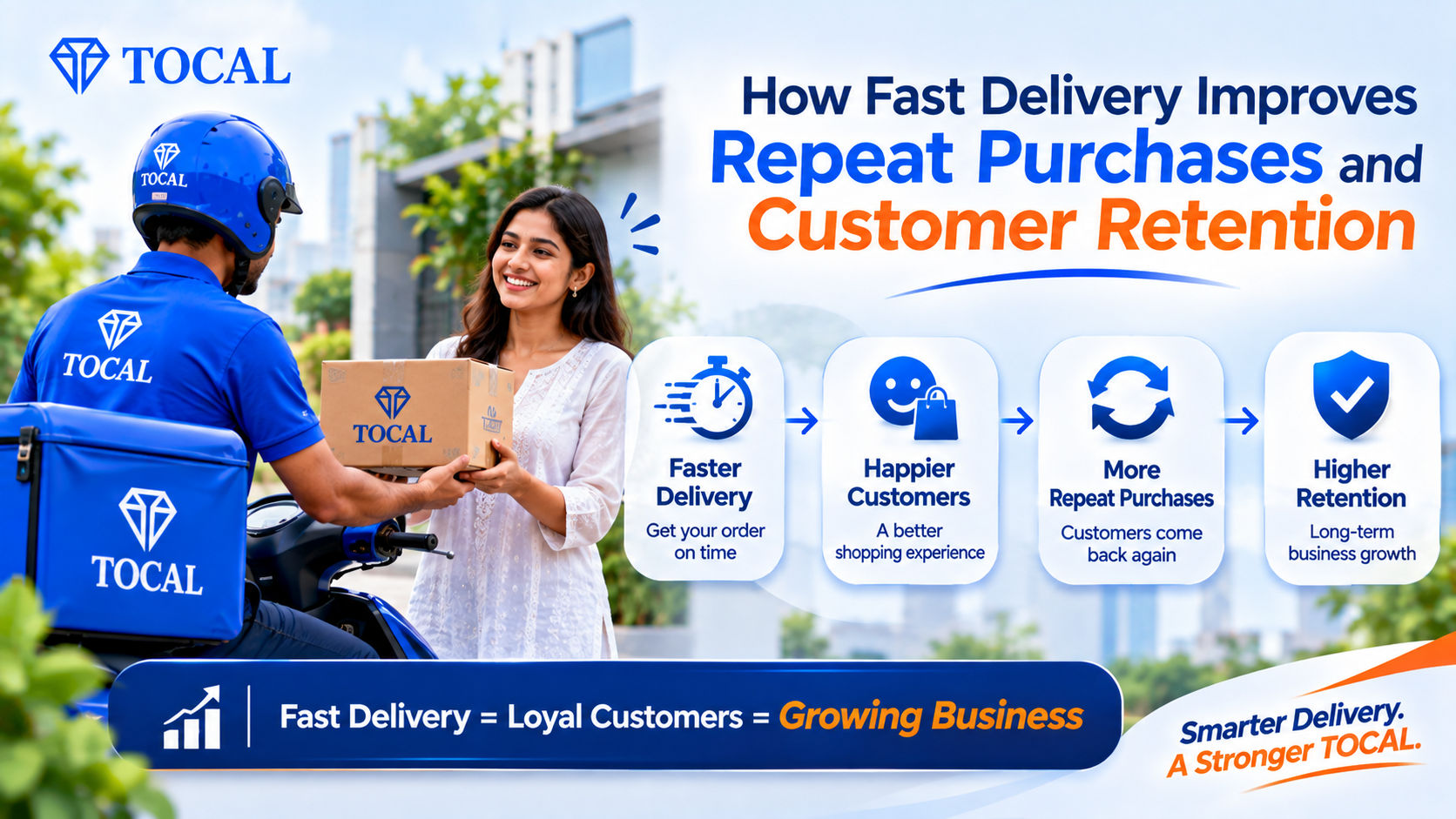
Faster delivery can raise conversion and repeat purchases, which may outweigh a higher cost per order. The test:
Net value per order = (increase in repeat purchase rate × expected repeat orders × contribution margin per order) − added delivery cost per order.
Test it in one or two zones before rolling out widely. See how fast delivery improves repeat purchases.
A monthly delivery-margin review routine
- Pull last month's orders and delivery invoices
- Calculate cost per successfully delivered order and delivery cost as a percentage of order value
- Check RTO rate, failed delivery reasons and return rate
- Check damage and complaint rates
- Calculate contribution margin per order by product and by zone
- Pick one or two fixes and set a target for next month
Metrics to keep on one sheet:
- Delivery cost as a percentage of order value
- Cost per successfully delivered order
- RTO rate and first-attempt delivery success
- Return rate and damage rate
- Contribution margin per order
- Repeat purchase rate
New to these terms? See the last-mile logistics glossary.
Common margin mistakes small sellers make
- Pricing products without including delivery, then discovering low margins later
- Judging providers on rate alone, not cost per delivered order
- Offering free delivery on every order without checking margin
- Ignoring RTO and returns, because they sit in other lines of the books
- Accepting COD with no confirmation step
- Over-promising speed, then paying for expedited fixes
- Never measuring, so leaks continue unnoticed
Delivery costs and margin in Bengaluru
Bengaluru's density works in your favour: many customers within short distances in areas such as Koramangala, HSR Layout, Indiranagar and Whitefield mean short routes and clustered orders, which lower cost per delivery. The flip side is apartment access, traffic on corridors like ORR and sudden rain, which can cause failed attempts and delays. Capture block and tower details, use fixed zones and build buffers into promises. See delivery service in Koramangala for a local example, and same-day delivery in Bengaluru for online sellers for speed options.
How TOCAL helps small sellers manage delivery cost
TOCAL serves SMEs and individual sellers with enterprise-grade logistics sized for their business, using hyperlocal delivery for same-day delivery within Bengaluru on an EV-only fleet, last-mile delivery and fulfilment centers. Our approach follows three steps:
- Understand: we analyse your order volumes, delivery zones and SLA requirements
- Deploy: we put the right fleet, trained delivery partners and operations team in place
- Manage, track and scale: we monitor performance live and scale capacity up or down as your volumes change
With 98%+ on-time delivery, 30 lakh+ green deliveries completed and 35+ brands served, TOCAL also supports D2C brands, retail and FMCG and enterprises and quick commerce.
Frequently asked questions
How do delivery costs affect profit margin?
Delivery cost is a per-order expense, so every rupee you spend on delivery comes straight out of your contribution margin. On low-priced orders, a small change in delivery cost can move margin by several percentage points. Failed deliveries, returns and damage add further hidden costs.
How do I calculate delivery cost per order?
Add your delivery charge, packaging, failed-delivery and re-delivery costs, refunds from delay or damage, support effort and your own time, then divide by the number of orders delivered successfully. This cost per successfully delivered order is more useful than the headline delivery rate.
Should a small online seller offer free delivery?
Free delivery works only if your product margin can absorb the cost. Many sellers offer it above a minimum order value, build the cost into product prices or charge a flat fee. Work out your margin per order first, then test options and watch conversion and profit, not just order count.
What is a good delivery cost as a percentage of order value?
There is no universal figure. It depends on your product margin, average order value and speed promise. Track delivery cost as a percentage of order value and set your own ceiling based on the margin you need after marketing and returns.
How do RTO and returns affect profit margin?
Each RTO order costs the forward trip, the return trip and handling without producing a sale, and returned items may lose value. Spread across successful orders, these costs can quietly cut margin. Reducing failed deliveries and avoidable returns is one of the fastest ways to protect profit.
How can small sellers reduce delivery costs without hurting service?
Capture complete addresses, confirm cash on delivery orders, right-size packaging, cluster orders by zone, use a delivery model that fits your volume, set a sensible minimum order value for free delivery, offer exchanges and review costs monthly.
Is faster delivery worth the extra cost?
It depends on whether faster delivery raises conversion and repeat orders enough to outweigh the added cost per order. Test it in one or two zones and compare the extra margin from repeat purchases with the extra delivery cost.
Does TOCAL help small sellers manage delivery costs in Bengaluru?
TOCAL serves SMEs and individual sellers with hyperlocal delivery, including same-day delivery within Bengaluru, on an EV-only fleet. Share your volumes, areas and product type and TOCAL will plan a setup sized for your business.
Final thoughts
Delivery is not just a service you buy. It is a cost line you can manage. Know your margin per order, measure cost per successfully delivered order, prevent failures before they happen, price delivery to protect profit and review the numbers every month. Small improvements, repeated across every order, add up to the difference between busy and profitable.
Want to bring your delivery costs under control? Share your volumes, delivery areas and product type, and TOCAL will plan a setup sized for your business. Talk to a TOCAL Delivery Expert.