Not every order reaches the customer on the first try. When a delivery fails, a good delivery company records why, contacts the customer, reattempts under a clear policy and, if needed, sends the order back as an RTO. Here is how that process works, what it costs and how to reduce it.
Quick answer
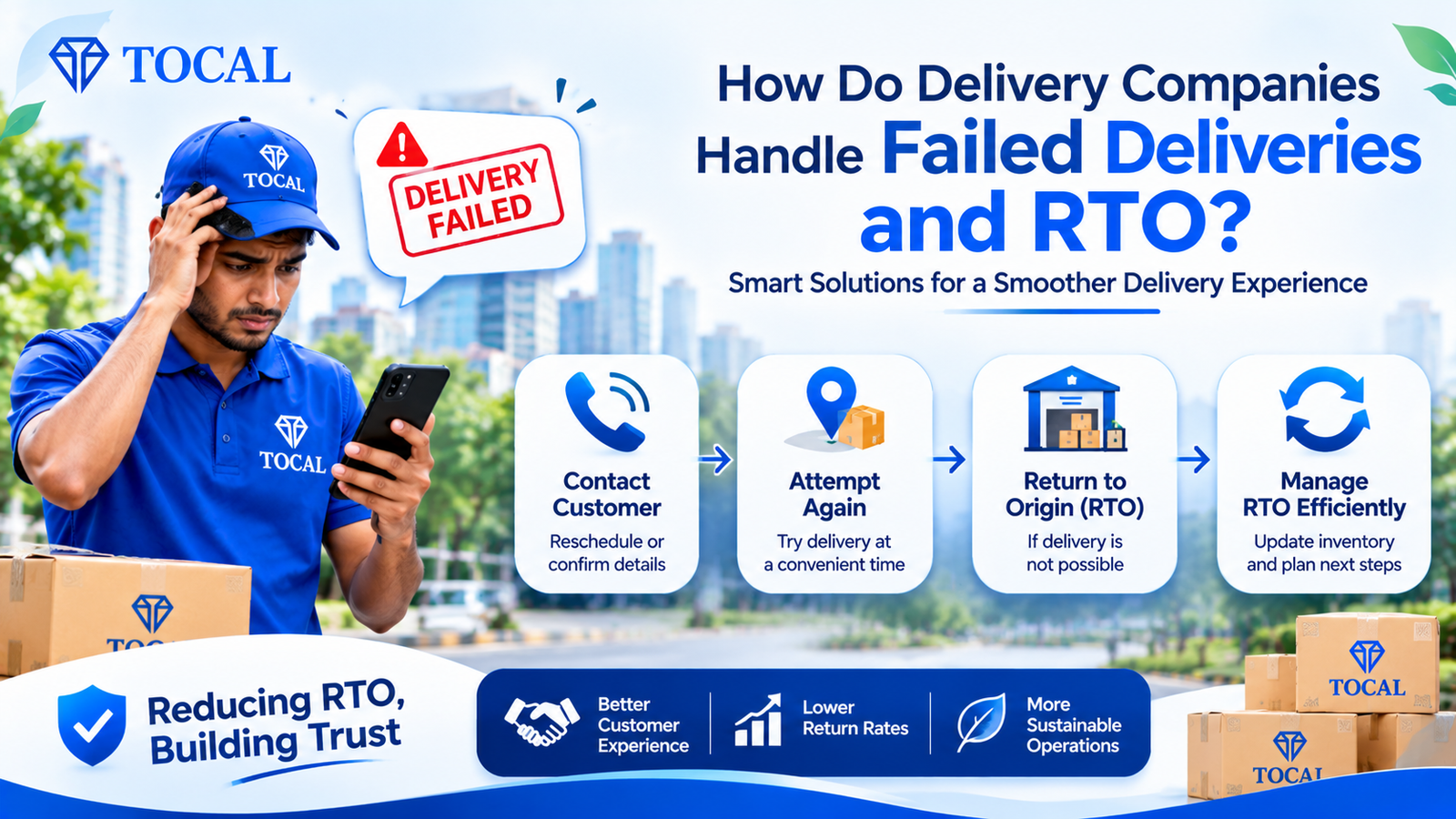
How do delivery companies handle failed deliveries and RTO? The rider records the failure reason with proof, tries to contact the customer, and the order is reattempted or rescheduled under an agreed policy. If delivery still fails, the order is marked RTO (return to origin), transported back to the seller, inspected and processed, with refunds and cash-on-delivery records reconciled. Clear attempt rules, reason codes and reporting in your SLA keep the process fair and fast.
Key takeaways
- RTO means return to origin: an undelivered order sent back to the seller.
- Most failures come from a few causes: customer unavailable, bad addresses, COD refusals and access problems.
- Define attempts, reason codes, timelines and cost responsibility in writing.
- Prevention beats cure: address validation, order confirmation, delivery slots and live tracking.
- Track first-attempt success and RTO rate by reason, zone and payment mode.
Every ecommerce brand has met this problem: the order was packed, dispatched and paid for in shipping, and the rider returned with the parcel. A failed delivery wastes a trip, delays the customer and, if it ends in RTO, costs you the forward journey, the return journey and often the sale.
This guide explains how delivery companies handle failed deliveries and RTO, why they happen, what they cost and how to bring them down.
What is a failed delivery, and what is RTO?
A failed delivery is a delivery attempt that does not result in the customer receiving the order, for example because nobody was available, the address could not be found or the customer refused.
RTO (return to origin) is what happens when delivery cannot be completed at all. The shipment is sent back to the seller or warehouse it came from. RTO is especially common with cash-on-delivery (COD) orders, where customers can refuse without having paid.
RTO is different from a customer return, which happens after the customer has accepted the order.
Why deliveries fail: common causes and how to prevent them
| Cause | What happens | How to prevent it |
|---|---|---|
| Customer unavailable | Nobody to receive the order at the time | Delivery slots, live tracking, proactive updates |
| Wrong or incomplete address | Rider cannot find the location | Address validation, landmarks, contact confirmation |
| Phone unreachable | Rider cannot reach the customer for directions | Phone or OTP verification at checkout |
| COD refusal or no cash ready | Customer declines or cannot pay at the door | Pre-dispatch COD confirmation, prepaid incentives |
| Changed mind or duplicate order | Customer no longer wants the order | Faster delivery, order confirmation, clear policies |
| Access issues | Gated community or office will not allow entry | Collect access instructions, delivery windows |
| Damaged or incorrect parcel | Customer refuses at the door | Careful packing and handling, accurate picking |
| Delay or rider issue | Order is late, customer cancels or is unavailable later | Reserved capacity, realistic windows, dedicated riders |
How delivery companies handle a failed delivery, step by step
| Step | What happens | What good practice looks like |
|---|---|---|
| 1. Attempt and record | The rider tries to deliver and logs the outcome with a reason code | Timestamp, location and evidence such as call log or photo |
| 2. Contact the customer | Call or message to find out when they can receive the order | Multiple contact tries, and notice to the seller |
| 3. Reschedule or correct | A new slot is agreed or the address is corrected | Customer confirmation and updated tracking |
| 4. Reattempt | The order goes out again within the agreed policy | A defined number of attempts and gap between them |
| 5. Decide | If delivery is still not possible, the order is marked for RTO | Clear rules on when and who authorises it |
| 6. Return transit | The parcel travels back to the seller or hub | Tracked and sealed to prevent tampering |
| 7. Receipt and inspection | The seller or fulfilment centre checks condition and contents | Quick grading as resellable, repairable or unsellable |
| 8. Close and reconcile | Stock is restocked, COD records are settled and refunds are issued if prepaid | Reports that match orders, attempts and outcomes |
Receiving and processing returned parcels follows the same logic as reverse logistics for ecommerce, and each stage fits into the wider last-mile delivery process.
What does a failed delivery or RTO really cost?
RTO cost per order = forward delivery cost + return delivery cost + handling and inspection + repackaging + COD or payment handling + value lost if the item cannot be resold at full price. On top of that comes the lost sale and any customer goodwill.
Track these to see the scale of the problem:
- First-attempt delivery success: delivered on first attempt ÷ total attempted × 100
- Failed delivery rate: failed attempts ÷ total attempts × 100
- RTO rate: orders returned to origin ÷ orders dispatched × 100
- RTO by reason, pin code and payment mode, to find where the problem concentrates
- Time to RTO receipt: from final failed attempt to the parcel back with you
10 ways to reduce failed deliveries and RTO
1. Validate addresses at checkout
Catch incomplete addresses and ask for a landmark or a pin on the map before the order is placed. Fixing it here costs nothing; fixing it at the doorstep costs a trip.
2. Verify phone numbers or use OTP
A reachable customer is the single biggest factor in first-attempt success. Phone verification at checkout makes later contact far easier.
3. Confirm COD orders before dispatch
A quick call, message or confirmation link filters out accidental, duplicate and unserious orders before they leave your warehouse.
4. Encourage prepaid payment
Small incentives for paying online reduce COD refusals and speed up reconciliation.
5. Offer delivery slots
Letting customers choose a window means someone is more likely to be there. Pair slots with realistic promises, as covered in last-mile delivery SLAs.
6. Send live tracking links and proactive updates
When customers know the rider is nearby, they are ready. See how in real-time delivery tracking for ecommerce.
7. Use riders who know their zones
Local knowledge helps with tricky addresses, gated communities and the best time to find people at home. That is a core benefit of dedicated delivery riders.
8. Make delivery fast
The longer an order takes, the more likely the customer cancels or is unavailable. Nearby hubs and hyperlocal delivery shorten the gap between click and doorstep, and make reattempts quicker and cheaper.
9. Screen for risky orders
Look at RTO by pin code, payment mode, order value and customer history. Add extra confirmation or prepaid-only rules where patterns show repeated trouble.
10. Review reasons every week and act on them
Reason codes are only useful if someone reads them. A short weekly review shows whether the fix is better addresses, better packing, slower riders or riskier orders.
The cheapest failed delivery is the one prevented at checkout.
What to agree with your delivery partner about failed deliveries
- Attempt policy: how many attempts, the gap between them and when an order becomes RTO
- Reason codes and evidence: a standard list, backed by call logs, photos or location data
- Customer contact rules: how many call or message attempts before a failure is logged
- Timelines: time from final attempt to the parcel arriving back with you
- Cost responsibility: who pays in customer-caused failures versus partner-caused ones
- COD handling on RTO: how cash is accounted for and reported
- Reporting: regular data on attempts, reasons and RTO by zone
Put these in your SLA so disputes are settled by facts, not arguments.
Red flags in how a delivery partner handles failures
- Failures marked without evidence or customer contact attempts
- No standard reason codes, or vague ones such as "other"
- Orders sent to RTO too quickly, or held too long with no updates
- No reporting on attempts and reasons
- No clear answer on who pays for what
- Long delays before returned parcels reach you
Failed deliveries in Bengaluru: local factors
Bengaluru adds its own challenges. Large gated communities and apartment complexes can complicate access, addresses often rely on landmarks, and traffic on corridors like ORR plus sudden rain can disrupt delivery windows. Working-hour absences also mean evenings and weekends matter.
- Capture access instructions and landmarks at checkout, especially for Koramangala, HSR Layout, Indiranagar and Whitefield-style dense layouts
- Offer evening and weekend slots where possible
- Use fixed zones so riders learn tricky addresses over time
- Keep trips short with nearby hubs, so reattempts are quick and cheap (see hyperlocal delivery)
Failed deliveries in different business models
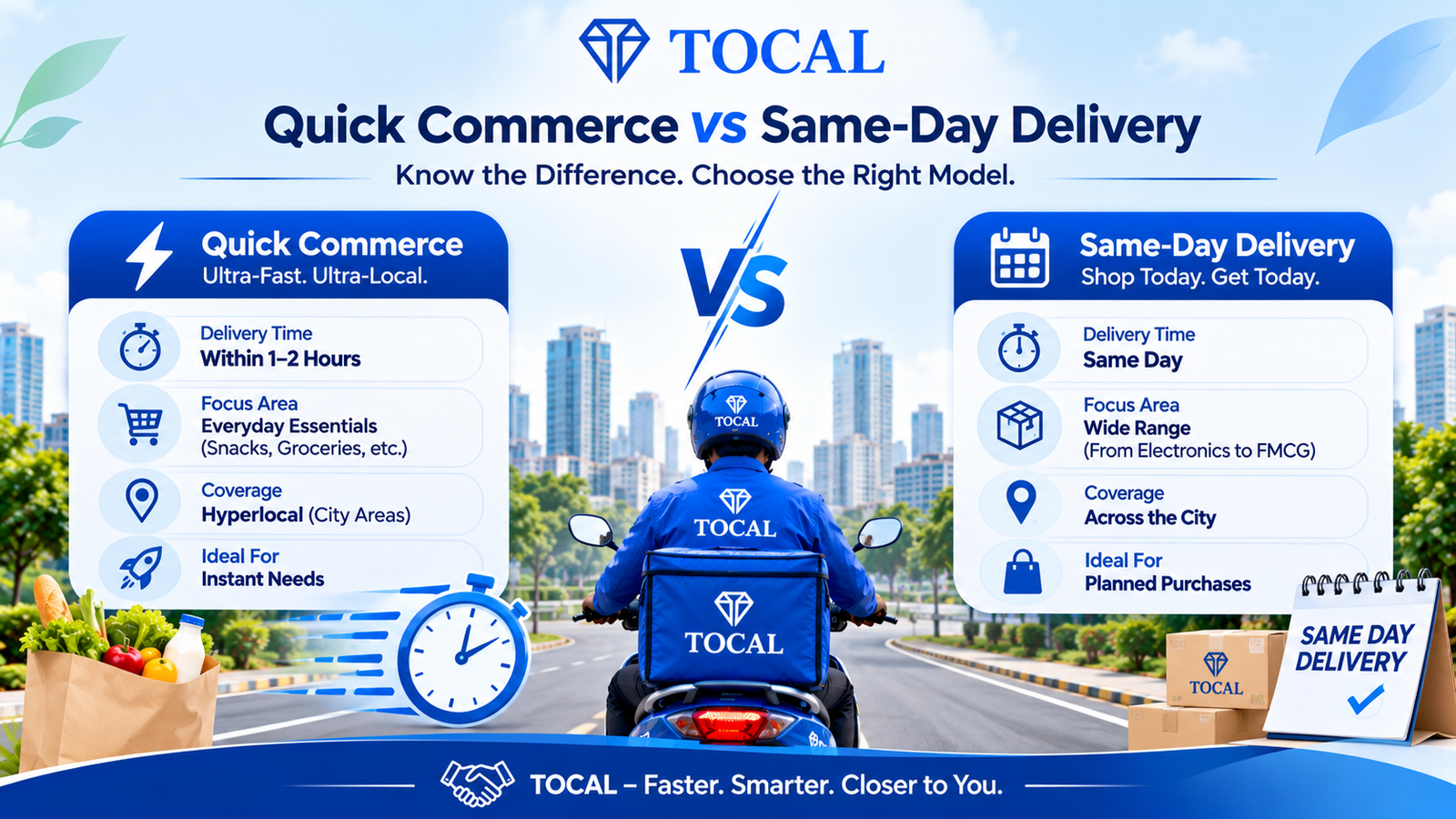
- Quick commerce and same-day: tight windows mean a missed delivery hurts more, so confirmation and tracking are essential (see quick commerce vs same-day delivery)
- FMCG and perishables: a failed attempt can mean wasted stock, so speed and fast reattempts matter (see choosing a delivery partner for FMCG and perishables)
- D2C and fashion: exchanges and size-related refusals are common, so clear policies help
How TOCAL helps reduce failed deliveries in Bengaluru
TOCAL builds dedicated delivery infrastructure in Bengaluru around an EV-only fleet, with zone-based trained delivery partners and live performance monitoring. Our approach follows three steps:
- Understand: we analyse your order volumes, delivery zones, failed delivery and RTO patterns and SLA requirements
- Deploy: we put the right fleet, trained delivery partners and operations team in place
- Manage, track and scale: we monitor performance live and scale capacity up or down as your volumes change
With 98%+ on-time delivery, 30 lakh+ green deliveries completed and 35+ brands served, TOCAL supports D2C brands, retail and FMCG, SMEs and individual sellers and enterprises and quick commerce, through hyperlocal delivery, last-mile delivery, fulfilment centers and EV fleet rentals.
Frequently asked questions
What is RTO in delivery?
RTO stands for return to origin. It happens when a shipment cannot be delivered to the customer, for example after failed attempts or refusal, and is sent back to the seller or warehouse it came from.
What happens when a delivery fails?
The rider records the reason, tries to contact the customer, and the order is reattempted or rescheduled according to the agreed policy. If delivery still cannot be completed, the order is marked for return to origin, transported back, inspected and processed by the seller.
How many delivery attempts are made before RTO?
It depends on the delivery partner's policy and your agreement. The number of attempts, the gap between them and the time before an order is marked for return should be written into your SLA so everyone knows the rules.
Who pays for RTO?
It depends on your agreement and the cause. Commonly the seller bears the cost when the customer is unavailable or refuses the order, while the delivery partner may bear it when the failure is due to its own error. Define this clearly in the contract.
How can I reduce RTO for cash-on-delivery orders?
Confirm COD orders by call, message or OTP before dispatch, validate addresses, encourage prepaid payment with incentives, set clear delivery slots, give live tracking so customers are ready, and review RTO by pin code and payment mode to spot risky patterns.
What is the difference between RTO and a customer return?
RTO happens before the customer accepts the order, when delivery fails or is refused. A customer return happens after successful delivery, when the customer sends the item back for a refund or exchange. They follow different processes and costs.
Does real-time tracking reduce failed deliveries?
Yes. Tracking links and status updates tell customers when the rider is nearby, so they are more likely to be available. Tracking also records timestamps and reasons, which helps you find patterns and fix them.
How does TOCAL help reduce failed deliveries in Bengaluru?
TOCAL provides last-mile and hyperlocal delivery in Bengaluru with zone-based trained delivery partners, an EV-only fleet and live performance monitoring. Share your failed delivery and RTO data and TOCAL will plan a setup around your zones and SLA needs.
Final thoughts
Failed deliveries and RTO will never vanish completely, but they can be cut sharply. Prevent what you can at checkout, give customers visibility and slots, use riders who know their zones, agree clear attempt and RTO rules with your partner and review the reasons every week. Each failure avoided saves a trip, a cost and a customer.
Struggling with failed deliveries or RTO in Bengaluru? Share your order volumes, failure patterns, service areas and SLA needs, and TOCAL will plan a delivery setup around your business. Talk to a TOCAL Delivery Expert.