Every parcel travels in three stages: from the seller into the network (first mile), between facilities (middle mile) and finally to the customer's door (last mile). Each stage has different vehicles, costs and challenges. Here is what they mean, how they connect and where your business should focus.
Quick answer
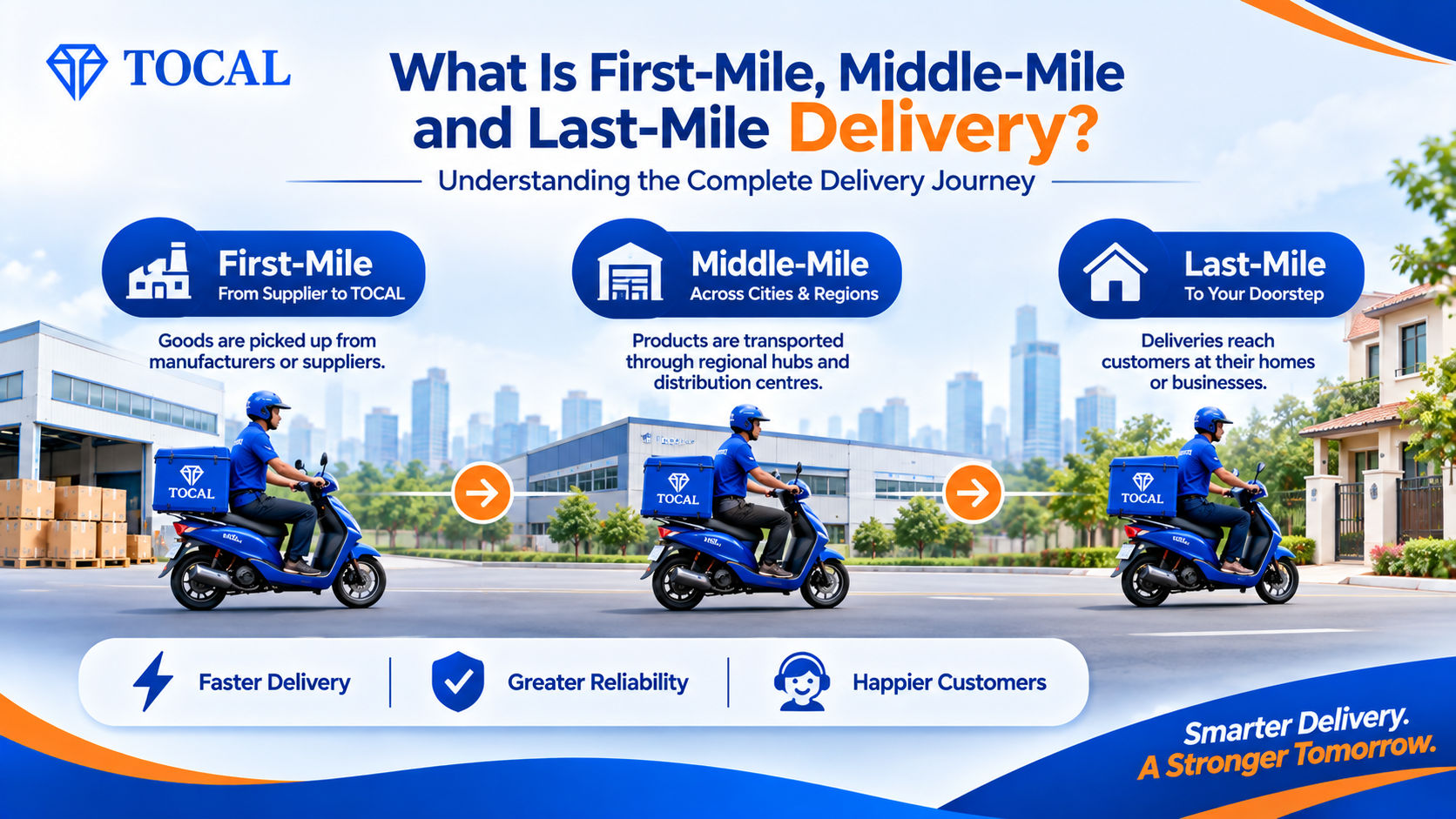
What are first-mile, middle-mile and last-mile delivery? First-mile delivery moves goods from the seller or supplier to the first facility in the network. Middle-mile delivery moves them in bulk between facilities, such as warehouses and hubs. Last-mile delivery brings them from the final hub, store or fulfilment centre to the customer's doorstep. The word "mile" describes the stage, not the actual distance.
Key takeaways
- First mile is pickup into the network; middle mile is bulk movement between facilities; last mile is delivery to the customer.
- The last mile is the most visible to customers and often the most costly per parcel.
- Hyperlocal and same-city deliveries can shorten or skip the middle mile.
- Weak handoffs between stages cause most delays, so data and SLAs must span all three.
- Where you invest depends on your model: national shipping, city-based delivery or both.
When a customer orders a product, they see two moments: "order placed" and "delivered". In between, the parcel passes through a chain of pickups, transfers and handoffs. Logistics people divide that chain into three stages to plan, price and improve each part.
This guide explains first-mile, middle-mile and last-mile delivery, how they differ, how a typical order moves through them and what it all means for ecommerce brands in Bengaluru.
The three stages of delivery at a glance
Think of a relay race with three runners:
- First mile: seller or supplier to the first facility
- Middle mile: facility to facility, usually in bulk
- Last mile: final facility to the customer's doorstep
The term "mile" is about the stage in the journey. A first mile can be a few kilometres in a city or hundreds across a country.
What is first-mile delivery?
First-mile delivery is the first leg of a shipment's journey, where goods move from the seller, manufacturer or supplier to the first facility in the network, such as a warehouse, fulfilment centre or sorting hub.
- Typical activities: pickup from the seller, collection from multiple sellers, initial scanning and handover
- Who is involved: sellers, suppliers, pickup riders or vehicles, receiving hubs
- Common challenges: missed pickup slots, unready or poorly packed orders, wrong labels and low data quality at handover
- What good looks like: on-time pickup, accurate scanning and clean packing from the start
What is middle-mile delivery?
Middle-mile delivery is the movement of goods between facilities in the network, for example from a central warehouse to regional hubs, or from a sorting centre to a local delivery hub. It usually involves bulk transport by trucks or larger vehicles, carrying many orders at once.
- Typical activities: linehaul, hub-to-hub transfers, sorting, consolidation and replenishment of local stock
- Who is involved: transport operators, warehouses, sorting and cross-dock hubs
- Common challenges: hub congestion, poor load planning, transit delays and limited visibility
- What good looks like: full loads, predictable schedules and tracked transfers
What is last-mile delivery?
Last-mile delivery is the final leg, from the last hub, store or fulfilment center to the customer's doorstep. It involves many small drops to different addresses, usually by bike, scooter, van or on foot.
- Typical activities: dispatch planning, rider assignment, delivery, customer contact and proof of delivery
- Who is involved: riders, local hubs, customers, operations teams
- Common challenges: traffic, weather, address problems, unavailable customers and failed deliveries
- What good looks like: on-time delivery, high first-attempt success and clear tracking
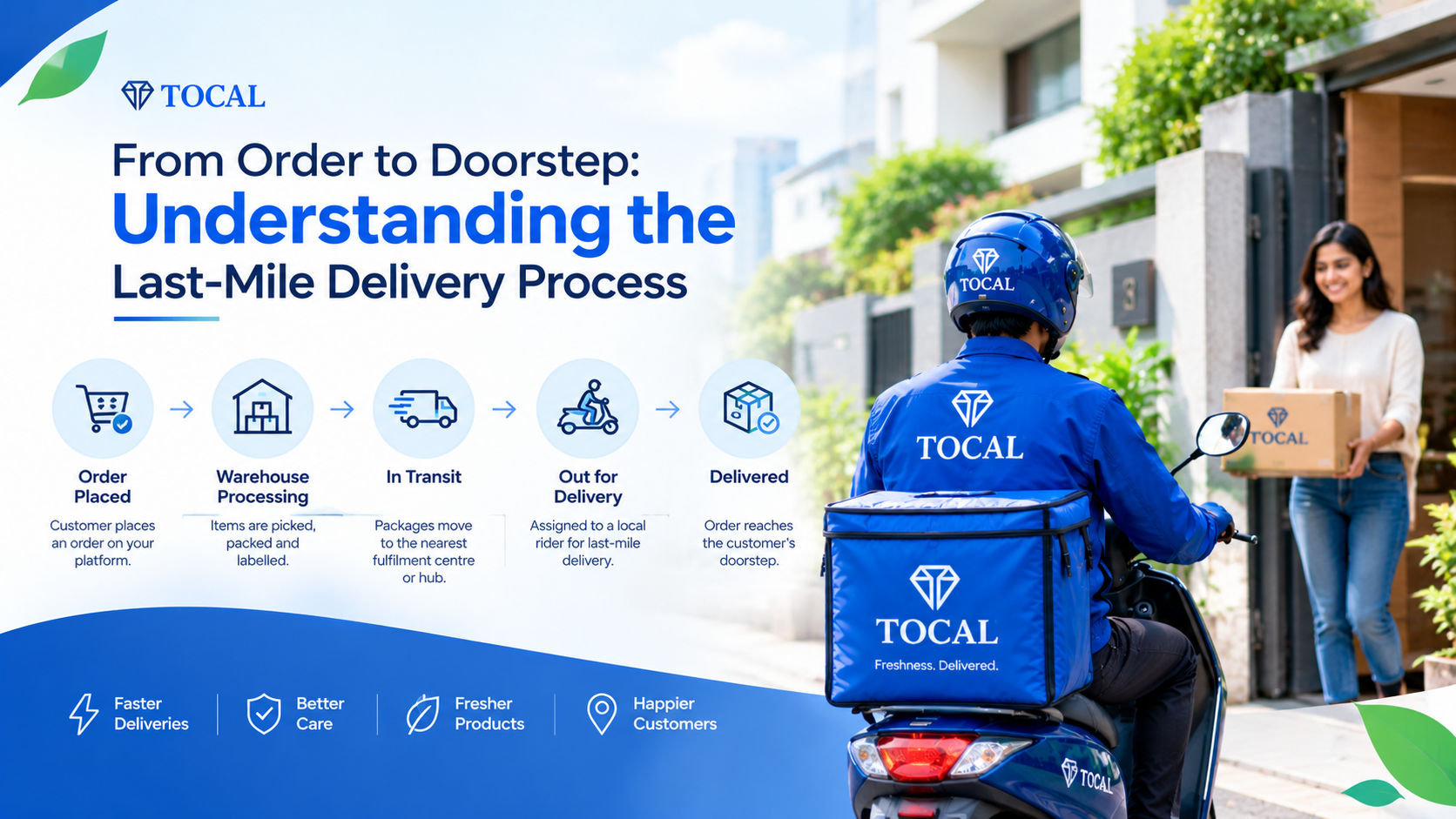
See every step in our guide to the last-mile delivery process from order to doorstep.
First-mile vs middle-mile vs last-mile: comparison
| Factor | First mile | Middle mile | Last mile |
|---|---|---|---|
| Journey | Seller to first facility | Between facilities | Final facility to customer |
| Volume per trip | Small to medium, collected from sellers | Large, bulk loads | Very small, one or a few parcels per stop |
| Typical vehicles | Bikes, vans, small trucks | Trucks and larger vehicles | Bikes, scooters, EVs, small vans |
| Customer visibility | Low, mostly the seller sees it | Low | High, the customer sees and judges it |
| Main cost driver | Pickup frequency and distance between sellers | Load utilisation and distance | Number of drops, traffic and failed attempts |
| Biggest risk | Delayed or incomplete pickups | Transit delays and hub bottlenecks | Late, failed or damaged deliveries |
| Key metric | Pickup on-time rate | Transit time and load utilisation | On-time delivery and first-attempt success |
An example: how one order moves through all three stages
Imagine a D2C brand in Bengaluru sells a product to a customer in another city:
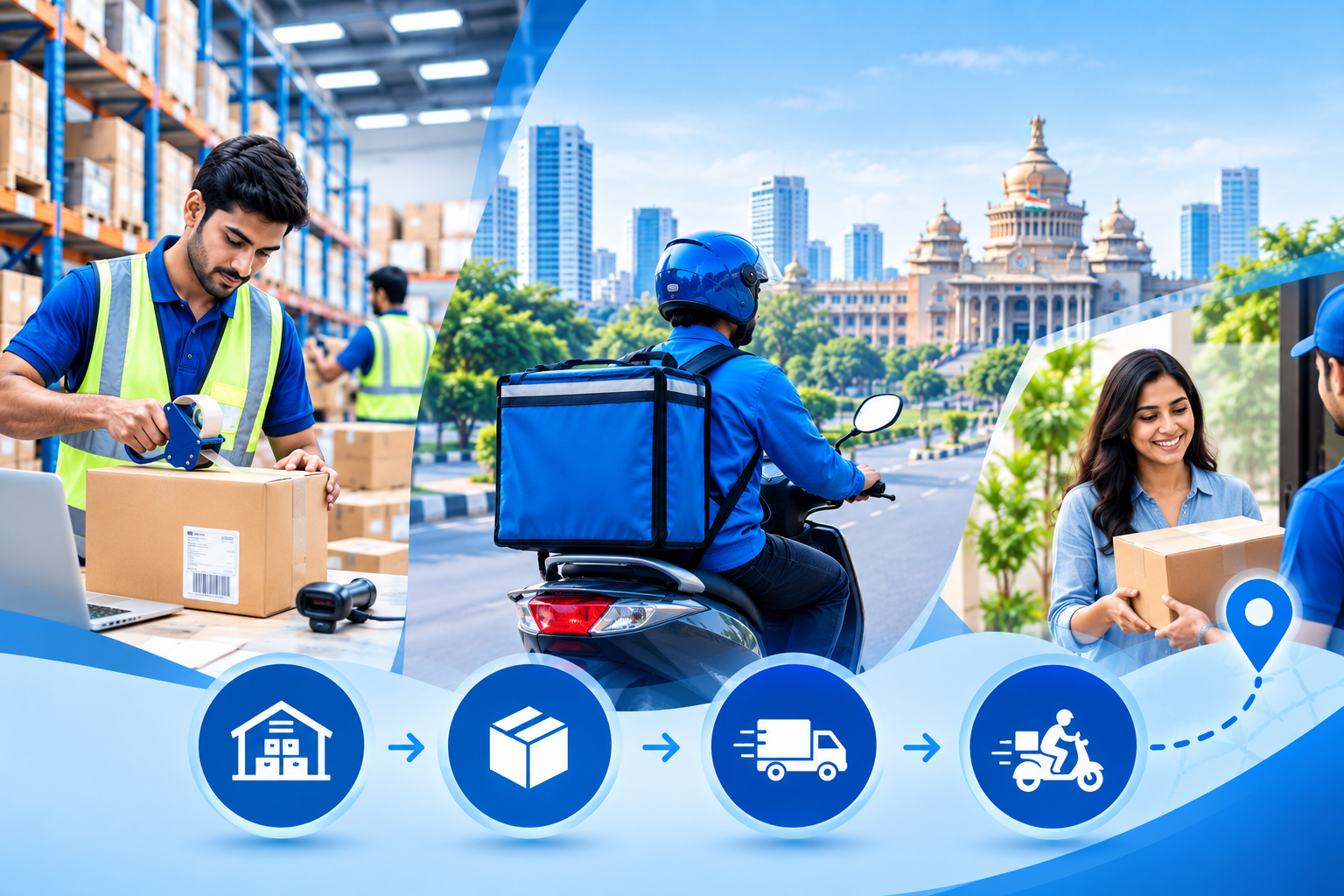
- First mile: a pickup rider collects the packed order from the brand's store or warehouse and takes it to a sorting hub
- Middle mile: the parcel is consolidated with others and moved by truck to a hub in the customer's city
- Last mile: a local rider picks it up from that hub and delivers it to the customer's doorstep
Now imagine the customer lives in the same city. If stock is already held in a nearby fulfilment center, the middle mile shrinks or disappears: the order goes from the local hub straight to the customer through hyperlocal delivery. This is why hyperlocal models can be so fast.
How the three stages connect, and where things go wrong
- Handoffs: every transfer between stages is a chance for delay, error or lost data
- Data gaps: if each stage uses a different system, nobody sees the whole journey
- Inventory placement: where stock sits decides how long the middle mile is, and how fast the last mile can be
- Mismatched promises: a quick last mile cannot fix a slow first or middle mile
A delivery is only as fast as its slowest stage, and the customer experiences the sum of all three.
Common challenges at each stage and how to fix them
| Stage | Challenge | Fix |
|---|---|---|
| First mile | Orders not ready at pickup | Set pickup slots, packing cutoffs and ready-to-ship checks |
| First mile | Labelling and data errors | Standard labels and scan-at-pickup |
| Middle mile | Hub delays and poor visibility | Tracked transfers and fixed schedules |
| Middle mile | Long distances from stock to customers | Place stock closer through regional or local hubs |
| Last mile | Failed deliveries | Address validation, slots and proactive updates (see failed deliveries and RTO) |
| Last mile | Inconsistent riders and quality | Dedicated riders in fixed zones (see dedicated delivery riders) |
Metrics to track across the three stages
- First mile: pickup on-time rate, pickup success rate, scan accuracy
- Middle mile: transit time, load utilisation, hub dwell time, damage during transfer
- Last mile: on-time delivery rate, first-attempt success, average delivery time by zone, cost per delivered order
- End to end: order-to-delivery time and customer complaints per 1,000 orders
Agree targets for each stage with your partners, using the approach in our guide to last-mile delivery SLAs, and give customers a single view through real-time delivery tracking.
Where should your business focus?
| Business model | Where to focus | Why |
|---|---|---|
| Ships across cities or states | All three, especially middle-mile partners and hub placement | Long distances make transfers a major source of time and cost |
| City-based D2C or retail | First and last mile, with local stock | Short journeys make pickup and doorstep quality the difference |
| Quick commerce or same-day | Last mile and local fulfilment | Speed depends on nearby stock and ready riders (see quick commerce vs same-day delivery) |
| SMEs and individual sellers | First mile convenience and reliable last mile | Simple pickup and dependable delivery without managing multiple vendors |
The three miles in Bengaluru
Bengaluru is a large, dense city, and its geography shapes each stage. Warehousing often sits towards the outskirts, while customers cluster in dense neighbourhoods such as Koramangala, HSR Layout, Indiranagar and Whitefield. Congested corridors like ORR and sudden rain can slow every stage.
- Keep first-mile pickups on planned slots so orders do not queue at your store or warehouse
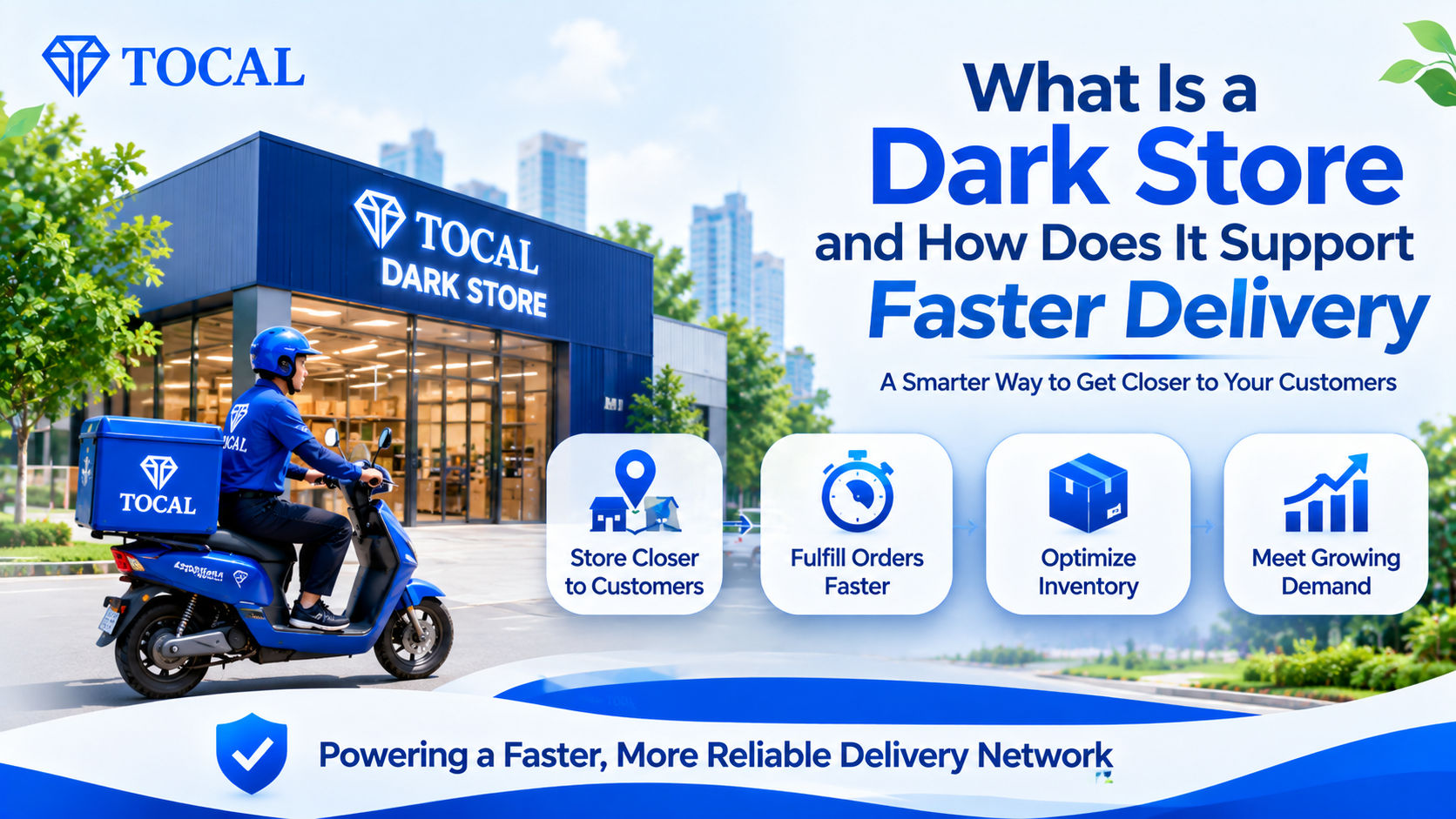
- Shorten the middle mile by placing fast-moving stock in hubs close to demand zones (see micro-fulfilment centres in Bengaluru and what a dark store is)
- Make the last mile consistent with fixed zones, trained riders and live tracking
- Consider an EV fleet for short, frequent urban trips (see green logistics in Bengaluru)
One partner or several? Managing handoffs across the stages
Using different partners for each stage can work, but every extra handoff adds delay and finger-pointing. Whoever you choose, insist on:
- Shared data: order IDs and status updates that follow the parcel across stages
- Clear handoff rules: who is responsible, and for what, at each transfer
- Stage-level SLAs: targets and reporting for each stage, plus an end-to-end view
- One escalation path: a named contact who can resolve problems across stages
Fewer partners and fewer handoffs usually mean fewer problems, a principle covered in how to scale daily deliveries without extra complexity.
How TOCAL supports the last mile in Bengaluru
TOCAL focuses on the stage customers see: last-mile and hyperlocal delivery in Bengaluru on an EV-only fleet, supported by fulfilment centers that bring stock closer to customers. Our approach follows three steps:
- Understand: we analyse your order volumes, delivery zones and SLA requirements
- Deploy: we put the right fleet, trained delivery partners and operations team in place
- Manage, track and scale: we monitor performance live and scale capacity up or down as your volumes change
With 98%+ on-time delivery, 30 lakh+ green deliveries completed and 35+ brands served, TOCAL supports D2C brands, retail and FMCG, SMEs and individual sellers and enterprises and quick commerce, through hyperlocal delivery, last-mile delivery, fulfilment centers and EV fleet rentals.
Frequently asked questions
What is first-mile delivery?
First-mile delivery is the first leg of a shipment's journey, where goods move from the seller, manufacturer or supplier to the first facility in the network, such as a warehouse, fulfilment centre or sorting hub. It covers pickup, collection and initial handover.
What is middle-mile delivery?
Middle-mile delivery is the movement of goods between facilities in the network, such as from a central warehouse to regional hubs or from a sorting centre to a local delivery hub. It usually involves bulk transport by trucks or larger vehicles.
What is last-mile delivery?
Last-mile delivery is the final leg of the journey, from the last hub, store or fulfilment centre to the customer's doorstep. It is the most visible stage for customers and involves many small drops to different addresses.
What is the difference between first-mile, middle-mile and last-mile delivery?
First mile moves goods from the seller into the network, middle mile moves them in bulk between facilities, and last mile delivers them from the final facility to the customer. They differ in purpose, vehicles, volumes, cost drivers and customer visibility.
Which mile is the most expensive?
The last mile is often considered the most costly per parcel because it involves many small drops, unpredictable conditions and failed attempts. The actual split depends on your product, distances and volumes.
Do all deliveries go through all three stages?
No. Long-distance shipments usually pass through all three. In same-city or hyperlocal delivery, stock may sit in a nearby hub or store, so the middle mile can be very short or skipped and the first and last miles are close together.
How can businesses improve first-mile, middle-mile and last-mile performance?
Standardise pickup and handover, place stock closer to customers to shorten the middle mile, use fixed zones and dedicated riders for the last mile, share data across stages and agree clear SLAs with every partner.
Does TOCAL provide last-mile delivery in Bengaluru?
Yes. TOCAL focuses on last-mile and hyperlocal delivery in Bengaluru with an EV-only fleet, supported by fulfilment centers, serving D2C brands, retail and FMCG, SMEs and individual sellers, and enterprises.
Final thoughts
First mile gets the order into the network, middle mile moves it through, and last mile puts it in the customer's hands. Understanding each stage helps you spot where time and money leak, choose the right partners and decide where to invest. For most city-based brands, that means getting pickups right, holding stock close to customers and making the last mile consistent.
Want a more reliable last mile in Bengaluru? Share your expected volumes, service areas and SLA needs, and TOCAL will plan a delivery setup around your business. Talk to a TOCAL Delivery Expert.