A dark store looks like a shop but never opens its doors to shoppers. It exists to pick, pack and dispatch online orders as fast as possible from a location close to customers. Here is how dark stores work, why they speed up delivery, where they fall short and whether one makes sense for your business.
Quick answer
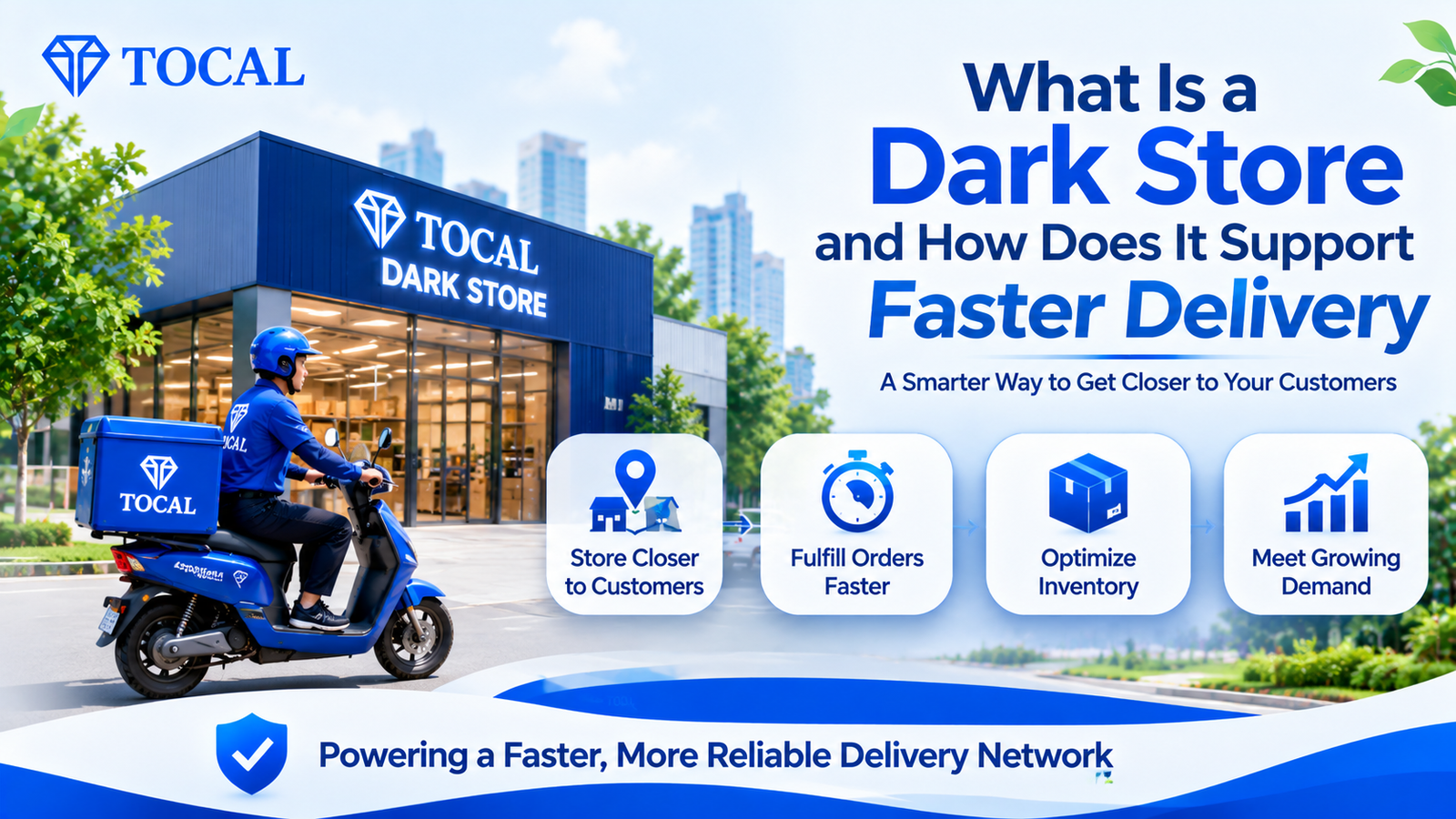
What is a dark store and how does it support faster delivery? A dark store is a small warehouse or retail-style outlet closed to walk-in customers and used only to fulfil online orders. It supports faster delivery by placing fast-moving stock close to dense demand, using a layout built for quick picking, tracking inventory in real time and having riders ready to leave the moment an order is packed.
Key takeaways
- A dark store serves only online orders, so its layout and staff are optimised for picking, not browsing.
- Speed comes from proximity, a limited assortment, accurate inventory and ready riders.
- Dark stores need dense, repeat demand; without it, cost per order rises quickly.
- A shared fulfilment centre or micro-hub can deliver many of the same benefits for smaller volumes.
- The dark store and the delivery fleet must be planned together to keep promises.
When an order arrives within minutes, the speed rarely comes from the rider alone. It comes from where the stock was waiting. Dark stores moved the inventory out of distant warehouses and into the neighbourhoods where customers actually live.
This guide explains what a dark store is, how it works, why it makes delivery faster, how it compares with other fulfilment models and how to decide if it fits your business.
What is a dark store?
A dark store is a retail-style warehouse or micro-fulfilment outlet that is closed to walk-in shoppers and used only to pick, pack and dispatch online orders. It is usually placed in or near dense residential and commercial areas so that orders can reach customers within minutes or a few hours.
The name comes from the fact that the store is "dark" to the public: there is no checkout counter and no browsing experience, only shelves arranged to make picking as quick as possible.
How a dark store works, step by step
| Stage | What happens | How it saves time |
|---|---|---|
| 1. Replenishment | Stock arrives from suppliers or a main warehouse and is checked in | Frequent, planned top-ups keep fast movers available |
| 2. Slotting | Items are placed on shelves by demand, with fast sellers closest to the packing area | Shorter walking distance per order |
| 3. Order received | The order enters the system with live stock checks | Only available items are shown, avoiding substitutions |
| 4. Picking | A picker collects items along an optimised path, guided by an app or scanner | Fast, accurate collection |
| 5. Packing | Items are checked, packed and labelled at a packing station | Standard packing keeps handling quick and consistent |
| 6. Handover | The packed order is passed to a waiting rider at a dispatch point | No waiting time between packing and pickup |
| 7. Delivery | The rider travels a short distance to the customer, tracked live | Short radius means short trip |
6 ways a dark store supports faster delivery
1. Stock sits close to the customer
The biggest time saver is distance. A dark store in the same neighbourhood replaces a trip from a distant warehouse with a short ride.
2. The layout is built for picking, not browsing
With no shoppers, shelves can be arranged purely by demand and picking routes. Pickers travel less and collect more orders per hour.
3. The assortment is small and fast-moving
Carrying a limited range of high-demand items keeps the store compact and makes every product easy to find. It also reduces dead stock.
4. Inventory is tracked in real time
Live stock data means customers only see items that are actually on the shelf, which cuts cancellations, substitutions and delays.
5. Riders are ready the moment an order is packed
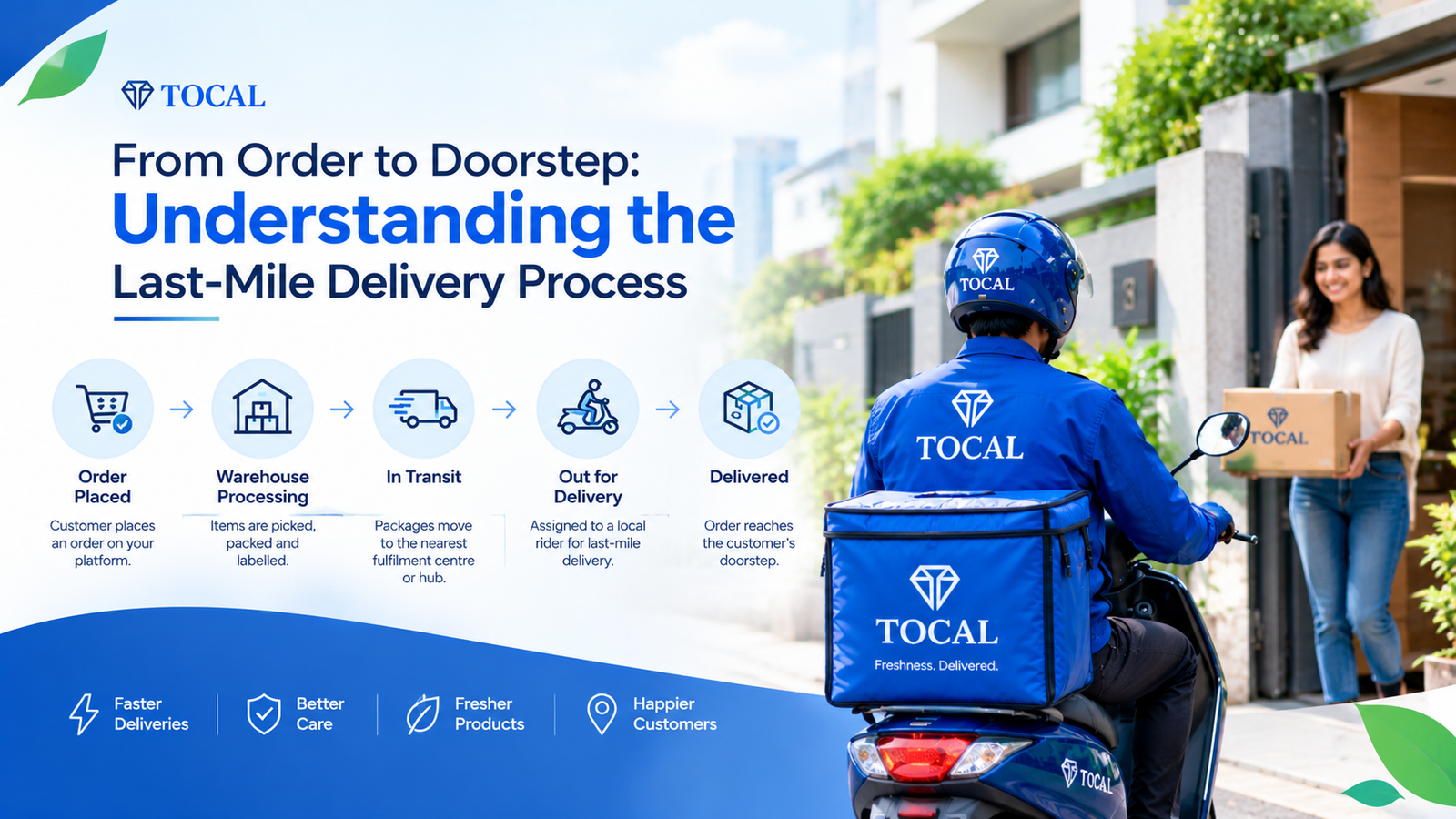
In a well-run dark store, riders wait at a dispatch point and leave as soon as the order is sealed. That removes the idle gap between packing and pickup, a hidden source of delay in many operations. See how this fits in the last-mile delivery process.
6. Operations are focused on one job
Staff, systems and processes are designed for fulfilment alone, without the distractions of running a retail floor.
Fast delivery is decided before the rider leaves: by where the stock is, how it is stored and how quickly it is packed.
Dark store vs retail store vs warehouse vs micro-fulfilment centre
| Factor | Dark store | Retail store | Central warehouse | Micro-fulfilment centre |
|---|---|---|---|---|
| Open to shoppers | No | Yes | No | No |
| Main purpose | Rapid local order fulfilment | In-store sales, some online orders | Bulk storage and regional distribution | Fast fulfilment for a local area |
| Location | Dense neighbourhoods | High-footfall areas | Outskirts or industrial zones | Near dense demand zones |
| Assortment | Narrow, fast-moving | Wide, display-oriented | Very wide | Moderate, tuned to local demand |
| Typical delivery speed | Minutes to hours | Hours | Next day or longer | Hours to same day |
For more on the micro-fulfilment model, read our guide to micro-fulfilment centres in Bengaluru.
Benefits and limitations of dark stores
Benefits
- Speed: short distances and quick picking enable minutes-level or same-day promises
- Accuracy: live inventory and guided picking reduce errors
- Focus: operations and staffing are built purely around fulfilment
- Scalability in dense areas: adding stores adds local capacity
Limitations
- Needs dense, repeat demand: without enough orders nearby, fixed costs are spread thinly
- Urban real estate cost: space in dense areas can be expensive
- Stock duplication: holding the same items in several locations ties up inventory
- Limited assortment: not suited to wide or slow-moving catalogues
- Wastage risk: perishables need careful stock control
- Staffing complexity: shifts must flex with demand peaks and troughs
Is a dark store right for your business?
Ask these questions:
- Is my catalogue small and fast-moving? Dark stores suit essentials and high-frequency items
- Do I have dense, repeat demand in specific zones? That is the key condition for viability
- Do customers really value minutes-level delivery? If a same-day slot is enough, a lighter model may be better
- Can my margins support the fixed costs? Model cost per delivered order before committing
- Do I have riders and SLAs ready to match the store's speed? A fast store with slow delivery wastes the advantage
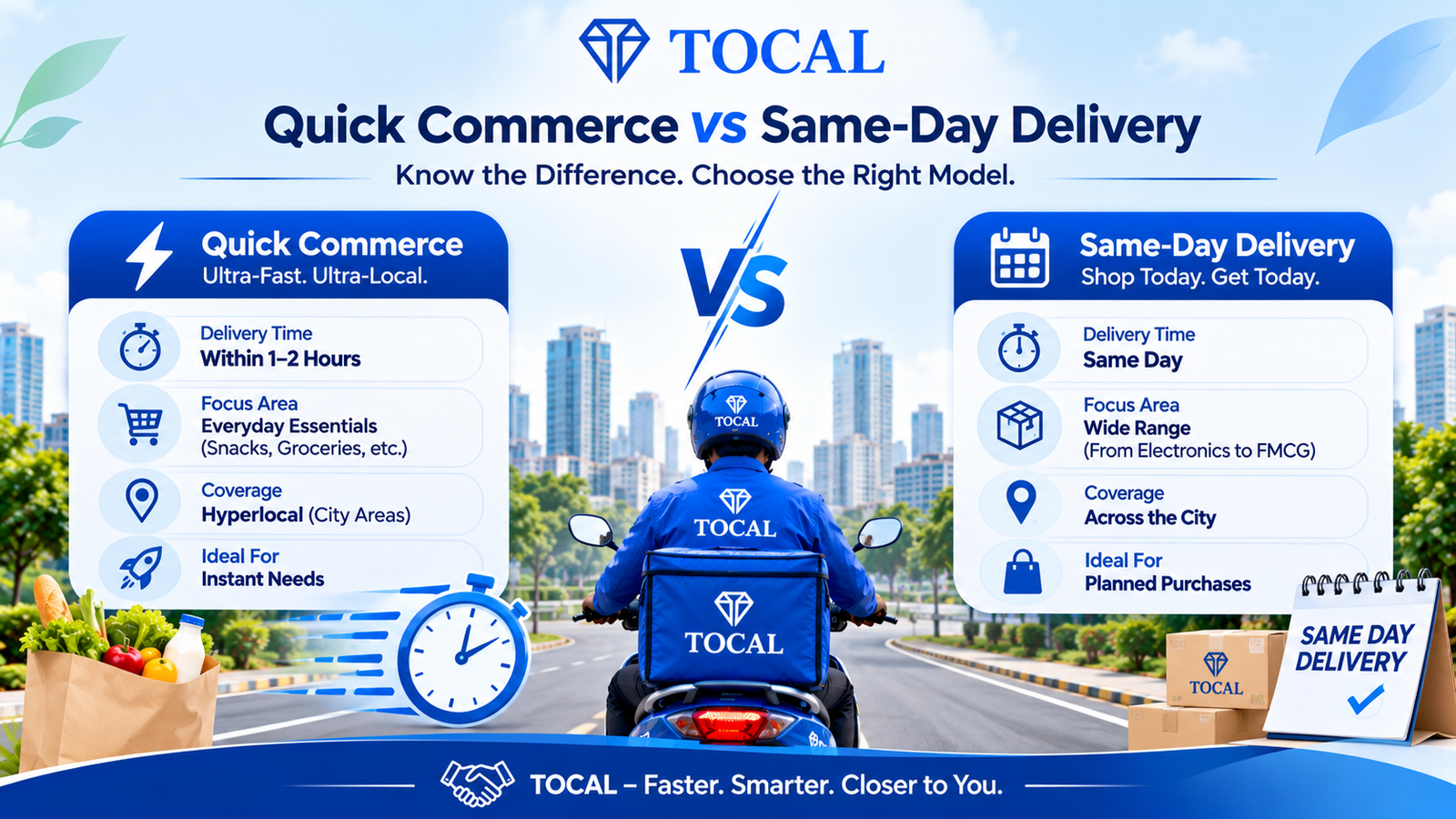
If your volumes are modest or your range is wide, a shared fulfilment centre or micro-hub near your main zones often gives most of the benefit without the full cost. Compare the delivery promises in quick commerce vs same-day delivery.
Key design choices for a dark store
- Location: choose by the density and repeat rate of orders within a short delivery radius, and by easy rider access
- Layout: place fast movers closest to packing, and group items for short picking paths
- Inventory: plan frequent replenishment and keep safety stock for top sellers
- Technology: inventory sync, order management, picking guidance and rider dispatch
- Packing and dispatch area: a clear handover point so riders never wait
- Storage conditions: ambient, chilled or frozen zones, depending on your products
- Staffing: shifts matched to demand patterns, with trained pickers and packers
Metrics that show whether a dark store is performing
- Order-to-dispatch time: from order received to rider departure
- Pick accuracy: orders picked correctly ÷ total orders × 100
- Stock availability (fill rate): items available when ordered
- Orders per hour per picker
- Wastage and stock turns
- Delivery time and on-time rate
- Cost per successfully delivered order, including idle time and failed deliveries
Set targets with your delivery partner using the approach in our guide to last-mile delivery SLAs.
How dark stores and delivery partners work together
A dark store is only half of fast delivery. The other half is a fleet that matches its speed:
- Dedicated riders in fixed zones, who know the area and are ready for instant dispatch (see dedicated delivery riders)
- Reserved base capacity plus flexible peak support, as in fixed delivery capacity vs on-demand fleet support
- Live tracking, so customers see progress and your team spots delays (see real-time delivery tracking)
- Low failed-delivery rates, because a missed minutes-level promise costs more (see how delivery companies handle failed deliveries and RTO)
Dark stores and fast delivery in Bengaluru
Bengaluru's dense neighbourhoods such as Koramangala, HSR Layout, Indiranagar and Whitefield are well suited to hyperlocal fulfilment, because many customers live within short distances of one another. At the same time, the city brings constraints: high urban rents, congested corridors such as ORR, and sudden rain that can break a delivery promise.
- Choose locations by order density and rider access, not just rent
- Plan rain and peak-hour buffers into delivery promises
- Use EV fleets for short, frequent trips (see green logistics in Bengaluru)
- For perishables, check handling needs carefully (see choosing a delivery partner for FMCG and perishables)
How to set up fast local fulfilment in 6 steps
- Map demand by zone and hour, and identify the densest clusters
- Define a core assortment of fast-moving items for each zone
- Choose the fulfilment model: your own dark store, a shared micro-hub or a fulfilment centre
- Design layout and processes for quick picking, packing and handover
- Line up the fleet and SLAs: dedicated riders, tracking and reporting
- Pilot in one zone, measure cost per delivered order and on-time rate, then expand. For the bigger picture, see how to scale daily deliveries without extra complexity
How TOCAL supports fast local fulfilment and delivery in Bengaluru
TOCAL builds dedicated delivery infrastructure in Bengaluru around an EV-only fleet, with fulfilment centers for warehousing and order fulfilment on demand, and hyperlocal delivery for same-day delivery within the city. Our approach follows three steps:
- Understand: we analyse your order volumes, product mix, delivery zones and SLA requirements
- Deploy: we put the right fulfilment, fleet, trained delivery partners and operations team in place
- Manage, track and scale: we monitor performance live and scale capacity up or down as your volumes change
With 98%+ on-time delivery, 30 lakh+ green deliveries completed and 35+ brands served, TOCAL supports D2C brands, retail and FMCG, SMEs and individual sellers and enterprises and quick commerce, through hyperlocal delivery, last-mile delivery, fulfilment centers and EV fleet rentals.
Frequently asked questions
What is a dark store?
A dark store is a retail-style warehouse or micro-fulfilment outlet that is closed to walk-in shoppers and used only to pick, pack and dispatch online orders. It is placed close to dense customer areas so orders can be delivered very quickly.
How does a dark store support faster delivery?
It shortens delivery in several ways: stock sits close to customers, the layout is designed for fast picking, the assortment is limited to fast-moving items, inventory is tracked in real time, and riders are ready to leave as soon as an order is packed.
What is the difference between a dark store and a regular store?
A regular store serves walk-in customers and is arranged for browsing. A dark store serves only online orders and is arranged for picking efficiency, with no customer-facing shopping experience.
What is the difference between a dark store and a warehouse?
A warehouse is typically larger, located farther from customers and holds a wide range of stock for bulk or longer-distance fulfilment. A dark store is smaller, closer to customers and holds a narrower range for rapid local delivery.
What are the disadvantages of dark stores?
Dark stores need dense, repeat demand to be viable, urban real estate can be expensive, stock may be duplicated across locations, the assortment is limited and perishable items risk wastage. Without enough order volume, costs per order can rise quickly.
Do I need a dark store to offer fast delivery?
Not always. A shared fulfilment centre or micro-hub near your main demand zones can support same-day or fast delivery without running your own dark store, especially if your volumes are modest or your catalogue is wide.
Which metrics matter for a dark store?
Key metrics include order-to-dispatch time, pick accuracy, stock availability, orders per hour per picker, wastage, delivery time and cost per delivered order. Together they show whether the dark store is fast, accurate and economical.
Does TOCAL offer fulfilment and delivery for dark-store style operations in Bengaluru?
TOCAL offers fulfilment centers and hyperlocal and last-mile delivery in Bengaluru on an EV-only fleet. Share your product mix, volumes and target zones and TOCAL will plan the right fulfilment and delivery setup for your business.
Final thoughts
A dark store is a powerful tool for speed, but only where demand is dense and repeat. Place stock close to customers, keep the assortment tight, track inventory live and pair the store with riders who can match its pace. If the volumes are not there yet, start lighter with a shared hub or fulfilment centre and grow into more as your orders do.
Planning faster local fulfilment in Bengaluru? Share your product mix, volumes, target zones and SLA needs, and TOCAL will plan a fulfilment and delivery setup around your business. Talk to a TOCAL Delivery Expert.