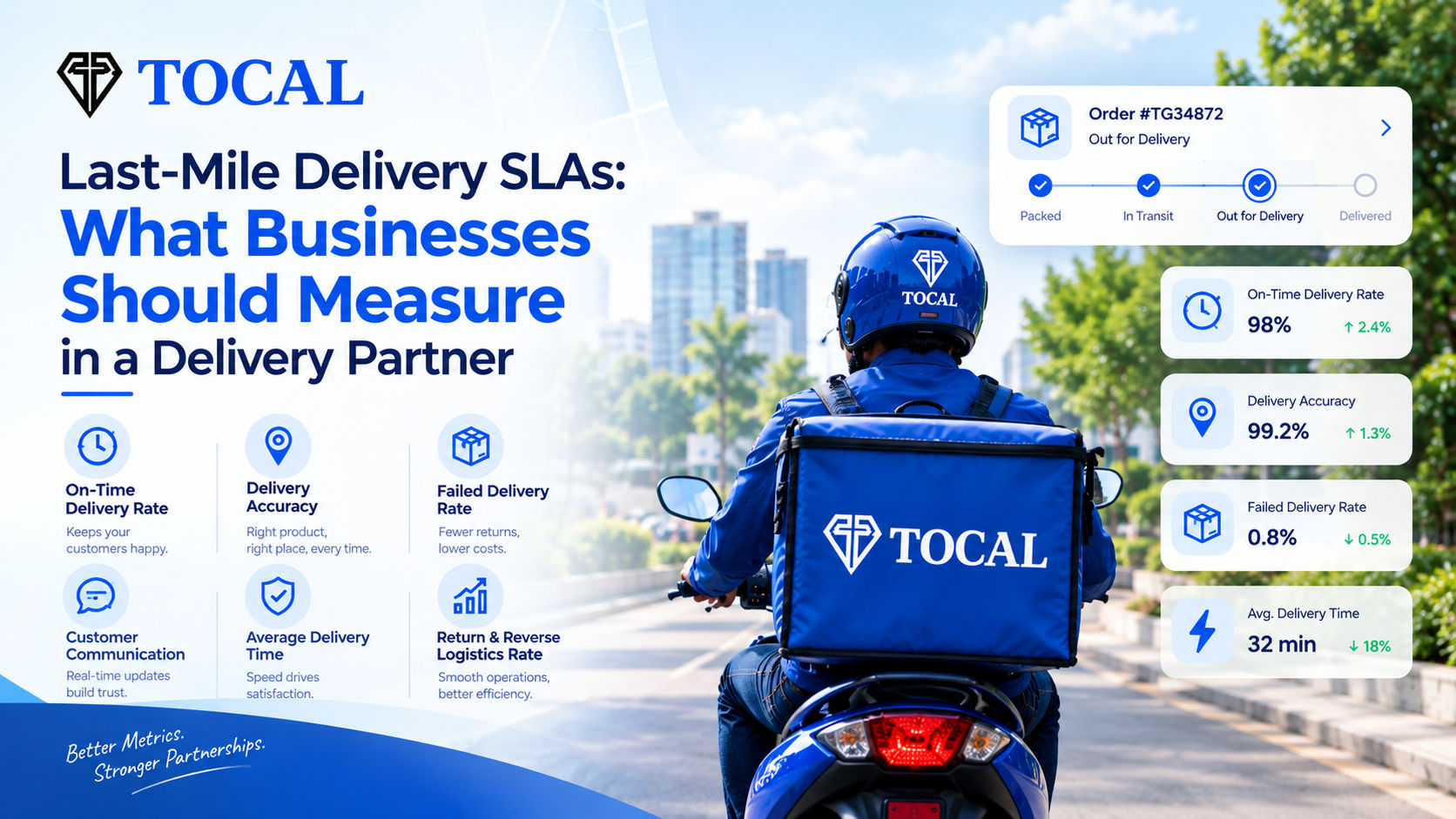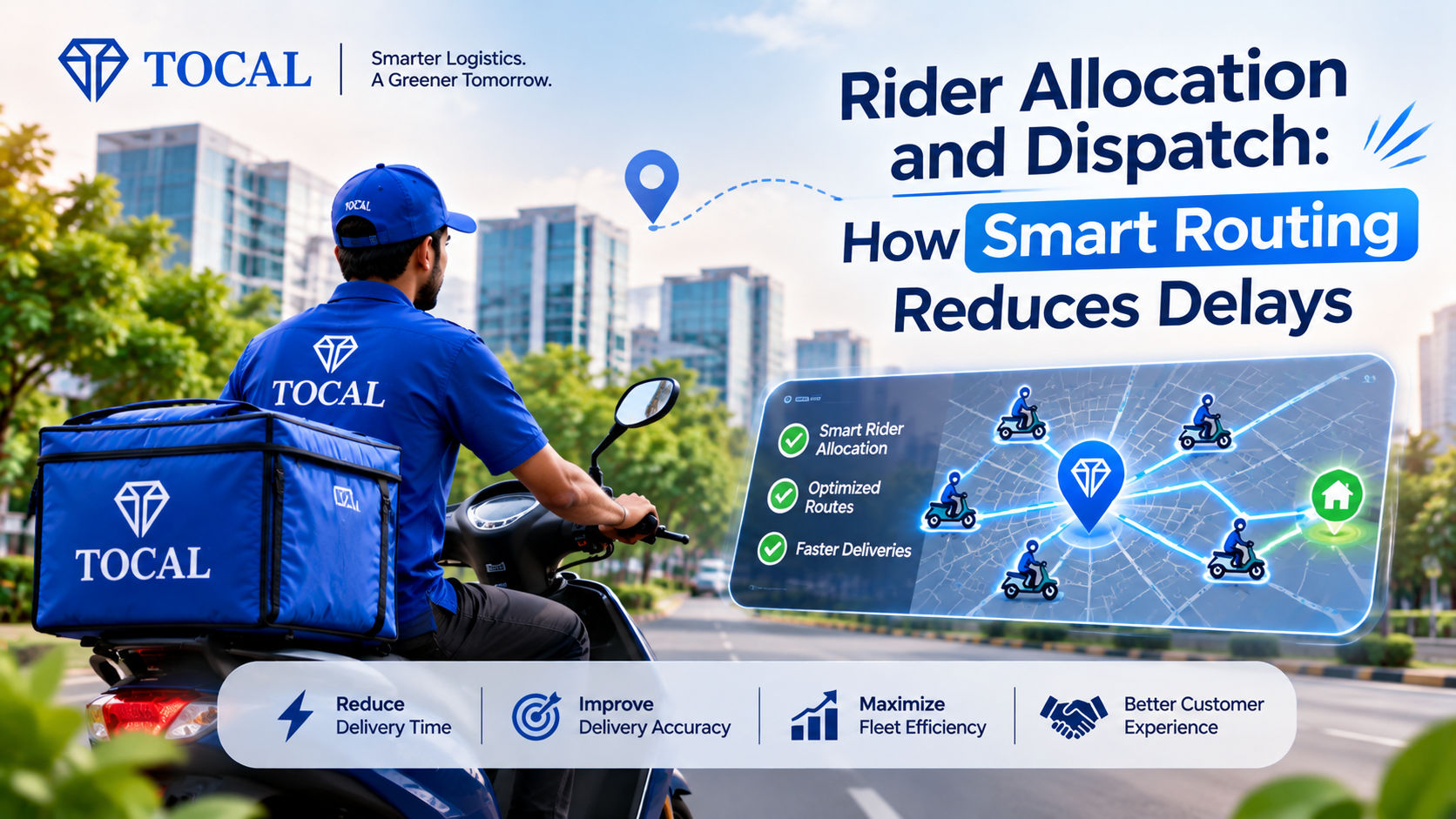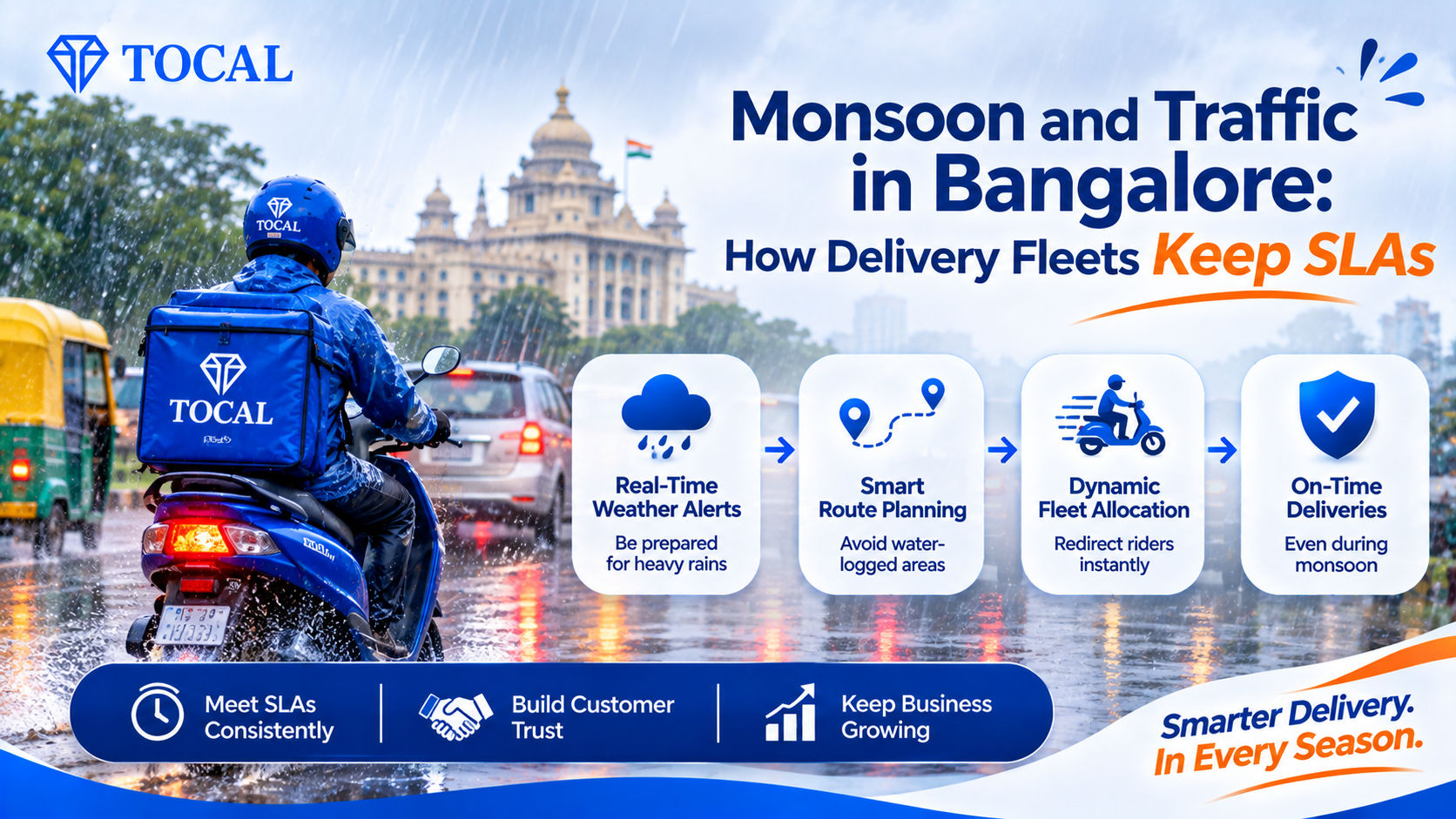
Rain and traffic are the two forces that most often break a delivery promise in Bangalore (Bengaluru). You cannot control either, but you can plan for both. Here is how well-run delivery fleets keep their SLAs through monsoon showers and peak-hour jams, and what businesses should ask for in their agreements.
Quick answer
How do delivery fleets keep SLAs during monsoon and traffic in Bangalore? They plan realistic, flexible delivery windows, keep buffer rider capacity, assign riders to fixed zones they know, limit batch sizes in heavy rain, protect parcels with rain-ready packaging, monitor live and alert customers early, and follow a weather playbook with clear triggers and rider safety rules. A well-written SLA defines weather conditions narrowly and requires proactive communication.
Key takeaways
- Plan for rain and peak traffic in advance: buffers, windows and capacity, not heroics on the day.
- Fixed zones, local knowledge and smaller batches protect on-time performance when roads slow down.
- Rider safety comes first: clear rules on gear, speed and when to pause deliveries.
- Weather clauses in SLAs should be narrow, evidence-based and paired with communication duties.
- Measure rainy-day performance separately so you can improve it.
Bangalore is known for pleasant weather, but delivery teams know a different side of it: sudden evening downpours, waterlogged stretches and traffic that can double travel times within minutes. The city typically sees heavy rain in both the southwest monsoon (roughly June to September) and the northeast monsoon (roughly October to December), with thunderstorms in between.
This guide explains how monsoon and traffic affect delivery, how fleets protect SLAs, and what to put in your agreements so that bad weather does not mean broken promises.
How monsoon and traffic affect delivery
| Condition | Effect on delivery | Risk to SLA |
|---|---|---|
| Heavy or sudden rain | Slower riding, more caution, fewer deliveries per hour | Late deliveries and missed windows |
| Waterlogging and blocked roads | Detours or no-go stretches | Long delays, failed deliveries |
| Peak-hour traffic (morning and evening) | Longer trips, unpredictable travel time | Windows broken by minutes that add up |
| Rain plus evening peak | Combined slowdown, surging demand | Worst-case delays and rider shortage |
| Wet parcels and handovers | Packaging failure, damage, product quality issues | Complaints, refunds and returns |
| Reduced rider availability | Riders pause or log off for safety | Capacity gaps when demand is high |
| Customer unavailability | People are unreachable or unable to come to the door | Failed attempts and RTO (see failed deliveries and RTO) |
Why SLAs break in rain and traffic
- Promises ignore real conditions: fixed windows set for a dry, quiet day
- Capacity is sized for average days, so there is no buffer when demand surges and riders slow down
- Long routes and big batches multiply the effect of every delay
- No weather playbook, so decisions are made ad hoc, late and inconsistently
- Weak communication, so customers learn about delays only after the promise is missed
10 ways fleets keep SLAs in monsoon and traffic
1. Set realistic, flexible delivery windows
Use time-of-day travel data by zone and add buffers for known peaks and rainy conditions. Show windows instead of single exact times, and adjust them when forecasts or live conditions change.
2. Use fixed zones and local knowledge
Riders who work the same zones know which lanes flood, which entrances to use and how traffic moves. That cuts detours and failed attempts. See how in dedicated delivery riders.
3. Keep buffer capacity
Rain slows every rider, so the same orders need more rider-hours. A fixed base with a pre-agreed flexible layer covers this, as explained in fixed delivery capacity vs on-demand fleet support.
4. Route by time of day, not just distance
Smart routing uses real travel times and avoids known chokepoints at peak hours. Learn how in rider allocation and dispatch.
5. Limit batch sizes in heavy rain
Large batches work in good conditions. In heavy rain, smaller batches stop a single delay from cascading across many customers.
6. Put rider safety first
Define gear, vehicle checks, speed guidance and clear rules for when to pause deliveries in severe weather. Riders should never be pushed to risk safety to protect a number. See how delivery partner training and safety support better deliveries.
7. Protect parcels with rain-ready packaging
Use water-resistant outer packaging or sealed covers, and waterproof or insulated delivery bags. Pay extra attention to electronics, documents, food and fragile items, and plan a careful doorstep handover.
8. Shorten trips with stock closer to customers
Shorter trips mean less exposure to traffic and rain. Hubs and fulfilment centers near dense zones cut distance (see what a dark store is).
9. Monitor live and communicate early
A control team watching live progress can re-route, reassign orders and warn customers before a window is missed. Customers forgive weather delays far more readily when told early. See real-time delivery tracking.
10. Follow a weather playbook with clear triggers
Decide in advance what happens at each level of conditions, who decides and how customers are told. The next section shows a simple version.
You cannot stop the rain, but you can decide in advance what happens when it comes.
A simple weather playbook for delivery operations
| Level | Trigger | Actions |
|---|---|---|
| Normal | Dry weather, typical traffic | Standard windows, normal batching |
| Watch | Rain forecast or light rain beginning | Add window buffers, brief riders, check packaging stock, alert control team |
| Alert | Heavy rain, slow traffic or localised waterlogging | Smaller batches, wider windows, activate flexible riders, proactive customer messages, avoid affected routes |
| Pause | Severe conditions or official weather warnings affecting safety | Pause deliveries in affected zones, protect riders, notify customers and offer rescheduling, resume when safe |
Base triggers on a mix of official weather forecasts and warnings, live traffic and on-ground reports from riders.
Planning for traffic peaks
Traffic in Bangalore follows patterns. Plan around them:
| Peak | Why it matters | How to plan |
|---|---|---|
| Morning and evening commute | Corridors such as ORR and routes around Whitefield slow sharply | Use time-based travel estimates, wider windows and shorter routes |
| Weekends and evenings | Order demand rises while roads are busy | Pre-position riders and stock in high-demand zones |
| Festivals and big sale days | Demand and traffic surge together | Reserve capacity early (see peak season delivery planning) |
| Events and road works | Closures and diversions | Check updates, adjust routes and zones in advance |
Protecting products in the rain
- Outer protection: water-resistant bags, sleeves or sealed covers
- Delivery bags: waterproof or insulated bags that close properly
- Sensitive items: extra layers for electronics, paper, cosmetics and food
- Doorstep handover: shelter the parcel while handing over, and avoid leaving it exposed
- Track damage: compare damage and complaint rates on rainy and dry days, then improve packaging
For temperature-sensitive and perishable goods, see choosing a delivery partner for FMCG and perishables.
Talking to customers in bad weather
- Tell them early: a short, honest message about expected delay beats silence
- Give a new window, not just an apology
- Offer choice: reschedule, cancel or continue if feasible
- Keep tracking live, so customers can see progress themselves
- Acknowledge rider safety: many customers appreciate that deliveries are being handled responsibly
What your SLA should say about weather and traffic
- Defined conditions: what counts as severe weather, such as official warnings or waterlogging in a zone, rather than any rain
- Evidence requirements: data such as timestamps, location records or weather alerts to support exclusions
- Narrow relief: exclusions only for affected zones and periods, not the whole city for the whole day
- Communication duties: proactive updates to customers and your team
- Make-up deliveries: how and when delayed orders are completed
- Priority handling: how urgent or perishable orders are treated
- Reporting: separate performance reporting for weather-affected periods
Broad exclusions that excuse ordinary rain or everyday traffic are a red flag. See our guide to last-mile delivery SLAs for the full checklist.
Metrics to track during monsoon
- On-time delivery rate, split by dry days, rainy days and peak hours
- Average delay in minutes for late orders
- Reschedule and cancellation rate due to weather
- Damage and wet-parcel complaints
- First-attempt delivery success
- Rider availability and incident or near-miss reports
- ETA accuracy in rain versus dry conditions
Comparing rainy and dry days shows exactly where your operation bends, and where to add buffer.
EV fleets in the monsoon
Electric fleets are well suited to short urban trips, but wet weather needs sensible practices:
- Follow the vehicle manufacturer's guidance on riding through water and on charging in wet conditions
- Keep charging areas dry, safe and well organised
- Plan routes and shifts within comfortable battery range, since slow traffic and detours add distance
- Train riders on wet-weather riding and basic vehicle checks
Read more on EV operations in how EV delivery fleets support sustainability goals and green logistics in Bengaluru.
Questions to ask a delivery partner about monsoon readiness
- Do you have a written weather playbook, and what are its triggers?
- How much buffer capacity do you keep, and how fast can you add more?
- What are your rider safety rules, gear standards and pause criteria?
- How do delivery windows and customer messages change in rain?
- How do you protect parcels, and how do you report damage on rainy days?
- What does the SLA say about weather, and how is performance reported?
How TOCAL supports businesses through Bangalore's rain and traffic
TOCAL builds dedicated delivery infrastructure in Bengaluru around an EV-only fleet, with zone-based trained delivery partners and live monitoring of performance. Our approach follows three steps:
- Understand: we analyse your order volumes, delivery zones, peak and weather patterns and SLA requirements
- Deploy: we put the right fleet, trained delivery partners and operations team in place
- Manage, track and scale: we monitor performance live and scale capacity up or down as your volumes change
With 98%+ on-time delivery, 30 lakh+ green deliveries completed and 35+ brands served, TOCAL supports D2C brands, retail and FMCG, SMEs and individual sellers and enterprises and quick commerce, through hyperlocal delivery, last-mile delivery, fulfilment centers and EV fleet rentals.
Frequently asked questions
How does rain affect delivery in Bangalore?
Rain slows traffic, can cause waterlogging and road blockages, makes riding less safe, and raises the risk of damaged or wet parcels. Together these increase delivery times, failed attempts and rider safety risks, especially during evening peaks.
How can delivery companies keep SLAs during the monsoon?
They plan realistic and flexible delivery windows, keep buffer rider capacity, use fixed zones and local knowledge, limit batch sizes in heavy rain, protect parcels with rain-ready packaging, monitor performance live, update customers early and follow a clear weather playbook with defined triggers.
Should an SLA include a weather exclusion?
A narrow, well-defined weather clause is reasonable for severe conditions, with clear triggers, evidence requirements and duties such as proactive customer updates and make-up deliveries. Broad exclusions that excuse ordinary rain or traffic are a red flag.
How do you plan delivery windows for rain and traffic?
Use time-of-day travel data by zone, add buffers for known peaks and rainy conditions, show windows rather than single exact times, and adjust them dynamically when forecasts or live conditions change.
Is it safe for riders to deliver in heavy rain?
Safety must come first. Riders need proper gear, vehicle checks, slower speeds and clear rules about when to pause deliveries in severe conditions. Businesses can help by accepting wider windows and not penalising safety-driven delays.
How can I protect products from rain during delivery?
Use water-resistant outer packaging or sealed covers, insulated or waterproof delivery bags, careful handover at the doorstep and, for sensitive items such as electronics and food, extra protective layers. Track damage rates on rainy days to improve packaging.
What should I ask a delivery partner about monsoon readiness?
Ask about their weather playbook and triggers, buffer capacity, rider safety rules and gear, how windows and customer updates change in rain, how they report performance on rainy days and what the SLA says about weather.
Does TOCAL deliver during Bangalore's monsoon?
TOCAL provides last-mile and hyperlocal delivery in Bengaluru with zone-based trained delivery partners on an EV-only fleet, live performance monitoring and capacity planned around each business's volumes, zones and SLA needs. Ask TOCAL about its current weather protocols for your specific requirements.
Final thoughts
Bangalore's rain and traffic are facts of life, not excuses. Fleets that keep their SLAs plan for them: realistic windows, buffer capacity, zone knowledge, smaller batches in heavy rain, rain-ready packaging, live monitoring and early communication, all backed by clear safety rules. Put the same thinking into your SLA, measure rainy-day performance separately and you will turn the toughest weeks of the year into proof of reliability.
Want a delivery setup that holds up in Bangalore's monsoon? Share your expected volumes, service areas and SLA needs, and TOCAL will plan a delivery setup around your business. Talk to a TOCAL Delivery Expert.