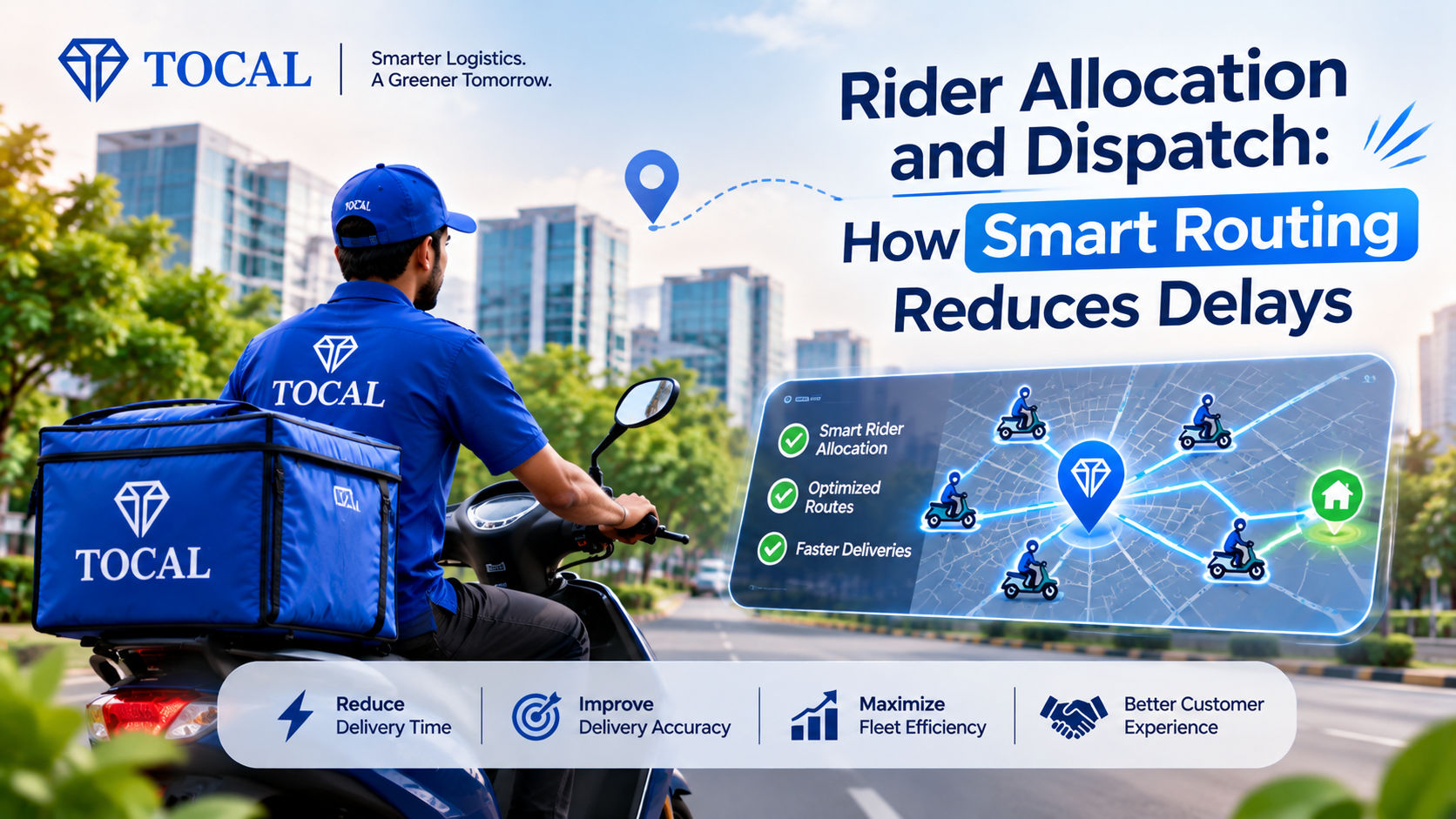
Most delivery delays are not caused by the road. They are caused by decisions made before the rider leaves: who gets which order, which orders travel together and in what sequence. Smart rider allocation and dispatch fix those decisions. Here is how they work and how they reduce delays in Bengaluru.
Quick answer
How does smart routing reduce delivery delays? Smart routing and rider allocation match each order to the right rider, group nearby orders into efficient batches, sequence stops sensibly, account for traffic, weather and vehicle range, and re-route when conditions change. That cuts unnecessary distance, rider idle time and missed delivery windows, so more orders arrive on time at lower cost.
Key takeaways
- Rider allocation decides who delivers; dispatch decides when and in what order.
- Zone-based allocation, batching and dynamic re-routing are the biggest levers on delays.
- Smart routing must balance speed, cost, rider workload and delivery windows, not just distance.
- Electric fleets need range-aware planning and well-timed charging.
- Local knowledge and a clear rider app matter as much as the algorithm.
Picture two operations with the same riders and the same orders. In one, riders are sent wherever the next order appears and cross the city for a single parcel. In the other, riders work fixed zones, orders are grouped and routes adapt to traffic. The second delivers faster, cheaper and more reliably, without adding a single rider.
This guide explains rider allocation and dispatch, what smart routing adds, and how to use both to reduce delays in a busy city like Bengaluru.
What are rider allocation and dispatch?
Rider allocation is the process of assigning each delivery order to a specific rider. Good allocation looks at where the rider is, which zone they cover, how many orders they carry and whether their vehicle suits the job, alongside the order's pickup point, destination and time window.
Dispatch is the stage where assigned orders are released to riders for pickup and delivery. It includes grouping orders, sequencing stops, sending instructions to the rider's app and monitoring progress until delivery is complete. Together, they sit between "order packed" and "rider on the road" in the last-mile delivery process.
How dispatch works, step by step
| Step | What happens | What causes delay |
|---|---|---|
| 1. Order ready | The order is packed and marked ready for pickup | Packing delays, orders not marked ready |
| 2. Grouping | Orders are clustered by zone, time window and priority | Poor clustering, long detours |
| 3. Rider matching | A suitable rider is chosen by location, load and availability | No rider free, riders far from pickup |
| 4. Stop sequencing | The order of drops is planned for an efficient route | Zig-zag routes, ignoring delivery windows |
| 5. Pickup and departure | The rider collects the orders and leaves | Waiting time at the store or hub |
| 6. Live monitoring | Progress is tracked and delays flagged | No visibility, late intervention |
| 7. Re-route or reassign | Plans change if traffic, rain or failures disrupt the route | Manual, slow decisions |
What is smart routing, and what data does it use?
Smart routing uses data to choose efficient routes and stop sequences, and to adjust them as conditions change. It goes beyond "shortest path" by weighing several factors at once:
| Input | Why it matters |
|---|---|
| Order locations | Shows which orders can share a trip |
| Delivery windows and SLAs | Ensures time-critical orders go first |
| Traffic and weather | Reflects real travel time, not just distance |
| Rider location and availability | Finds the rider who can start soonest |
| Rider load and capacity | Avoids overloading one rider while others idle |
| Vehicle type and range | Matches orders to vehicles, and keeps electric vehicles within battery range |
| Pickup readiness | Prevents riders waiting for unready orders |
| Order priority | Handles urgent, perishable or high-value orders first |
Where delays come from in manual or unplanned dispatch
- Riders sent across the city for one order because allocation ignores zones
- Waiting at pickup because orders are not ready when riders arrive
- Scattered stops because orders are not grouped or sequenced
- Uneven workloads, with some riders overloaded and others idle
- Slow reaction to traffic, rain or a failed delivery
- No live view, so delays are found only after the customer complains
6 ways smart routing and allocation reduce delays
1. Zone-based allocation
Assigning riders to fixed zones means they learn lanes, landmarks and gated communities, travel shorter distances to pickups and deliver more consistently. This is a core benefit of dedicated delivery riders.
2. Order batching and clustering
Grouping nearby orders into one trip cuts distance per delivery and frees riders for more work. The art is balance: batch enough to save cost, but not so much that the first customer waits for the last.
3. Matching the right rider to each order
Choosing the rider by location, load, vehicle and availability reduces pickup time and avoids overloading anyone. It also keeps the right vehicle on the right job.
4. Sensible stop sequencing
Ordering stops by geography and delivery window avoids zig-zagging and ensures time-critical orders are delivered first, protecting your delivery SLAs.
5. Dynamic re-routing and reassignment
When traffic builds, rain starts or a delivery fails, plans should adjust: re-sequence stops, hand an order to a nearer rider or notify the customer early. Pair this with real-time delivery tracking so the control team can act in minutes.
6. Load balancing and capacity planning
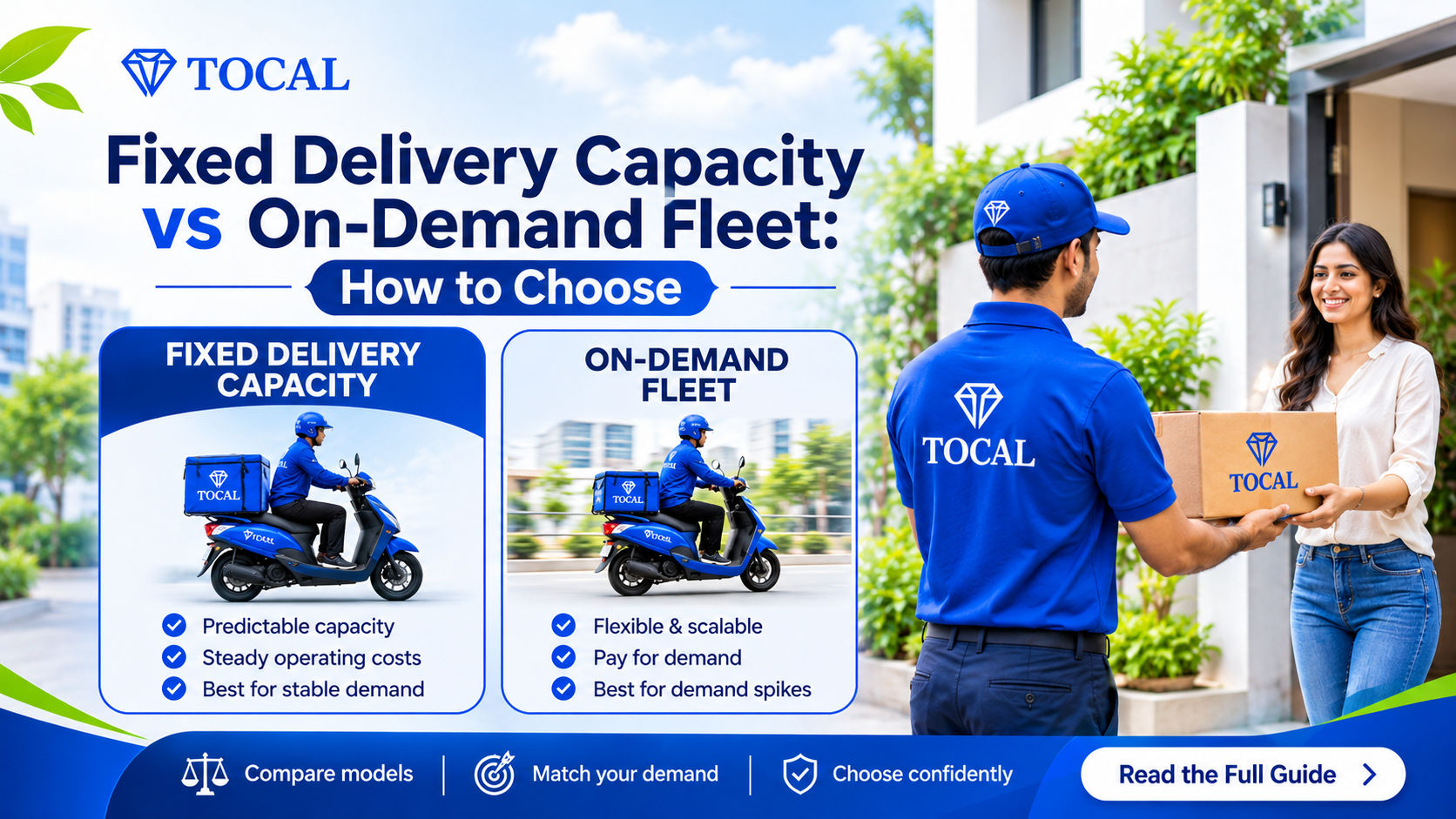
Looking at demand by zone and hour lets you place riders where orders will appear, and add flexible capacity before peaks, as covered in fixed delivery capacity vs on-demand fleet support and peak season delivery planning.
The fastest route is not always the shortest. It is the one that matches the right rider, the right orders and the right moment.
Allocation strategies compared
| Strategy | How it works | Strength | Limitation |
|---|---|---|---|
| Nearest rider | The closest available rider gets the order | Quick pickups, simple | Scatters riders, weak local knowledge |
| Zone-based | Riders own fixed zones and take orders in them | Consistency, local expertise | Zones can be uneven when demand shifts |
| Batch-based | Nearby orders are grouped and given to one rider | Lower cost per delivery | Can delay the first order in a batch |
| Priority or window-based | Urgent or time-bound orders are served first | Protects SLAs on critical orders | May reduce overall efficiency |
| Hybrid | Zones by default, with nearest-rider or reassignment for exceptions | Balances consistency and flexibility | Needs clear rules and monitoring |
Trade-offs to manage
- Speed vs cost: bigger batches lower cost but can slow individual deliveries. For minutes-level promises, keep batches small (see quick commerce vs same-day delivery)
- Efficiency vs workload: an optimiser that squeezes every minute can exhaust riders, so set realistic loads and breaks
- Algorithm vs local knowledge: experienced riders often know shortcuts and access points that maps miss, so build feedback into the system
- Stability vs reaction: constant re-routing confuses riders, so change plans only when the gain is clear
Routing for electric delivery fleets
Electric vehicles add one more input: battery range. Smart planning for an EV fleet should:
- Keep each rider's trips and shifts within comfortable range
- Schedule charging in quieter periods rather than at peaks
- Cluster orders to cut total distance, which also lowers energy use
- Assign longer or heavier jobs to the vehicles and riders best suited to them
Shorter, well-clustered routes also reduce emissions, linking dispatch to sustainability goals (see green logistics in Bengaluru).
Metrics to show whether dispatch is working
- Pickup-to-dispatch time: from order ready to rider departure
- On-time delivery rate, overall and by zone and time slot
- Orders or drops per trip and drops per hour
- Rider idle time and utilisation
- Kilometres per delivered order
- Reassignment and re-route rate, and why they happen
- ETA accuracy: orders arriving within the shown window
- First-attempt delivery success (see failed deliveries and RTO)
Smart routing in Bengaluru: local challenges
Bengaluru is a demanding place to dispatch. Evening peaks on corridors such as ORR, sudden rain, dense neighbourhoods like Koramangala, HSR Layout, Indiranagar and Whitefield, and large gated communities with access rules all change real travel times.
- Use time-of-day travel times, not just map distance, when planning routes
- Keep fixed zones so riders know entry points and landmarks
- Build a rain and peak-hour buffer into promised windows
- Stage orders by zone so riders collect and go without waiting
- Keep stock close to demand with fulfilment centers, shortening every route (see what a dark store is)
The human side: rider app, instructions and feedback
- A clear rider app: simple order lists, clear sequence, navigation and proof of delivery
- Good instructions: landmarks, access notes and customer contact details
- Feedback loops: riders report blocked roads, wrong pins and access problems, and the data is fixed for next time
- Fair workloads: sensible shift lengths and breaks, which also protect safety and quality
How to improve your dispatch in 6 steps
- Map demand by zone and hour to see where and when orders cluster
- Define zones and rider ownership for your busiest areas
- Set batching rules by delivery type, so speed-critical orders are never over-batched
- Add live tracking and delay alerts so exceptions are caught early
- Create re-route and reassignment rules, including who decides and how fast
- Review weekly: look at pickup-to-dispatch time, drops per trip and on-time rate by zone, then adjust. For the wider picture, see how to scale daily deliveries without extra complexity
What to ask a delivery partner about dispatch
- How are riders allocated: by zone, nearest rider or a hybrid?
- How do you batch orders, and how do you protect time-critical deliveries?
- How do you handle traffic, rain and failed deliveries mid-route?
- What live visibility will I and my customers get?
- How do you plan capacity for peaks and for electric vehicle range?
- What dispatch metrics will you report, and how often?
How TOCAL runs dispatch and rider allocation in Bengaluru
TOCAL builds dedicated delivery infrastructure in Bengaluru around an EV-only fleet, with zone-based trained delivery partners and an operations team monitoring performance live. Our approach follows three steps:
- Understand: we analyse your order volumes, delivery zones, peak patterns and SLA requirements
- Deploy: we put the right fleet, trained delivery partners and operations team in place
- Manage, track and scale: we monitor performance live and scale capacity up or down as your volumes change
With 98%+ on-time delivery, 30 lakh+ green deliveries completed and 35+ brands served (as of October 2026), TOCAL supports D2C brands, retail and FMCG, SMEs and individual sellers and enterprises and quick commerce, through hyperlocal delivery, last-mile delivery, fulfilment centers and EV fleet rentals.
Frequently asked questions
What is rider allocation in delivery?
Rider allocation is the process of assigning each delivery order to a specific rider. Good allocation considers the rider's location, zone, current load, availability and vehicle, and the order's pickup point, destination and time window.
What is delivery dispatch?
Dispatch is the stage where assigned orders are released to riders for pickup and delivery. It includes grouping orders, sequencing stops, sending instructions to the rider's app and monitoring progress until delivery is complete.
What is smart routing?
Smart routing uses data such as order locations, delivery windows, traffic, weather, rider availability and vehicle range to choose efficient routes and stop sequences, and to adjust them as conditions change.
How does smart routing reduce delivery delays?
It reduces unnecessary distance, groups nearby orders, matches the right rider to each order, sequences stops sensibly and adapts to traffic and rain. The result is shorter trips, less rider idle time and fewer missed delivery windows.
What is order batching and when should I use it?
Order batching groups several nearby orders into one rider trip. It lowers cost per delivery and suits scheduled and same-day deliveries. For very fast promises, batching must be limited so earlier customers are not kept waiting for later ones.
Is zone-based allocation better than nearest-rider allocation?
For steady daily volumes, zone-based allocation usually gives more consistent results because riders learn their areas. Nearest-rider allocation is flexible but can scatter riders and reduce local knowledge. Many operations combine both.
How does routing work for electric delivery vehicles?
Routing for electric vehicles also considers battery range and charging time, so trips and shifts are planned to keep riders within range and allow charging at suitable moments, ideally during quiet periods.
How does TOCAL manage rider allocation and dispatch in Bengaluru?
TOCAL runs zone-based operations with trained delivery partners on an EV-only fleet in Bengaluru, with an operations team monitoring performance live and capacity planned around each business's volumes, zones and SLA needs.
Final thoughts
Delays are often decided in the dispatch room, not on the road. Assign riders to zones, batch orders with care, sequence stops around delivery windows, watch live progress and re-route early. Measure pickup-to-dispatch time, drops per trip and on-time rate, and keep improving. Smarter dispatch gives you faster deliveries, lower cost and happier riders without adding a single vehicle.
Want fewer delays and smoother dispatch in Bengaluru? Share your expected volumes, service areas and SLA needs, and TOCAL will plan a delivery setup around your business. Talk to a TOCAL Delivery Expert.